
Open your bank app and you see a number. Most people glance at it and move on. But that number is not the whole story, and treating it like it is can cost you in overdraft fees, missed bills, and bad spending decisions.
Your bank balance is a snapshot of your finances at one moment in time. Depending on the bank, your screen might show one, two, or even three different balance figures. Each one tells you something different.
This guide explains what bank balance actually means, the different types you will see, and how to use the numbers to manage your money instead of letting your money manage you.
What Bank Balance Means
In the simplest terms, your bank balance is the amount of money the bank says you have in your account. It is the result of every deposit added in and every withdrawal taken out since the account was opened. For a deeper dive on the moving parts, see our explainer on account balance.
Bank balance applies to checking accounts, savings accounts, money market accounts, and certificates of deposit. Each type of account has its own balance and its own rules.
The tricky part is that most banks track balance multiple ways behind the scenes. What you see in the app is often a curated version, not the full picture.
The Main Types of Bank Balance
There are three balance figures you will commonly see on your account. Knowing the difference is the difference between a clean week and an overdraft.
Current balance is the total amount of money in your account based on transactions that have fully cleared. It is updated whenever a deposit or withdrawal finishes processing. See our current balance guide for more.
Available balance is the amount you can actually spend right now. It is your current balance minus pending charges, holds, and any restrictions. If you are unsure how pending items factor in, our guide on which account balance includes pending transactions breaks down exactly what each figure counts.
Ledger balance is a behind-the-scenes term sometimes used by banks. It represents the start-of-day balance before any same-day activity. You will rarely see this in a consumer app, but it can show up in older bank statements.
For everyday spending, available balance is the number that matters most. It is the realistic ceiling on what you can use today without overdrafting.
Why Your Balance Changes Throughout the Day
Your balance is not a static number. It moves every time something hits your account, from a coffee purchase to a paycheck deposit to a hold on a hotel reservation.
Deposits like paychecks and transfers usually post once a day, often early morning. Card purchases can take one to three days to fully clear. Holds from gas stations, hotels, and rental cars can stay pending for several days.
So a balance you check at noon may be different from the same balance at 6 p.m. on the same day. This is why budgeting off only one number, especially current balance, can mislead you.
Apps like Monarch Money and MoneyLion can help by pulling all your account data into one view, so the changing numbers are easier to track in real time.
How Banks Calculate Your Balance
When you make a purchase, the merchant sends an authorization request to your bank. The bank reserves the funds, which reduces your available balance, but the money is not yet gone.
A day or three later, the merchant sends the final settlement. The bank releases the hold and posts the actual charge. Now your current balance and available balance update to match.
Deposits work the opposite way. Some show up in your balance immediately, while others, like checks, may have a hold for one to two business days while the bank verifies funds.
This time gap between authorization and settlement is the main reason balances feel confusing.
What Your Balance Says About Your Financial Health
A healthy bank balance is more than just a positive number. Financial planners often suggest keeping at least one month of essential expenses in checking, plus three to six months of expenses in savings as an emergency fund.
If your balance often drops near zero before payday, that is a sign your budget is too tight or your spending needs adjustment. If you keep a huge balance in low-interest checking, that is a sign you could move some to a high-yield savings account.
For people building or rebuilding credit, your bank balance does not directly affect your credit score. But a stable balance helps you pay bills on time, which absolutely does affect your score.
Products like Self Visa®, Current Build Card, and Kikoff Secured work alongside a stable checking balance to build positive credit history.
Current Build Card
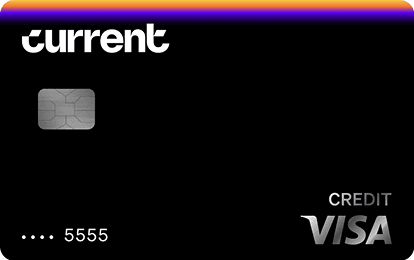
Current Build Card
$0 annual fee. No minimum deposit required. No credit check required. 1 point per dollar on eligible categories. Reports to Experian, TransUnion, Equifax.
Fee
$0
APR
0%
Minimum Deposit Amount
$0
Credit Check
No
Cashback
1 point/dollar on eligible categories (with qualifying payroll deposit)
Benefit
No credit check, no deposit minimum
Bank Balance vs. Credit Card Balance
These two are not the same and people mix them up all the time.
A bank balance is money you own that the bank is holding for you. You can spend it or withdraw it. The balance is yours.
A credit card balance is money you owe the card issuer. It is a debt that will be billed in your next statement. You do not own it. You owe it.
When the credit card balance grows and the bank balance shrinks, that is the classic warning sign. Tools like Brigit can help bridge short cash gaps without stacking credit card debt, while Creditship.ai helps you track and protect your credit profile while you sort out the cash side.
How to Manage Your Bank Balance Smartly
First, always check both current and available balance before a big purchase. Available balance is the honest number.
Second, set low-balance alerts. Most banks let you trigger a text or push notification when your balance dips below a number you choose. A buffer alert at $100 or $200 above zero can save you from overdrafts.
Third, separate your money into purposes. Keep checking for monthly bills and small spending. Push the rest into savings, ideally a high-yield account, so you are less tempted to spend it.
Fourth, automate as much as possible. Auto-pay for bills and auto-transfer to savings on payday turns good habits into the default.
When Your Balance Says Negative
A negative bank balance means you spent more than what was available. The bank either covered the overage and charged an overdraft fee, or declined the transaction.
If you are negative, transfer money in fast. Many banks give a grace period of one business day before charging the overdraft fee. Apps like MoneyLion and Brigit can spot you a small advance to bring the balance back to zero before fees hit.
Repeat overdrafts can lead to a closed account and a ChexSystems mark, which makes it harder to open new accounts elsewhere. If you cannot keep your balance positive, switch to a fee-free no-overdraft account like a second-chance checking option.
Frequently Asked Questions
Why does my bank show two different balances?
Most banks show current balance and available balance. Current balance reflects cleared transactions. Available balance reflects what you can actually spend right now, after pending charges and holds are subtracted. Always rely on available balance for spending decisions.
Is my checking balance the same as my savings balance?
No. Each account has its own balance. Some banks show a combined total across all accounts, but they are tracked separately. You can only spend the money in the specific account where it lives, unless you transfer between them.
How often is my bank balance updated?
Most balances update in real time for card transactions and digital transfers. Check deposits and ACH transfers can take one to three business days to fully reflect. Some balances refresh overnight, so what you see at 8 a.m. may not match what was true at midnight.
Does my bank balance affect my credit score?
No. Your bank balance is not reported to credit bureaus and does not impact your credit score directly. However, having a stable balance helps you pay credit cards and loans on time, which strongly affects your score over time.
Current Banking

Current Banking
Current is a mobile-first banking app with no monthly fee and no minimum balance. Members can earn up to 4.00% APY with a qualifying direct deposit of $200, receive direct-deposit paychecks up to 2 days early, and overdraft up to $200 fee-free.
Standout feature
4.00% APY on Savings Pods (with a $200+ qualifying direct deposit) plus paycheck up to 2 days early — both included on the standard account for free
Fees
Free
Pros
$0 monthly fee; up to 4.00% APY on Savings Pods with qualifying direct deposit; paycheck up to 2 days early;
Cons
No physical branches




