
When you search for "cash advance apps with no credit check," here is the honest answer most guides skip: nearly every cash advance app in 2026 already skips your credit check. Klover, Brigit, EarnIn, Dave, MoneyLion, Chime SpotMe, Tilt, FloatMe — none of them pull your FICO score from Experian, Equifax, or TransUnion. "No credit check" is the category default, not a feature that narrows the field.
So this guide does something different. It explains what these apps actually check instead, the three layers of credit data that exist beyond your FICO, why your credit won't get hurt even if you default on an advance, and the catch — your credit won't get helped either, no matter how many advances you repay on time. That last part is why a credit-builder card running alongside the advance app is the difference between using these tools temporarily and using them forever. For a broader head-to-head ranking of the category by limit, fee, and speed, see our roundup of the best cash advance apps.
What "No Credit Check" Really Hides
There are three layers of credit-related data that lenders can check. Most people only know about the first.
Layer 1: FICO bureaus (Experian, Equifax, TransUnion). This is your traditional credit report. Cash advance apps do not pull from any of these. A 540 FICO will not block you, and applying for an advance does not appear as an inquiry.
Layer 2: Specialty subprime bureaus (Clarity, FactorTrust, DataX). These track payday-loan activity, prior subprime credit, and default history. They are invisible to most consumers but heavily used by payday lenders. Cash advance apps generally do not pull from these either. Storefront and online payday lenders do, even when they advertise "no credit check" — that phrase usually means they skip the FICO bureaus but still pull Clarity or FactorTrust.
Layer 3: Banking bureaus (ChexSystems, EWS). These track checking account history — overdrafts, account closures, unpaid bank fees. Most cash advance apps do not check these because they connect directly to your live bank account via Plaid.
The practical takeaway: cash advance apps generally pull nothing from any bureau. They underwrite on your linked bank account directly. Compare this to payday lenders, which check at least Layer 2, and traditional banks, which check Layer 1 and Layer 3.
The Credit Asymmetry — And Why It Matters
Because cash advance apps do not report to any bureau, an unusual asymmetry kicks in. Your credit cannot get hurt by using one, even if you fail to repay. No bureau, no inquiry, no negative mark, no collections to the credit report. The worst case is the app locks you out and you lose access to that specific product.
The flip side: your credit also cannot get helped, no matter how many advances you repay on time. Twelve months of perfect repayment on Klover, Brigit, EarnIn, and Dave will move your FICO score by zero points. There is no positive payment history to report.
That asymmetry is the entire reason to use a cash advance app for short-term liquidity without fear, and the entire reason to pair it with a credit-builder card if you want the long-term picture to actually improve.
The Pairing That Actually Fixes the Problem
If you are reaching for a cash advance app this month, the right move is to also open a credit-builder card today. The advance handles tonight. The credit-builder card moves your FICO into the 640 to 680 range over six months, which is enough to qualify for a real credit card with an available limit you can use as your own emergency line. All four of these approve thin or damaged files and report to all three bureaus:
- Current Build Card. No credit check. No SSN required at signup. No minimum deposit. Reports to Experian, TransUnion, Equifax. Lowest-friction starting point.
- Self Visa® Credit Card paired with a Self.Inc Credit Builder Account. Two reported tradelines from one product, which moves your score faster than a single card.
- OpenSky Secured Visa. No credit check at all. $200 minimum deposit becomes your credit limit.
- Kikoff Secured Credit Card. No APR, $5 monthly membership.
Firstcard also offers credit-builder products designed for damaged or no-credit files.
Current Build Card
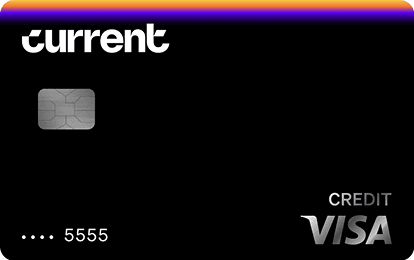
Current Build Card
$0 annual fee. No minimum deposit required. No credit check required. 1 point per dollar on eligible categories. Reports to Experian, TransUnion, Equifax.
Fee
$0
APR
0%
Minimum Deposit Amount
$0
Credit Check
No
Cashback
1 point/dollar on eligible categories (with qualifying payroll deposit)
Benefit
No credit check, no deposit minimum
Six months of on-time payments on any of these typically lifts a 540 FICO into the 640–680 range. That's the moment cash advance apps stop being a recurring tool and become an occasional backup at most.
A Few Apps That Genuinely Pull Zero Data on You
All of these skip every credit layer and report nothing back to any bureau. They underwrite purely on bank account activity. If you want the lowest possible data footprint, these are the cleanest picks.
Klover
Klover advances up to $250 with no membership fee and zero bureau pulls. Approval is based on direct deposit pattern and account activity. You can grow your limit by earning points through surveys and receipt scanning.
Klover

Klover
Need cash before payday? Klover gives you instant access to up to $750 with no credit check, no interest, and no late fees. Earn points through surveys, receipt scanning, and daily activities to unlock higher advance amounts.
Standout feature
Up to $750 cash advance with no interest or credit check. Free standard delivery.
Fees
Free (optional instant delivery fee)
Pros
No interest or required fees. Quick access to cash advances. Multiple ways to earn points and unlock higher limits.
Cons
Points system can be grindy with ads and games required.
Brigit
Brigit advances up to $250 on its Plus plan ($9.99/mo) or up to $500 on Premium ($14.99/mo). No interest, no tips, no late fees, no bureau pull. The Premium plan adds a credit-builder line that does report to bureaus — but that's a separate product layered on top, not the cash advance itself.
Brigit

Brigit
Need cash sooner than expected? Brigit is your go-to solution for instant cash. Access between $25–$500 on the free plan with no interest, no tips, and no hidden fees.
Standout feature
Trusted by over 10 million people
Fees
$8.99/mo or $15.99/mo
Pros
Get Cash in minutes, No Credit Score Needed
Cons
Monthly fee is needed
EarnIn
EarnIn uses your timesheet or paycheck pattern to set a limit. Up to $150 per day and $1,000 per pay period. No bureau pull, no monthly subscription, no mandatory fees. Optional tips up to $13.
Dave
Dave's ExtraCash advance runs $25 to $500. No bureau pull, $1 monthly membership, flat 5% service fee per advance ($5 to $15 cap). Approves on bank transaction history rather than strict W-2 DD.
MoneyLion Instacash
MoneyLion Instacash gives up to $500 per pay cycle with no interest, no mandatory fee, and zero bureau pulls. The free base tier underwrites on linked bank account activity over the last 60 days.
MoneyLion Instacash®
MoneyLion Instacash®
Unexpected vet bills, or last minute date night—no worries! If life throws you a curveball, get Instacash cash advances up to $500.
Standout feature
No interest. No credit check.
Fees
No mandatory fees.
Pros
Available in minutes for a fee, or get it in 1-5 business days with no fees.
Cons
Checking account connection required
Chime SpotMe
If you already bank with Chime, SpotMe covers debit card purchases up to $200 even when your balance is short. No fees, no interest, no bureau pull. SpotMe is technically overdraft coverage rather than a request-as-needed advance, but the no-credit-check mechanics are the same.
Chime
Chime
- Fee-free banking plus early pay access (up to 2 days early with direct deposit)¹ - Overdraft up to $200 without fees for eligible members¹ - 5% cash back on category of choice (with qualifying direct deposit)¹ - 3.75% APY on your savings¹
Standout feature
No credit check, no interest, no annual fee, and no minimum deposit required.
Fees
$0
Pros
Fee-Free Banking and Get paid up to 2 days early
Cons
App/online-only support, no branches
Why These Apps Approve When Banks Don't
A bank or credit card issuer underwrites you on years of credit history, income verification, debt-to-income ratio, and FICO score. A cash advance app underwrites you on the next 14 days of your bank account. The two models look at completely different windows.
For an app, the relevant question is: will this account have enough money on payday to cover repayment? That question gets answered by looking at the last 60 days of your bank statement. Your FICO score, your past defaults, your bankruptcies — none of it matters to that 14-day window. That is why a 540 FICO is invisible to these apps.
The Overdraft Trap
The genuine risk with no-credit-check cash advance apps is the overdraft cycle. You borrow $200 before payday. Payday hits, the app pulls $200 back automatically. If you do not have extra buffer, you're immediately tight again and take another advance. Repeat weekly or monthly and you're always borrowing. Costs of $3 to $5 per advance compound to $40 to $60 monthly.
This is why "no credit check" should be paired with "no overdraft cycle." Use the app for an actual one-off gap, not as a recurring liquidity source. If you're reaching for an advance more than once a quarter, the underlying issue is cash flow, not credit, and a $500 emergency cushion plus a credit-builder card is the fix.
Final Thoughts
"No credit check" is not a feature — it is the category default. The real question is what these apps check instead, what they don't report back, and whether you're pairing them with something that actually builds credit over time. Use a cash advance app for short-term liquidity without fearing damage to your credit, but do not expect on-time repayment to help it either. Open a credit-builder card the same day you take your first advance, and your FICO will be in a different place six months from now.
Frequently Asked Questions
Do cash advance apps check your credit score?
No. Klover, Brigit, EarnIn, Dave, MoneyLion, Chime SpotMe, Tilt, and FloatMe all skip the FICO bureaus. They connect to your bank account and verify income history to determine your advance limit. A 540 FICO will not block you, and applying does not appear as an inquiry.
What is the difference between a cash advance app's "no credit check" and a payday lender's "no credit check"?
Cash advance apps generally pull nothing from any bureau. Payday lenders that advertise "no credit check" usually mean they skip the FICO bureaus but still pull specialty subprime bureaus like Clarity or FactorTrust. The specialty pull does not affect your FICO score, but it does show the lender your past payday-loan history.
Do cash advance apps report to credit bureaus?
No. None of the apps on this list reports on-time advance repayments to Experian, Equifax, or TransUnion. This is why you cannot build credit through them. Brigit Premium and MoneyLion Credit Builder Plus include separate credit-builder lines (layered on top of the advance product) that do report — but the cash advance side itself does not.
Will an unpaid advance hurt my credit?
Generally no. Because the apps do not report to bureaus, an unpaid advance does not show up on your credit report. The app may lock you out or send to collections in extreme cases, and a collections account does report to bureaus. But day-to-day late repayment without default does not move your FICO score.
What credit score do I need for a cash advance app?
None. All of the apps on this list underwrite on bank account activity rather than credit score. The relevant criteria are consistent deposits (employer payroll, gig income, or benefits), a checking account in good standing, and identity verification.
How do I actually build credit while using cash advance apps?
Open a credit-builder card the same day you start using an advance app. The Current Build Card, Self Visa, OpenSky Secured Visa, and Kikoff all approve thin or damaged files and report to all three bureaus. Six months of on-time payments typically lifts a sub-580 FICO into the 640–680 range. That's the moment you graduate from cash advance dependence to having your own credit card limit as an emergency cushion.
Related guides
- Best cash advance apps in 2026 — The flagship roundup ranked across every category.
- Cash advance for bad credit — The bridge-and-build plan for damaged files specifically.
- Best small loan with no credit check (2026) — Real lender options when you need more than an app advance.
- Cash advance with no SSN — ITIN-friendly apps and lenders if SSN is your blocker.



