
Picture this: you just moved to the US for a new job, you have a great credit score back home, and the first apartment leasing office still rejects you. That is the expat credit paradox. Your overseas history does not cross the border, and most US issuers will not approve you without a domestic file.
The good news is that a few credit cards are built for exactly this situation. With the right credit card for immigrants and 6 to 9 months of on-time payments, an expat can move from invisible to prime-eligible faster than most people expect. If you are brand new to the country, our roundup of the best credit cards for new immigrants in the US compares the starter cards that approve applicants with little or no US credit history.
Why Expats Struggle With US Credit
US credit bureaus (Equifax, Experian, and TransUnion) only track financial activity that happens inside the country. A 15-year mortgage in London or a flawless Canadian Mastercard does not carry over. There are limited workarounds — see our guide on how to bring your credit history from Canada for the one major exception.
Most mainstream issuers also require a Social Security Number on the application. Expats on H-1B, L-1, O-1, F-1, or J-1 visas often have an SSN, but new arrivals can wait 4 to 8 weeks for one to be issued. Anyone on a dependent visa, a tourist visa, or who only has an ITIN faces even tighter restrictions. If your visa is H-1B specifically, the dedicated guide on the best credit card for H1B holders walks through the approval odds for each major issuer.
The result is a chicken-and-egg loop: no credit means no card, and no card means no credit. The path out is choosing an issuer that accepts alternative identification or non-traditional underwriting.
What to Look For in a Credit Card for Expats
Not every "starter card" works for expats. A useful card for someone new to the US should hit at least four of these marks:
- Accepts an ITIN or passport instead of an SSN
- Reports activity to all three major US bureaus
- Charges no annual fee or a low one (under $50)
- Offers a path to graduate to a higher limit or unsecured card
- Provides app-based account management in English plus a few other languages
Reporting to all three bureaus is the single most important feature. If a card only reports to one bureau, lenders pulling from the others will still see you as invisible.
Best Picks for Expats
A short list of cards consistently approves expats and reports to the bureaus. The combination of accessibility and credit-building features is what matters here.
Current Build Card is one of the only options that opens without an SSN, accepting an ITIN or passport for identity verification. There is no annual fee and no interest because it uses your own deposit to set the spending limit, similar to a debit card that reports as credit. If you have not received an SSN yet, a credit card without SSN is the cleanest place to start.
Current Build Card
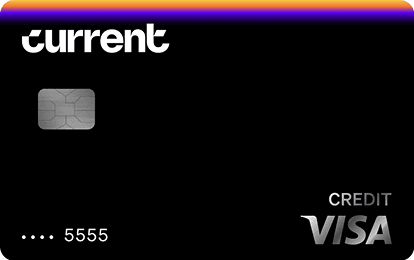
Current Build Card
$0 annual fee. No minimum deposit required. No credit check required. 1 point per dollar on eligible categories. Reports to Experian, TransUnion, Equifax.
Fee
$0
APR
0%
Minimum Deposit Amount
$0
Credit Check
No
Cashback
1 point/dollar on eligible categories (with qualifying payroll deposit)
Benefit
No credit check, no deposit minimum
Self Visa® Credit Card requires an SSN or ITIN and a paid-down Self Credit Builder Account. It reports to all three bureaus and is widely used by international students and recent arrivals who have at least started their SSN process. Read our full Self Credit Builder Card review for a deeper look.
OpenSky does not require a credit check, which helps expats who have been in the US briefly and accidentally damaged their thin file. It does require an SSN or ITIN.
ITIN vs SSN: What Each Unlocks
An Individual Taxpayer Identification Number, or ITIN, is issued by the IRS to people who need to file US taxes but cannot get an SSN. Spouses on dependent visas and some non-resident investors typically use ITINs.
An ITIN unlocks roughly half the US credit card market. An ITIN credit card from issuers like Capital One on select products, American Express on some prepaid and starter cards, and the credit-builder cards mentioned above can serve as your first US tradeline.
An SSN unlocks essentially the entire US credit card market once you have a domestic credit file. If you are eligible for an SSN, apply for it the week you arrive. Even a small head start is worth it.
A 12-Month Plan to Build US Credit
Most expats can reach a 700+ FICO score within a year by following a tight routine. The plan below is what works for nearly every visa category, and it mirrors the longer playbook in our guide on how to build credit as an immigrant.
- Month 1: Open a US bank account and a credit-builder card such as Current Build Card or Self Visa.
- Month 2: Set up two recurring charges on the card (Netflix, phone bill, etc.) and enable autopay for the full statement balance.
- Months 3-6: Keep utilization under 10% and pay on time every month.
- Month 6: Pull your free credit report from AnnualCreditReport.com and confirm all three bureaus show the account.
- Months 7-12: Add a second tradeline, such as a credit-builder loan from Self.Inc Credit Builder Account, to diversify your file.
By month 12, most expats see a FICO score between 690 and 730, which qualifies them for most prime cards.
Common Mistakes Expats Make
A few costly missteps come up over and over. Avoiding them keeps your score moving in the right direction.
Applying for too many cards in the first 90 days is the most common one. Each rejection adds a hard inquiry without building any history. Stick to one or two well-chosen cards.
Closing a starter card too early is another. Once your score grows, the temptation is to ditch the secured card. Keep it open for at least 2 years to build account age.
Finally, do not ignore credit reports. Errors happen, especially when your name or address has a recent change. Tools like Dovly can monitor your credit reports automatically and flag issues.
When to Upgrade
After 12 to 18 months of clean payment history, most expats qualify for a no-fee rewards card. Look for a card with 1.5% to 2% unlimited cash back and a modest welcome bonus you can actually hit.
If you want a guided next step, Creditship offers credit coaching that maps the upgrade path based on your specific score and goals. APRs vary by creditworthiness, terms and conditions apply, and approval is never guaranteed.
Frequently Asked Questions
Can I get a US credit card without an SSN?
Yes, a small number of cards accept an ITIN or a passport instead. Current Build Card is the most accessible option for SSN-less applicants. Once you receive an SSN, switch to issuers that accept it for a wider product range.
Will my home-country credit history transfer to the US?
No, US bureaus do not pull foreign credit data. A few services like Nova Credit can pass your overseas file to specific issuers, but most US cards still ignore it. Plan to build a fresh US file from scratch.
How long does it take expats to reach a 700 credit score?
With on-time payments and low utilization, most expats reach 700 in 9 to 12 months. The pace depends on the mix of accounts and whether all three bureaus receive reports. Adding a credit-builder loan can speed things up.
Are expat credit cards expensive?
Not usually. The cards designed for new US arrivals typically have no annual fee or charge under $50 per year. Watch for foreign transaction fees if you still spend in your home currency, since those can run 1% to 3% per swipe.




