Can You Get a Credit Card While Unemployed?
Losing a job does not automatically disqualify you from new credit. Finding a credit card for unemployed applicants comes down to what income you can list, what score you have, and which product you pick. Issuers care about your ability to repay, not about a single W-2.
The CARD Act of 2009 lets issuers count household income for applicants over 21. That means a spouse's paycheck, benefits, or investment returns can support your application. You also have several credit-building paths that do not rely on high approval odds at all.
This guide covers the rules, the income sources that count, and the product types that tend to approve unemployed applicants.
Income Rules Under the CARD Act
Before 2009, card issuers asked only about your personal income. Today, they follow a federal rule that expands what you can report.
Household income vs. personal income
If you are 21 or older, you can list any income you have a reasonable expectation of accessing. That includes a partner's salary if you share bills, rent, or a household budget. Applicants under 21 must show personal income or have a cosigner.
What issuers verify
Most issuers do not request pay stubs on a standard application. They may ask later if something looks off, so only list income you could document if asked. Lying on a credit application is fraud.
Income Streams That Count
Unemployment does not mean zero income. Several streams qualify on a credit card application.
- Unemployment benefits from your state
- Spousal or partner income you share
- Alimony, child support, or separate maintenance
- Social Security, SSDI, or SSI payments
- Pension or retirement distributions
- Investment income, dividends, or rental income
- Freelance, gig, or 1099 income
- Scholarships, grants, or regular family support
Add up the annual total. Even a modest number, like $12,000 from benefits plus side work, can support approval for a starter card.
Secured Credit Cards: The Most Reliable Path
Secured cards use a refundable deposit as your credit line. Because the issuer holds collateral, approval odds are much higher than for unsecured cards. That makes secured products the most realistic credit card for unemployed applicants with limited income.
The Self Visa® Credit Card is a common choice because you do not need a hard credit pull to qualify. You first open a Credit Builder Account, make small monthly payments, and once you hit a savings threshold, Self offers a card secured by those savings. It reports to all three major bureaus.

Other secured options include OpenSky, which does not require a bank account check, and Kikoff Secured Credit Card, which pairs low deposits with a simple mobile interface. Terms and conditions apply, and APRs vary by creditworthiness.
OpenSky is worth a closer look if your income is thin or irregular, since its core secured card runs no credit check and does not require a checking account to apply. You fund a refundable deposit that becomes your limit, and on-time payments report to all three bureaus, so you can build history even during a stretch without a paycheck.

If you would rather build credit without a deposit or a hard pull at all, the Current Build Card works differently from a traditional secured card. It draws from the balance in your Current spending account and reports that activity as credit usage, so there is no separate security deposit to lock up and no credit check that could ding you while you are between jobs. For an unemployed applicant who wants the lowest-risk on-ramp, it is one of the easiest tradelines to open.
Current Build Card
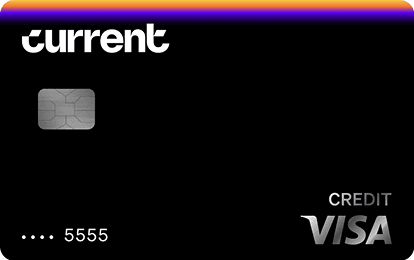
Current Build Card
$0 annual fee. No minimum deposit required. No credit check required. 1 point per dollar on eligible categories. Reports to Experian, TransUnion, Equifax.
Fee
$0
APR
0%
Minimum Deposit Amount
$0
Credit Check
No
Cashback
1 point/dollar on eligible categories (with qualifying payroll deposit)
Benefit
No credit check, no deposit minimum
Becoming an Authorized User
If a family member has good credit, ask to be added as an authorized user on one of their cards. The account's full history can appear on your credit report, which can raise your score within one or two billing cycles.
You are not legally responsible for the balance as an authorized user. The primary account holder still owes the debt. Pick someone whose payment history is clean, because negative activity can hurt you too.
Not every issuer reports authorized user data to the bureaus. Call customer service and confirm before you rely on this strategy.
Credit Builder Loans as a Backup
If no card works yet, a credit builder loan creates positive payment history without a credit check. You make fixed monthly payments into a locked savings account, then receive the funds at the end of the term.
These loans report as installment accounts, which diversify your credit mix. Pair one with a secured card once your score rises, and you will have both revolving and installment data on your file.
What to Avoid
Desperation attracts bad offers. Skip these traps while you are unemployed.
High-fee subprime cards
Some unsecured cards for bad credit charge setup fees, monthly fees, and annual fees on top of high APRs. Read the Schumer box before you apply. A secured card with a refundable deposit is almost always a better deal.
Payday loans and cash advances
These products can carry triple-digit APRs and trap you in a renewal cycle. They also do not help your credit score in most cases.
Applying for many cards at once
Each hard inquiry can drop your score a few points. Space applications at least three to six months apart, and check your prequalification odds first when an issuer offers that tool.
Related Reading
- How Foreigners Can Get a
- What's the Youngest Age You
Frequently Asked Questions
Can I get a credit card with no job and no income?
You can apply if you are 21 or older and share household income with a spouse or partner. You can also list benefits, investments, alimony, or retirement distributions. With zero of any of those, a secured card or authorized user spot is your best bet.
Do credit card companies verify income?
Most do not verify at the application stage, but they can request documentation later. Always report a number you can back up with tax returns, benefit statements, or bank deposits.
Will applying for a credit card while unemployed hurt my credit?
A hard inquiry takes a few points off your score for several months. One application rarely causes lasting damage, but multiple applications in a short window can. Check for prequalification tools before you commit.
Is unemployment income enough to qualify for a credit card?
It can be, especially for secured cards with low minimum income requirements. Combine unemployment benefits with any side income, spousal income, or investment returns to strengthen your application. APRs vary by creditworthiness, and terms and conditions apply.

Firstcard was founded in 2020 by Kenji Niwa, an immigrant founder who was turned down for his first U.S. credit card because he had no credit score. So he set out to build the card he couldn't get. Firstcard launched its own card, the Firstcard Secured Credit Builder Card. The program received more than 250,000 applications and served tens of thousands of cardholders. In February 2026, Firstcard became a marketplace for financial products, with the same mission: to help people build credit and reach financial freedom. Today we compare credit cards, cash advance apps and credit builders, so you can choose the right one with confidence. This editorial team is led by Chief Editor Kenji Niwa. We check fees, APRs and terms against each provider's own documents and note the date we checked. We also interview real users and the companies that offer credit cards and loans. Our ratings use the same standards whether or not Firstcard earns money from a product. Full profile and latest articles →