
What Does Current Balance Mean on a Credit Card or Bank Account?
The current balance is the live, real-time amount on your account. On a credit card, it's everything you owe right now — including new purchases since your last statement. On a bank account, it's the total dollars in the account before pending transactions clear. The exact meaning depends on whether you're looking at a credit card or a bank account, and the difference matters when you're trying to pay off debt or budget your spending. If the word "balance" itself is what's tripping you up across cards and bank accounts, our broader primer on what balance means on a bank account or credit card lays out every variation — current, available, statement, and minimum — in one place. If the broader vocabulary on your statement — balance, available credit, credit limit — also runs together, our explainer on balance vs credit: how to read your statement right lines those terms up side by side so you know which one your score actually responds to.
Current Balance on a Credit Card
On a credit card, the current balance includes:
- Your previous statement balance (if any)
- Any payments you've made since the statement closed
- Any new purchases that have posted
- Any interest, fees, or refunds that have posted
It does NOT include pending charges that haven't fully cleared yet. Most issuers display two numbers:
- Current balance — your live owed amount.
- Statement balance — the snapshot from when your billing cycle closed.
To preserve the grace period and avoid interest, pay the statement balance by the due date. New charges made after the statement closed go into the next cycle and remain interest-free as long as you continue paying in full.
Issuers like the Self Visa® Credit Card and the Current Build Card show both balances clearly in their apps so you can pick the right number. (For more on what's left after a payment posts, see our guide on the remaining balance.)
Current Balance on a Bank Account
On a checking or savings account, the current balance is the actual posted balance — the dollar amount the bank has officially settled. It typically does NOT include:
- Pending debit-card transactions
- Pending direct deposits not yet released
- Pending checks deposited but not yet cleared (especially mobile-deposit holds)
The available balance is the current balance minus any holds, plus any pending deposits the bank has chosen to release. The available balance is what you can spend right now.
Current Build Card
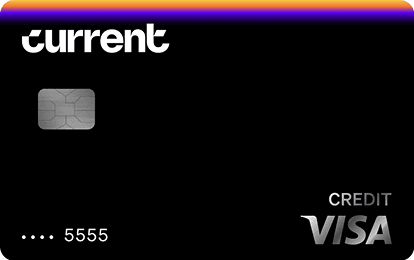
Current Build Card
$0 annual fee. No minimum deposit required. No credit check required. 1 point per dollar on eligible categories. Reports to Experian, TransUnion, Equifax.
Fee
$0
APR
0%
Minimum Deposit Amount
$0
Credit Check
No
Cashback
1 point/dollar on eligible categories (with qualifying payroll deposit)
Benefit
No credit check, no deposit minimum
A Banking App That Shows Balances Clearly
Much of the confusion around current versus available balance comes down to how clearly your bank app surfaces pending activity. Current Banking is a mobile-first account that breaks out posted, pending, and available figures in real time, so you always know exactly what's safe to spend. Seeing holds and pending deposits the moment they hit makes overdrafts far easier to avoid.
Current Banking

Current Banking
Current is a mobile-first banking app with no monthly fee and no minimum balance. Members can earn up to 4.00% APY with a qualifying direct deposit of $200, receive direct-deposit paychecks up to 2 days early, and overdraft up to $200 fee-free.
Standout feature
4.00% APY on Savings Pods (with a $200+ qualifying direct deposit) plus paycheck up to 2 days early — both included on the standard account for free
Fees
Free
Pros
$0 monthly fee; up to 4.00% APY on Savings Pods with qualifying direct deposit; paycheck up to 2 days early;
Cons
No physical branches
Common Sources of Confusion
- Pending charges that vanish. A merchant authorization (gas pump, hotel, rental car) often includes a hold larger than the final charge. The hold disappears when the final amount posts, sometimes 1–7 days later. The current balance won't update until then.
- Tipped restaurant transactions. A $40 dinner with a $10 tip authorizes for $40 first, then settles for $50 once the tip clears — your current balance jumps when the settlement posts.
- Negative current balance on a credit card. If you overpaid or got a refund larger than what you owed, the current balance shows as a negative number. You can request a refund or let it offset future purchases.
Why It Matters
- Credit utilization. Credit bureaus typically see your current balance on the statement closing date — not the day you pay it. To keep utilization low, make a mid-cycle payment so the balance reported is below 30% of your credit limit (10% is even better). Even paying just above the minimum payment several times a month is better than waiting for the due date.
- Overdraft risk. On a checking account, spending against the available balance is safe; spending against the current balance can trigger an overdraft if pending transactions hit later. The Self.Inc Credit Builder Account avoids overdraft entirely by debiting from a checking account on a schedule.
- Reconciliation. Bank apps often show all three: current balance, available balance, and pending. Use available for spending decisions and current for reconciliation against your records.
If your statement also shows a line labeled "balance amount" and you can't tell whether it matches the current, statement, or available number, our companion explainer on what "balance amount" means on your statement decodes that exact label.
Frequently Asked Questions
What's the difference between current balance and statement balance on a credit card?
The statement balance is what you owed at cycle close — a fixed snapshot. The current balance is what you owe right now, including any new transactions posted after the statement closed. Pay the statement balance in full by the due date to preserve the grace period and avoid interest.
Does current balance include pending transactions?
Usually no. The current balance reflects only posted, settled transactions. Pending transactions affect the available balance but not the current balance until they post. Mobile-deposit holds, debit-card authorizations, and merchant pre-authorizations all show as pending until they clear.
Can my current balance be different from my available balance?
Yes, almost always on an active account. The available balance is the current balance minus any holds (debit-card auths, check holds), plus any pending deposits the bank has released. The two converge when no transactions are pending.
Why is my current balance higher than my available balance?
Usually because of a merchant hold or pending authorization that hasn't fully cleared. Gas pumps, hotels, and rental car companies often place pre-authorizations larger than the final charge. The hold reduces your available balance until the final transaction posts, at which point both numbers update.
Related Reading
- What Does Balance Mean on a Bank Account or Credit Card? — the foundational primer that ties together every "balance" you see in your apps
- Current Balance vs. Available Balance: What's the Difference?
- Credit Card Calculator: How to Estimate Payoff and Total Interest
- What Is APR? Annual Percentage Rate Explained
- Free Checking Account: What 'Free' Actually Means in 2026
- What Is a Bank Account? Types, Features, and How to Pick One




