Need a little cash to bridge the gap before payday without taking on a high-interest payday loan? The Current cash advance feature, officially called Paycheck Advance, is one of the most talked-about early-pay tools because it has no mandatory subscription, no interest, and a ceiling of up to $1,000. This review breaks down the fees, eligibility, repayment, and the realistic cost so you can decide if it fits your situation. Terms and conditions apply.
Here are the key facts at a glance, as of November 2026.
| Feature | Current Paycheck Advance |
|---|---|
| Provider | Finco Advance LLC (Current affiliate); banking by Cross River Bank, Member FDIC |
| Advance amount | $25 to $1,000, set by Current |
| Eligibility | $200+ payroll deposit into a Current Account, valid SSN |
| Not available in | CT, MD, NV, WI, Washington DC |
| Mandatory fees | None: no subscription, tips or interest |
| Standard delivery | Free, within 3 business days |
| Instant Access | Optional fee, shown in the app before you confirm |
| Repayment | Automatic from your next payroll deposit |
| Credit impact | No credit check, not reported to the bureaus |
What Current Cash Advance Actually Is
Current is a financial technology company, not a bank. Its banking services are provided by Cross River Bank, Member FDIC, and Paycheck Advance is offered by Current's affiliate Finco Advance LLC. The Current cash advance product is an earned wage access feature that lets eligible account holders get part of their next payroll deposit early.
As of November 2026, Current's support page says advances range from $25 to $1,000, based on your payroll deposit history, repayment history, spending and other factors.
The Consumer Financial Protection Bureau confirmed in a December 23, 2025 advisory opinion that covered earned wage access products like this one are not classified as credit under Regulation Z. That is why Current does not quote an APR the way a personal loan would, and why Paycheck Advance does not require a credit check.
Current Paycheck Advance

Current Paycheck Advance
Need cash before payday? Current’s Paycheck Advance is here to help. Secure, and straightforward – your early paycheck is just a tap away.
Standout feature
Up to $1,000 advanced from your next paycheck if you qualify. No mandatory fee, no credit check, no late fees
Fees
$0 standard delivery (up to 3 business days). Optional Instant Access fee varies. Exact amount shown in-app at request time.
Pros
Up to $1,000 advance. One of the highest Paycheck Advance limits available
Cons
Requires a Current account with recurring payroll direct deposit
How Current's Paycheck Advance Works
Here is the basic path most users follow:
- Open a Current account in the iOS or Android app and pass identity verification. Per Current's terms, you need to be 18 or older with a valid Social Security number and a U.S. residential address
- Set up qualifying direct deposit, with at least one eligible payroll deposit of $200 or more into your Current Account within the last 35 days. Transfers from Venmo, Cash App or Zelle, mobile check deposits and cash deposits do not count
- Check the Overview tab in the app to see whether you qualify and how much you can get
- Request an advance from $25 up to your personal limit, which tops out at $1,000
- Choose free standard delivery within three business days, or pay the optional Instant Access fee to get the money typically within minutes
- Repay automatically when your next payroll deposit arrives, or repay early with the Repay Advance button
You can request advances as often as you like within your available amount. As of November 2026, Paycheck Advance is not available to residents of Connecticut, Maryland, Nevada, Wisconsin, or the District of Columbia.
Current Cash Advance Fees and APR
The headline number for the Current paycheck advance is the mandatory fee, which is $0. There is no monthly subscription, no membership tier, and no required tip. That is uncommon in the cash advance category, where most competitors charge a monthly fee, a per-advance tip, or both.
The one optional cost is the Instant Access fee. As of November 2026, Current does not publish a fee schedule. Per Current's terms and support pages, the fee varies with the size of the advance, the app shows it before you confirm, and it is repaid along with the advance. If you can wait up to three business days, standard delivery is free.
Because earned wage access is not classified as a loan, Current does not publish an APR. Still, even a few dollars on a small advance repaid in about two weeks can work out to a triple-digit annualized cost, so free standard delivery is the cheapest way to use Paycheck Advance.
Does Current Offer a Loan?
Many people searching for a current loan are actually looking for any kind of credit product from Current the company. As of November 2026, Current does not offer a traditional personal loan, installment loan, line of credit, or payday loan. Paycheck Advance is structured as an advance against your own future earnings, and Current's terms state you have no legal obligation to repay it. Current will not send an unpaid advance to collections, but an unpaid balance reduces how much you can get next time.
For users who want to build credit rather than just smooth out cash flow, Current offers the Current Build Card, a secured charge card issued by Cross River Bank that spends the money in your Current account and reports to all three credit bureaus, with no annual fee, interest or credit check. Terms and conditions apply.
Current Build Card
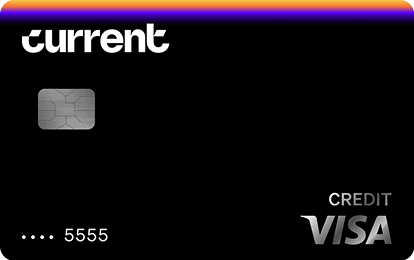
Current Build Card
$0 annual fee. No minimum deposit required. No credit check required. 1 point per dollar on eligible categories. Reports to Experian, TransUnion, Equifax.
Fee
$0
APR
0%
Minimum Deposit Amount
$0
Credit Check
No
Cashback
1 point/dollar on eligible categories (with qualifying payroll deposit)
Benefit
No credit check, no deposit minimum
Pros
- No mandatory monthly fee, no subscription, and no required tip
- Advance limit up to $1,000, which is higher than most competitors' free options
- No credit check and no hard inquiry on your credit report
- Standard delivery within three business days is completely free
- Built directly into the Current banking app, so there is no separate signup if you already have an account
Cons
- Requires a Current account and a $200+ payroll deposit, so it is not usable as a standalone app
- The Instant Access fee is not published up front, you only see it in the app, and on small advances it can mean a triple-digit annualized cost
- Repayment is automatic from the next deposit, which can squeeze your cash flow on the following pay cycle
- Does not build credit on its own, since the advance is not reported to the bureaus
- Your amount depends on payroll, repayment and spending history, so newer users often start well below $1,000
How Current Compares to Other Cash Advance Apps
Here is how Current stacks up against common alternatives as of November 2026:
- Current Paycheck Advance: $25 to $1,000, $0 monthly fee, optional Instant Access fee shown in the app, no credit check
- Brigit: $25 to $500 depending on eligibility, with a monthly subscription of $8.99 to $15.99 for in-app advances, no interest and no tips
- Dave: Up to $500 (few members qualify for the max), membership up to $5 per month plus an ExtraCash fee of 5 percent or $5, whichever is greater
- EarnIn: Up to $200 per day and up to $1,000 per pay period; $0 mandatory fees with optional tips and Lightning Speed fees starting at $3.99
If you want a no-monthly-fee option with a higher ceiling, Current tends to win on raw cost. If you also want credit monitoring and identity theft protection bundled in, Brigit can be worth the monthly fee for some users. For a broader look, compare cash advance apps side by side, see cash advance apps with no credit check, or read about same-day online cash advance options when you need the money today. APRs and fees vary by product, and terms and conditions apply.
Who Should Use Current's Paycheck Advance
The best fit is a worker with steady payroll direct deposit who occasionally needs to cover a small gap before payday and wants to avoid overdraft fees, payday lenders, or credit card cash advances. If you can plan ahead by three business days, the free standard delivery option is hard to beat in the current cash advance category. Our Current Paycheck Advance page compares its fees and limits with other apps.
It is less of a fit if you do not yet have qualifying direct deposit, if you live in one of the excluded states, or if you actually need a longer-term installment loan rather than a short bridge. In those cases, looking at a dedicated lender, apps like Earnin and Dave, or a credit builder product like the Current Credit Builder Card may make more sense.
Frequently Asked Questions
Is Current Paycheck Advance a loan?
No. It is an earned wage access feature that lets you tap a portion of your own upcoming payroll deposit early. The CFPB confirmed in a December 2025 advisory opinion that covered earned wage access products are not classified as credit under Regulation Z, so Current does not publish a traditional APR.
How much can I get from a Current cash advance?
As of November 2026, Current says eligible users can get between $25 and $1,000. Your personal limit depends on your payroll deposit history, repayment history and spending. Newer users often start at the lower end and may see the limit rise if their payroll stays steady.
Does Current offer a personal loan?
No. As of November 2026, Current does not offer a traditional current loan, installment loan, or line of credit. Paycheck Advance is an earned wage access feature, and the Current Build Card is a separate credit-building tool that reports to all three credit bureaus.
Does using Paycheck Advance affect my credit score?
No. There is no credit check to qualify, no hard inquiry, and the advance itself is not reported to the credit bureaus. That also means it will not help build your credit, so users focused on score growth often pair it with a credit builder product rather than relying on advances alone.

The Firstcard team writes simple, research-backed guides on credit, cards, and credit building. Firstcard has been helping people build credit and save money since 2020. Full profile and latest articles →