
Look at your credit or debit card right now. That little gold or silver square on the front is an EMV chip, and it is one of the biggest reasons credit card fraud in stores has dropped by 76% since 2015. The chip changed the way card payments work in the U.S. almost overnight.
If you have ever wondered why you have to insert your card instead of swiping it, or what the chip is actually doing in that machine, this guide explains everything you need to know about EMV chip technology.
What Is an EMV Chip?
EMV stands for Europay, Mastercard, and Visa, the three companies that created the standard in the 1990s. An EMV chip is a small embedded microprocessor that stores and processes your card data in a far more secure way than the older magnetic stripe.
Unlike a magnetic stripe, which holds static data that never changes, the EMV chip creates a unique transaction code every single time you use it. That code cannot be reused. Even if a thief intercepts it, the code is worthless.
The chip is the same technology used in passport cards, building access badges, and SIM cards. It is a tiny computer that talks securely to the payment terminal.
How EMV Chip Payments Work
When you insert your chip card into a payment terminal, three things happen in under a second:
- The chip authenticates that the card is real, not cloned
- The terminal sends transaction details to the chip
- The chip generates a one-time cryptogram, then sends it to the issuer for approval
This whole process is called a chip-and-dip transaction. It takes longer than a swipe because the chip is doing actual computation. The extra few seconds are the price of much stronger security. If you watch your account afterward, the charge usually appears among your pending transactions before it settles. (Developers building chip-enabled payment integrations should use sandbox numbers, not real cards, and rely on the test data Stripe, Adyen, Braintree, and Square publish for that.)
Contactless payments (tap-to-pay) use the same EMV chip with NFC technology. The chip generates the same one-time codes wirelessly when you hold the card near the reader.
EMV Chip vs. Magnetic Stripe
The difference between the two technologies is night and day:
- Magnetic stripe: Stores static card data. Can be cloned easily with a $50 skimmer device.
- EMV chip: Generates one-time codes. Cannot be cloned, even if intercepted.
Before EMV rolled out in 2015, in-person card fraud was a massive problem. Criminals would install skimmers on gas pumps and ATMs to copy magnetic stripe data and create counterfeit cards. After EMV, those skimmers became useless for chip transactions.
That is why fraud shifted online. Card-not-present fraud (online and phone purchases) jumped sharply because the chip cannot protect transactions where the card is not physically present.
Why the U.S. Switched to EMV Chips
The rest of the world moved to EMV in the early 2000s. The U.S. waited until October 2015, when the major card networks set a fraud liability shift deadline. After that date, whichever party had less secure technology was responsible for fraud losses.
If a merchant still used a magnetic stripe terminal and accepted a chip card for a fraudulent transaction, the merchant ate the cost. That financial pressure pushed nearly every U.S. retailer to upgrade their hardware within two years.
The results were dramatic. Visa reported a 76% drop in counterfeit card fraud at chip-enabled merchants within three years.
EMV Chips on Credit-Building Cards
Every legitimate credit card issued in the U.S. today has an EMV chip, including credit-building cards designed for people with no or low credit. The Self Visa® Credit Card has a chip and supports contactless tap-to-pay. The OpenSky secured card and the Kikoff Secured Credit Card also include EMV chip technology.
The Current Build Card uses the same chip technology used by major banks. Whether your card is from a giant issuer or a small fintech, the chip security is identical.
Kikoff Secured Credit Card
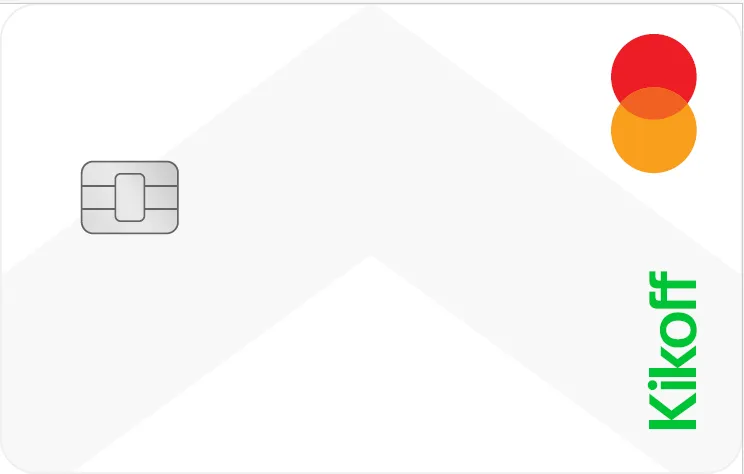
Kikoff Secured Credit Card
Kikoff Secured Credit Card works like a debit card & checking account and performs like a credit builder. Build credit with your everyday purchases.
APR
0%
Minimum Deposit Amount
$0
Credit Check
No
Cashback
Yes
Benefit
0% interest. No credit check.
What to Do If Your EMV Chip Stops Working
Chips can fail, especially after heavy use or exposure to magnets and bending. If yours stops working:
- Try cleaning the chip surface gently with a soft cloth
- Insert the card slowly and hold it steady
- Try a different terminal to rule out a reader problem
- If swiping is the only option, request a replacement from your issuer
Most banks will mail a free replacement card within 5 to 7 business days. Many issuers also support adding the card to a digital wallet immediately, so you can keep spending while you wait.
Contactless vs. Insert: Which Is Safer?
Both chip insertion and contactless tap-to-pay use the same EMV security. From a fraud standpoint, they are equally safe. Contactless is faster and reduces wear on the card.
There have been theoretical concerns about contactless skimming, but in practice it is extremely rare. The card must be within an inch or two of a malicious reader, and the one-time code is still useless for repeat fraud.
Digital wallets like Apple Pay, Google Pay, and Samsung Pay add another layer of security by replacing your card number with a virtual token, a process known as tokenization. That makes them arguably the safest way to pay.
EMV Chips and Online Shopping
Here is the catch: EMV chips do nothing to protect online purchases. When you type your card number into a website, the chip is not involved at all. That is why online fraud has grown so rapidly since the chip rollout.
For online security, look for cards that offer:
- Virtual card numbers for one-time use
- Spending alerts via text or app
- 3D Secure (Visa Secure or Mastercard Identity Check) authentication
- Two-factor authentication for the issuer's app
Services like Creditship.ai help monitor your credit for unusual activity, which can be an early warning sign of online card theft.
Creditship

Creditship
Get free credit monitoring and concrete advice how to improve your credit from Creditship AI.
Standout feature
AI Credit Coach. AI analyzes your credit report in depth and gives you tailored, actionable steps to raise your score.
Fees
Free
Pros
Free credit report access plus monitoring and alerts
Cons
No credit repair feature
How EMV Chips Help You Build Credit
Chip technology does not directly affect your credit score. What does matter is that chip-enabled cards are universally accepted, meaning you can use your credit-building card anywhere. Consistent, low-risk use of a credit card is one of the fastest ways to build a credit history.
Apps like Brigit and Monarch Money help you track spending across your chip cards so you stay under 30% credit card utilization, which protects your score.
Learn more about building credit with a chip-enabled secured card on the Firstcard credit building page.
Frequently Asked Questions
Why does the chip take longer than a swipe?
The chip generates a unique cryptographic code for each transaction, which requires the card and terminal to communicate back and forth. This takes one to three seconds longer than a swipe but provides much stronger security. The few extra seconds dramatically lower your fraud risk.
Can a chip card be cloned?
No, an EMV chip cannot be cloned in practical terms. Each transaction creates a one-time code that cannot be reused. Even if a thief intercepts the code, it is useless for any future purchase. This is the main reason in-person card fraud has dropped sharply since 2015.
What is the difference between EMV and chip-and-PIN?
EMV is the underlying standard. Chip-and-PIN means you enter a PIN to authorize the transaction, common in Europe. The U.S. mostly uses chip-and-signature, where the chip authenticates the card and the signature confirms the user. Both rely on the same EMV chip technology.
Do all credit cards have EMV chips now?
Yes, virtually every credit and debit card issued in the U.S. since 2015 has an EMV chip. This includes secured cards, credit-building cards, and prepaid cards. If you have an older card without a chip, contact your issuer for a free replacement. Modern cards without chips are extremely rare.
Current Banking

Current Banking
Current is a mobile-first banking app with no monthly fee and no minimum balance. Members can earn up to 4.00% APY with a qualifying direct deposit of $200, receive direct-deposit paychecks up to 2 days early, and overdraft up to $200 fee-free.
Standout feature
4.00% APY on Savings Pods (with a $200+ qualifying direct deposit) plus paycheck up to 2 days early — both included on the standard account for free
Fees
Free
Pros
$0 monthly fee; up to 4.00% APY on Savings Pods with qualifying direct deposit; paycheck up to 2 days early;
Cons
No physical branches




