Two Very Different Brokers
E*TRADE has been around since 1982, while Robinhood only launched in 2013. Both let you buy stocks and ETFs with no commission, but the experience could not feel more different.
E*TRADE, now part of Morgan Stanley, offers a deep set of research tools, mutual funds, and banking features. Robinhood keeps things mobile-first with a simpler app and an IRA match that draws in retirement savers.
This guide compares fees, features, account types, and who each broker tends to fit best.
Company Background
E*TRADE helped pioneer online investing in the 1990s and now operates as a division of Morgan Stanley. That ownership gives customers access to Morgan Stanley research, retirement tools, and a full suite of banking services.
Robinhood started as a free stock-trading app aimed at people who felt traditional brokers were too expensive. It now serves more than 27 million funded customers and has added IRAs, retirement matches, and a desktop platform called Robinhood Legend.
Both firms are regulated by the SEC and FINRA, and customer accounts are protected by SIPC up to $500,000.
Fees and Commissions
Stock and ETF trades are free at both brokers. The gap shows up when you look at options, mutual funds, and other products.
E*TRADE charges $0.65 per options contract, with the price dropping to $0.50 for active traders who place at least 30 trades per quarter. Robinhood charges no options contract fee at all, which can add up if you trade options often.
For mutual funds, ETRADE offers thousands of no-load, no-transaction-fee funds, while Robinhood does not offer mutual funds. Bond and fixed-income trading is also available at ETRADE but not at Robinhood.
Account Types Available
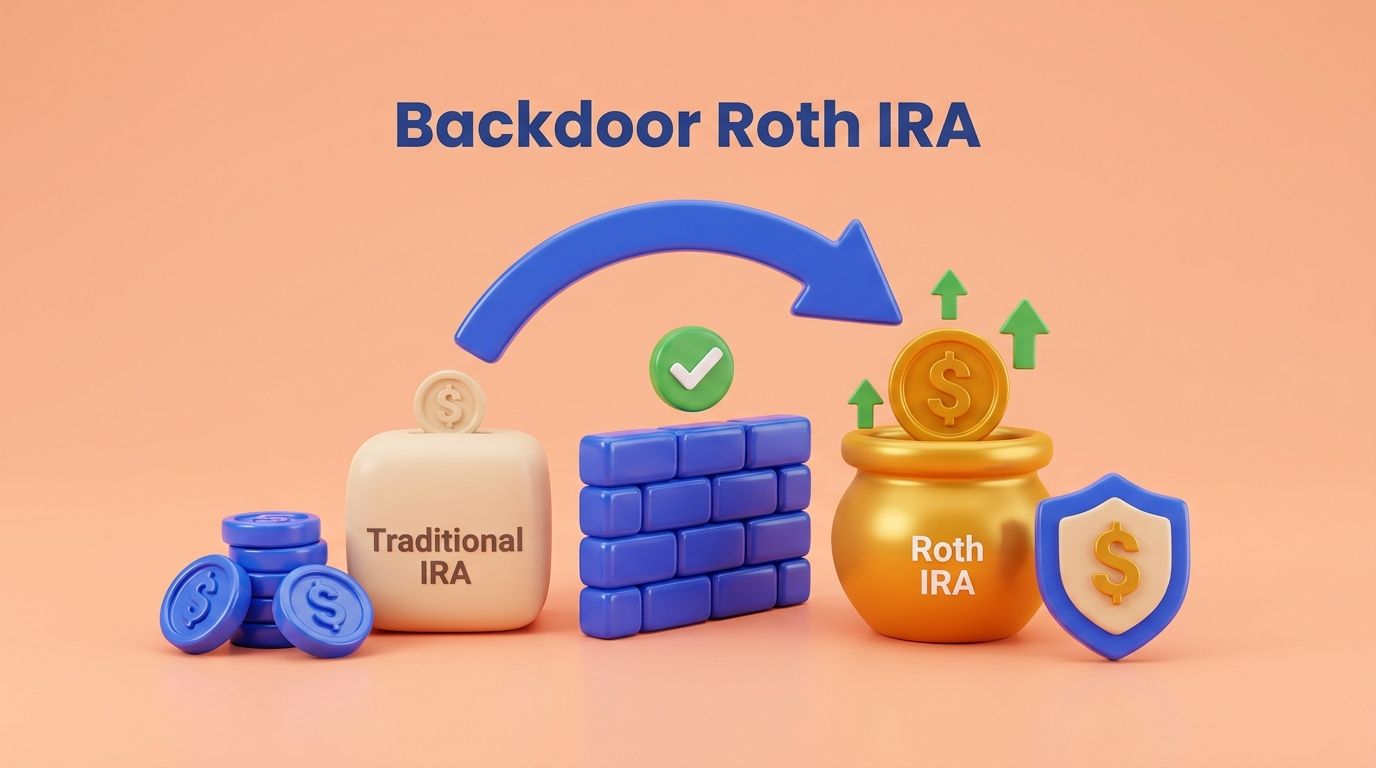
E*TRADE supports a long list of account types, including individual and joint taxable accounts, Traditional IRAs, Roth IRAs, Rollover IRAs, SEP IRAs, SIMPLE IRAs, custodial accounts, trust accounts, and small-business retirement plans.
Robinhood offers individual taxable brokerage accounts, joint taxable accounts, Traditional IRAs, and Roth IRAs. It does not yet support SEP IRAs, SIMPLE IRAs, custodial, or trust accounts.
If you are self-employed and want a SEP IRA or a Solo 401(k), E*TRADE is the more complete pick.
Retirement Matching
Robinhood stands out for offering a 1% match on IRA contributions for free users, with the match rising to 3% for Robinhood Gold members. The match applies to both Traditional and Roth IRAs.
E*TRADE does not offer a direct contribution match on personal IRAs. Instead, it leans on its research tools, target-date funds, and retirement planning calculators.
For a saver who consistently maxes out a Roth IRA, the Robinhood match can be a meaningful boost over time. For an investor who wants mutual funds and broader retirement plan options, E*TRADE may be the better home.
Research and Education
ETRADE provides reports from Morgan Stanley, Argus, and other research firms, plus screeners and educational articles. Power ETRADE, its advanced platform, adds options analysis tools and live streaming charts.
Robinhood offers basic research, analyst price targets, earnings data, and news. It also launched Robinhood Legend in 2024 to give active users more advanced desktop tools.
For investors who lean on third-party research, E*TRADE has the deeper library. Robinhood works well if you mostly want simple charts and quick trades.
Banking and Cash Features
E*TRADE customers can open checking and savings accounts through Morgan Stanley Private Bank, with debit cards and ATM access. That helps if you want investing and banking under one roof.
Robinhood offers a spending account with a debit card and a cash sweep for brokerage cash. Gold members earn a higher sweep rate than standard users.
Both brokers offer FDIC insurance on bank deposits through their partner banks.
User Experience
Robinhood is well known for a clean, mobile-first design. Placing trades, setting alerts, and viewing positions feels simple, even for first-timers.
ETRADE offers two main apps, the standard ETRADE app for everyday investors and Power ETRADE for active traders. The standard app is easy to use, while Power ETRADE has a steeper learning curve.
If you mostly invest from your phone and want simplicity, Robinhood feels lighter. If you want one provider for trading, retirement, and banking, E*TRADE has more to explore.
Who Should Pick E*TRADE
E*TRADE fits investors who want mutual funds, deeper research, and account types like SEP, SIMPLE, custodial, and trust accounts. It also fits people who want banking features alongside their brokerage account.
Who Should Pick Robinhood
Robinhood works well for investors who like a simple mobile app, no options contract fees, crypto trading, and the IRA contribution match. It is often the easier starting point for younger or first-time investors who want to make small, frequent trades without much friction. If that fits your goals, you can open a Robinhood account and get started in about five minutes.
Robinhood

Robinhood
Robinhood is a trading platform that brings stocks, ETFs, options, futures, prediction markets, crypto, and retirement accounts together in one app.
Standout feature
One platform for stocks, ETFs, options, futures, prediction markets, and crypto
Fees
$0 commission on stocks, ETFs, and options.
Pros
Zero-commission trading on stocks, ETFs, and options
Cons
Best perks (high APY, lower margin rates) require Gold subscription ($5/month)
Frequently Asked Questions
Is E*TRADE more expensive than Robinhood?
For stock and ETF trades, both brokers charge $0 commission. E*TRADE charges $0.65 per options contract, while Robinhood charges nothing per contract, so options traders may pay less at Robinhood. Mutual funds and other products have their own fee schedules to review.
Does E*TRADE offer an IRA match?
E*TRADE does not currently offer a direct match on personal IRA contributions. Robinhood offers a 1% match for free users and a 3% match for Gold members, subject to the terms of its rewards program.
Can I roll over a 401(k) to either broker?
Yes, both E*TRADE and Robinhood accept 401(k) rollovers into a Rollover IRA. The process usually involves contacting your former plan administrator and asking for a direct rollover, then following each broker's instructions to fund the new account.
Which broker is better for retirement savers?
It depends on your needs. Robinhood may be appealing if you want simplicity and a contribution match, while E*TRADE may suit savers who want mutual funds, target-date funds, and a wider set of retirement accounts like SEP or SIMPLE IRAs.