Firstcard
Get Started
Menu

How Does a 401k Work? A Plain-English Beginner's Guide

May 22, 2026

Your first job offer probably came with a few HR forms about something called a 401k, and the fine print likely lost you by page two. You are not alone. So how does a 401k work in plain English, without the buzzwords and the dense legal text?

Think of a 401k as a special savings account for retirement that you fund through your paycheck. Your employer helps set it up, the IRS gives it tax perks, and the money quietly grows in the background while you live your life.

What a 401k Actually Is

A 401k is a workplace retirement plan named after a section of the U.S. tax code. Employers offer it as a benefit, and employees decide whether to participate.

Money goes in straight from your paycheck before you ever see it. That cash then sits in an investment account, usually a mix of mutual funds, and grows over decades.

The key feature is the tax treatment. The government rewards you for saving by deferring or eliminating certain taxes on the money inside the account.

How Does a 401k Work Step by Step

The day-to-day mechanics are simpler than the marketing brochures suggest. Here is the basic flow.

First, you tell your employer what percentage of your paycheck to send to the 401k. That percentage gets routed before income tax is calculated, in most cases.

Next, the money lands in an account managed by a plan provider like Fidelity, Vanguard, or Empower. You pick from a short menu of investment options, like target-date funds or low-cost index funds.

Finally, the money compounds quietly until you start withdrawing in retirement. Each paycheck cycle adds a little more.

Traditional vs. Roth 401k

Most plans now offer two versions of the 401k. Traditional is the classic, and Roth is the newer option.

In a traditional 401k, contributions are pre-tax. They lower your taxable income today, but you pay income tax when you withdraw in retirement.

In a Roth 401k, contributions are made with after-tax dollars. You get no break today, but qualified withdrawals in retirement are tax-free.

Younger workers often lean Roth because their tax rate is likely to be higher later, and many Gen Z retirement plans now split between a Roth 401k and a Roth IRA. Higher earners sometimes prefer traditional for the immediate tax break. Many plans let you split your contribution between the two.

The Employer Match: Free Money

A huge reason to care about how a 401k works is the employer match. This is extra money your company adds to your account based on what you contribute.

A common formula is 50% of your contributions up to 6% of your salary. If you make $60,000 and contribute 6%, that is $3,600 from you and $1,800 from your employer per year.

Not maxing out the match is one of the most expensive mistakes new workers make. Always contribute at least enough to get the full employer match if you can afford it.

Vesting: When the Match Is Truly Yours

There is a catch with employer match dollars called vesting. Vesting is the schedule that determines when matched money fully belongs to you.

Some plans vest immediately, meaning every dollar your employer puts in is yours from day one. Others use a graded schedule, like 20% per year over five years.

If you leave the company before you are fully vested, you forfeit the unvested portion of the match. Your own contributions are always 100% yours, no matter what.

Investment Options Inside a 401k

Unlike an IRA at a brokerage, a 401k usually has a curated list of investment choices. The plan administrator picks the menu.

The most common options include:

  • Target-date retirement funds that automatically shift toward bonds as you near retirement
  • Index funds that track broad markets like the S&P 500 ETF lineup
  • Actively managed mutual funds across different sectors and styles
  • Bond funds and money market funds for stability
  • Sometimes company stock

If you do not pick, most plans default your money into an age-appropriate target-date fund. That default is often a reasonable starting point for new investors.

How Does a 401k Work With Taxes?

The tax piece is where 401ks shine. With a traditional 401k, your contributions reduce your taxable income for the year. Contribute $5,000 and your taxable income drops by $5,000.

The money inside the account grows without yearly taxes on dividends or capital gains. That tax-deferred compounding is what makes the long-term math so powerful.

When you withdraw in retirement, those withdrawals are taxed as ordinary income. With a Roth 401k, you skip the upfront break but get tax-free qualified withdrawals later.

Contribution Limits and Catch-Up Rules

The IRS sets a maximum amount you can contribute each year. That limit usually rises a little annually to keep up with inflation.

Workers 50 and older can also make extra catch-up contributions on top of the regular limit. That perk is meant to help late starters close the retirement gap.

If you change jobs partway through the year, your contributions across all employers still count toward the same yearly cap.

Withdrawals, Loans, and What Happens If You Leave a Job

A 401k is meant for retirement, so the IRS adds friction to early withdrawals. Generally, you must wait until age 59 and a half to take money out without a 10% penalty.

Many plans allow loans, where you borrow from your own balance and pay yourself back with interest. Loans have rules and risks, so review the fine print before tapping the account.

When you leave a job, you typically have four options: leave the money in the old plan, roll it into your new employer's 401k, roll it into an IRA, or cash it out. Cashing out almost always triggers taxes and penalties and is rarely the best move.

How a 401k Fits With an IRA

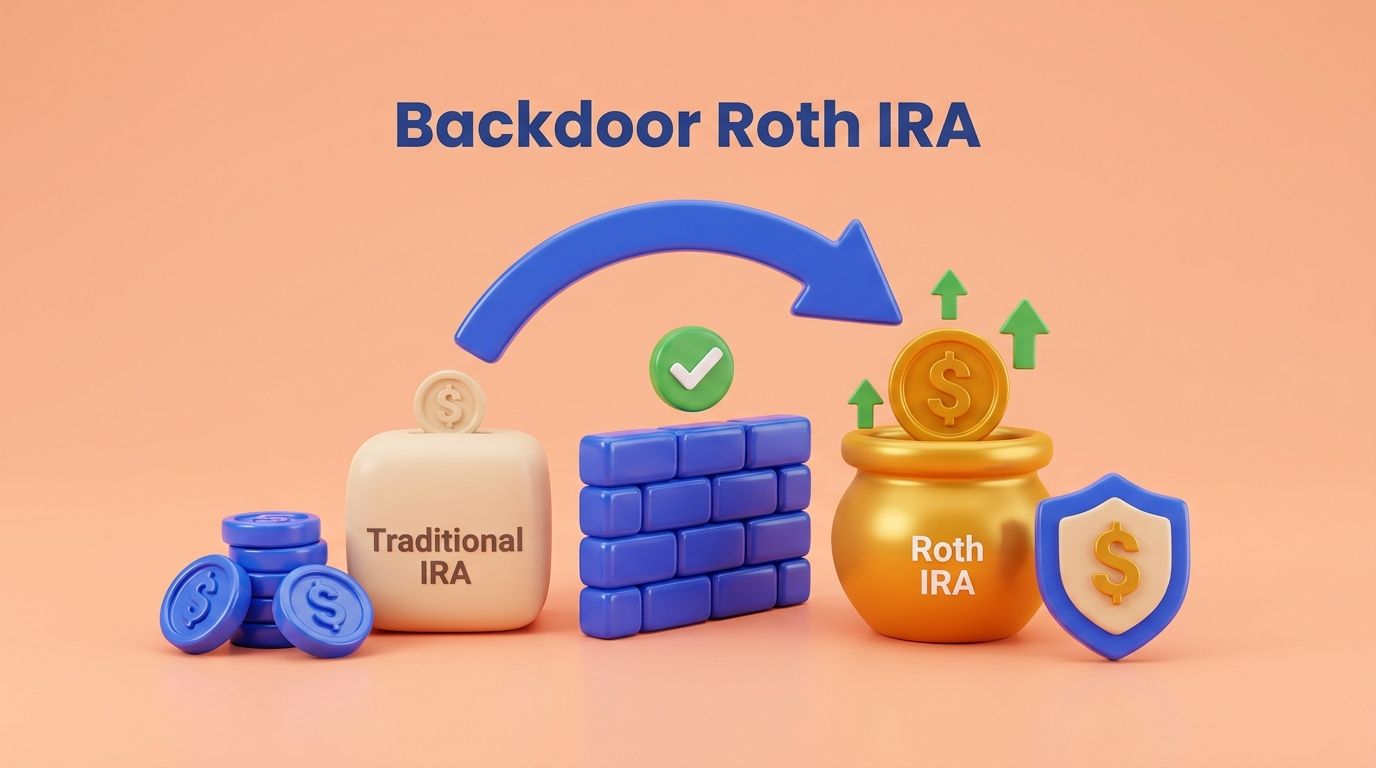
A 401k is powerful, but it is not the only retirement account out there. Many savers use a 401k for the employer match and then open an IRA for more investment choice, and our guide to set up a Roth IRA walks through the paperwork side of that second account.

Many beginners open their first IRA at Robinhood because the app is simple and there are no commissions on stocks and ETFs. The Robinhood IRA breakdown covers the contribution match and rollover process if you want to move an old 401k balance over. Using both accounts can give you flexibility now and more options in retirement.

Best for: All-in-one investing across stocks, options, futures, and crypto

Robinhood

Robinhood
5Firstcard rating

Robinhood is a trading platform that brings stocks, ETFs, options, futures, prediction markets, crypto, and retirement accounts together in one app.

Standout feature

One platform for stocks, ETFs, options, futures, prediction markets, and crypto

Fees

$0 commission on stocks, ETFs, and options.

Pros

Zero-commission trading on stocks, ETFs, and options

Cons

Best perks (high APY, lower margin rates) require Gold subscription ($5/month)

This article is for general educational purposes and is not tax or investment advice. Speak with a qualified financial professional about your specific situation.

Frequently Asked Questions

How much should I contribute to my 401k?

At a minimum, contribute enough to capture your full employer match, because that is free money. A common longer-term target is 10% to 15% of your gross income across all retirement accounts. Start where you can, then raise the percentage with each pay increase.

Can I lose money in my 401k?

Yes, the value of your 401k can drop in the short term because the money is invested in the market. Over multi-decade periods, broadly diversified portfolios have historically recovered and grown, but past performance does not guarantee future results.

What happens to my 401k if I quit my job?

Your 401k stays yours. You can leave it in the former employer's plan, roll it into your new employer's 401k, or roll it into an IRA. Cashing it out usually triggers taxes and a 10% early withdrawal penalty if you are under 59 and a half.

Is a 401k better than a Roth IRA?

They serve different purposes, and many people benefit from using both. A 401k typically has higher contribution limits and an employer match, while a Roth IRA gives you more control over investments and tax-free qualified withdrawals.


Firstcard Educational Content Team

Firstcard Educational Content Team - May 22, 2026

Credit building
for all

Build credit early, earn cashback, grow your savings all in one place.

Credit building for all