
A foreign transaction fee is a 1–3% surcharge most U.S. credit cards add to any purchase processed outside the United States. On a $3,000 European vacation, that 3% means $90 in pure fee, on top of the credit card APR you may already owe. A no foreign transaction fee credit card waives that surcharge — and once you start traveling internationally, the absence of the fee is one of the highest-leverage ways to save money on plastic. This guide explains how foreign transaction fees work, which categories of card waive them, and how to pick the right one in 2026.
How a foreign transaction fee actually works
When you swipe a U.S. credit card at a merchant outside the United States — say, a café in Paris — the transaction goes through a chain of currency conversion and network processing.
- The merchant in France charges €10.
- The card network (Visa, Mastercard, Amex, Discover) converts €10 to USD using its wholesale exchange rate, plus a small network fee (about 1%).
- Your card issuer then adds its own foreign transaction fee, typically 1–3% of the converted amount.
- The total appears on your statement.
The issuer's foreign transaction fee is the part that varies. Visa and Mastercard charge networks roughly 1% to convert the currency, and that 1% gets passed to you regardless of your card. The issuer's added fee on top is what you can avoid by choosing the right card.
In 2026, the fee landscape has split into three tiers:
- Cards with a 3% foreign transaction fee — most basic Visa and Mastercard products from major U.S. banks.
- Cards with a 1% foreign transaction fee — some store cards and a few legacy products.
- Cards with NO foreign transaction fee — most travel rewards cards, premium cards, and many credit-builder cards.
The difference between 0% and 3% on the same purchase is exactly the fee — the rest of the math (network exchange rate, conversion fee) is identical.
Which cards waive the foreign transaction fee
Four categories of card commonly skip the fee:
1. Travel rewards cards
The Chase Sapphire family, Capital One Venture, American Express Platinum, Citi Premier, Bank of America Travel Rewards, and Capital One Quicksilver all waive foreign transaction fees as a baseline feature. The trade-off is usually an annual fee of $0–$695 and rewards earnings tilted toward travel.
2. Premium cards across categories
Most cards with annual fees over $95 waive foreign transaction fees regardless of whether they emphasize travel — it has become a standard premium feature.
3. Some credit unions
Many credit unions waive the fee on standard checking-linked cards. The credit-union model emphasizes member benefits over fee revenue, and the foreign transaction fee is a common waiver.
4. Credit-builder and secured cards (sometimes)
This is less consistent, but several modern credit-builder products waive the foreign transaction fee as part of their no-fee positioning. Always check the specific card's pricing schedule (the Schumer Box) before assuming. The Self Visa® Credit Card is a strong example: it runs on the Visa network (so it works anywhere Visa is accepted abroad), reports to all three bureaus, and is built around a no-surprise fee structure — a good fit if you want to build credit before you graduate to a premium travel card. Our Self Credit Builder Card review breaks down the full cost picture.

If you'd rather build credit on a card with no annual fee at all, the Current Build Card is another app-issued option worth a look. It charges $0 annual fee, requires no security deposit and no credit check, and reports to Experian, TransUnion, and Equifax — and because it's a Visa, it's accepted internationally without the issuer surcharge that legacy bank cards tack on. For travelers rebuilding credit, that combination is hard to beat. See our Current Build Card review for the details.
Current Build Card
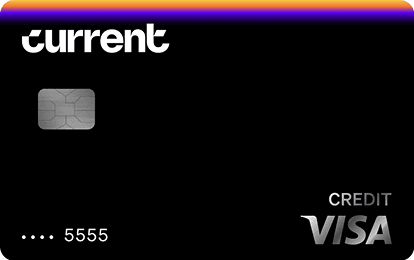
Current Build Card
$0 annual fee. No minimum deposit required. No credit check required. 1 point per dollar on eligible categories. Reports to Experian, TransUnion, Equifax.
Fee
$0
APR
0%
Minimum Deposit Amount
$0
Credit Check
No
Cashback
1 point/dollar on eligible categories (with qualifying payroll deposit)
Benefit
No credit check, no deposit minimum
How to actually pick one
Three questions:
1. How often do you travel internationally? If the answer is once every few years, a generic no-FTX card with no annual fee is plenty. If you travel several times a year, a travel rewards card with miles or points and zero FTX makes sense even with a $95+ annual fee.
2. What is your credit profile? If your FICO is in the 700s, you can qualify for the best travel rewards cards. If your score is below 670, look at credit-builder cards that happen to waive FTX, build credit for 6–18 months, and graduate up. Before you apply for any travel card, it pays to know exactly where your score sits — Creditship is a free AI-powered credit monitor that tracks all three bureaus and tells you which actions move your score, so you don't waste a hard inquiry applying for a premium no-FTX card you're not yet approval-ready for.
Creditship

Creditship
Get free credit monitoring and concrete advice how to improve your credit from Creditship AI.
Standout feature
AI Credit Coach. AI analyzes your credit report in depth and gives you tailored, actionable steps to raise your score.
Fees
Free
Pros
Free credit report access plus monitoring and alerts
Cons
No credit repair feature
3. What is your spending pattern abroad? A general-purpose card with 1–2x rewards across all categories beats a card with 3x dining rewards if you mostly stay in hotels and shop at duty-free.
What to bring on a trip
For international travel, the optimal stack is:
- A primary travel rewards card with no FTX, used for most purchases.
- A backup card from a different network in case the primary is declined.
- A small amount of local currency in cash for taxis, tips, and merchants who do not take cards.
- A debit card with no foreign ATM fees for cash withdrawals at local ATMs.
Never rely on a single card while traveling — fraud-detection systems sometimes flag international transactions and freeze the card. A backup keeps you moving.
What to NOT do abroad
Three avoidable mistakes:
Choosing dynamic currency conversion (DCC) at the point of sale. When the terminal asks if you want to be charged in USD or the local currency, ALWAYS pick the local currency. DCC "helpfully" converts the price to USD using a worse exchange rate plus an added fee — worse than your card's no-FTX conversion. The savings are real and consistent.
Using a U.S. ATM card abroad without a fee-free arrangement. Foreign ATM withdrawals on a typical U.S. debit card carry a $5+ fee plus 1–3% conversion. A travel-friendly checking account or a card from a global network avoids this.
Forgetting to notify your bank you are traveling. Major issuers used to require travel notifications; modern fraud detection has reduced the need, but a heads-up still helps for less-traveled destinations.
Frequently Asked Questions
How much is a typical foreign transaction fee?
Most U.S. credit cards charge a 3% foreign transaction fee on purchases processed outside the United States. Some cards charge 1%, and travel rewards or premium cards typically charge 0%. The fee is calculated on the converted USD amount of each transaction.
Are foreign transaction fees the same as currency conversion fees?
They overlap but are not identical. The card network (Visa, Mastercard, Amex, Discover) handles currency conversion at a wholesale rate and adds about 1% network fee. The issuer's foreign transaction fee is separate and added on top. A "no foreign transaction fee" card waives the issuer's fee but still pays the network's conversion cost.
Do all credit cards charge a foreign transaction fee?
No. Most travel rewards cards, premium cards, and many credit-builder and credit-union cards waive the fee. Always check the card's pricing disclosure (Schumer Box) before assuming. The fee is one of the easier benefits to verify when comparing cards.
Can I avoid foreign transaction fees by paying in dollars abroad?
No — paying in dollars (called Dynamic Currency Conversion or DCC) is almost always WORSE than paying in the local currency. DCC uses a less-favorable exchange rate plus an added fee, even on no-FTX cards. Always pick the local currency at the terminal and let your card's network handle the conversion.
Related Reading




