
Credit utilization ratio is one of the most powerful levers in personal credit, and it is also one of the most misunderstood. The number itself is dead simple: take your total credit card balance, divide by your total credit limit, and the result is your utilization ratio expressed as a percentage. The complication is that this single ratio can swing a FICO score by 50 to 100 points in either direction, often within a single statement cycle. This guide explains what credit utilization is, how the major scoring models actually weight it, and the proven tactics for lowering it quickly. The same ratio is sometimes called your debt-to-credit ratio when lenders are looking at it from the underwriting side rather than the score side our companion explainer on debt to credit ratio: what it is and why it matters walks through how lenders read the same number when they evaluate a new application.
The plain-English definition
Credit utilization ratio = (Reported Balance ÷ Credit Limit) × 100. If you have a credit card with a $5,000 limit and the issuer reports a $1,500 balance to the credit bureaus, your utilization on that card is 30%. If you have three cards reporting a combined $4,500 balance against a combined $15,000 in limits, your aggregate utilization is also 30%.
The ratio is calculated only for revolving accounts credit cards and lines of credit. Installment loans (auto, mortgage, student, personal, and credit-builder loans) are tracked separately under credit mix, a different scoring factor that does not directly affect the utilization ratio.
Utilization is the second-largest input into a FICO score, accounting for roughly 30% of the score after on-time payment history (35%). It is the largest variable factor in the short term, because payment history takes years to repair while utilization can be moved in a single statement cycle.
Per-card utilization vs. aggregate utilization
The scoring models look at both your aggregate utilization (total balance ÷ total limit across all cards) and your per-card utilization on each individual account. A maxed-out single card can hurt your score even if your overall utilization is moderate. Concrete example: if you have two cards with $5,000 limits each and you carry a $4,800 balance on one card and $0 on the other, your aggregate utilization is only 48% but the FICO model sees one card at 96% utilization and penalizes that.
The practical rule: spread balances across cards rather than concentrating them. If you have to carry a balance, splitting $4,000 across four cards at $1,000 each looks better to the scoring model than $4,000 on one card.
The 30% "rule" — truth and myth
You will see "keep your utilization under 30%" repeated in every credit-score article on the internet. The rule is not exactly wrong, but it understates the science. FICO and VantageScore both penalize utilization on a continuous curve, not a step function:
- Under 10% utilization: optimal, full credit toward the score.
- 10–29% utilization: still strong, minor downward pressure.
- 30–49% utilization: noticeable score drag, the original "30% rule" threshold.
- 50–74% utilization: significant penalty.
- 75–100% utilization: severe penalty, especially close to maxed out.
- Over 100% (over the limit): worst tier, plus often triggers a fee.
For people pushing for a high score say, qualifying for a mortgage the practical target is single-digit utilization on every reported statement. People in the highest FICO band tend to report 1–7% utilization, not 25–29%. Our how to improve your credit score guide walks through the full playbook beyond utilization.
Watching your utilization in real time
The scoring models reward people who keep utilization low every reporting cycle, which means you need visibility into what each card is actually reporting before the statement closes. Creditship is a free AI credit monitor that pulls all three bureaus and flags the specific actions moving your score, so a sudden utilization spike on one card shows up on your dashboard instead of in a surprise score drop six weeks later.
Creditship

Creditship
Get free credit monitoring and concrete advice how to improve your credit from Creditship AI.
Standout feature
AI Credit Coach. AI analyzes your credit report in depth and gives you tailored, actionable steps to raise your score.
Fees
Free
Pros
Free credit report access plus monitoring and alerts
Cons
No credit repair feature
How and when utilization gets reported
The trick to managing utilization is timing. Credit card issuers report your balance to the three credit bureaus on a regular cadence usually once per month, on or near the statement closing date, not the payment due date. Whatever balance is on the card the day the statement closes is what the bureau records as your utilization for that month.
This means paying the balance in full on the due date is great for avoiding interest, but it does not reduce reported utilization, because the statement already closed weeks earlier. To minimize reported utilization, the move is to pay before the statement closing date.
Most issuers list the statement closing date in the account dashboard. Some also let you make multiple payments per cycle. If you regularly run high balances, paying the card down a few days before the statement closes can drop reported utilization by 50 percentage points or more.
Five fast ways to lower your credit utilization
When utilization is hurting your score, several moves can ratchet it down within one to two reporting cycles:
- Pay down the balance, ideally before the statement closing date. This is the most direct lever every dollar paid down before the statement closes drops reported utilization.
- Request a credit limit increase on existing cards. Most issuers let you ask through the app or by phone with a soft credit pull. Same balance ÷ higher limit = lower utilization.
- Open a new credit-builder card or line of credit to add to your total available credit. Tools like the Self Visa® Credit Card or the Current Build Card report monthly to all three bureaus and add new available credit, lowering aggregate utilization. Note: opening a new card temporarily lowers your average account age, which has its own small score impact (see our note on credit history length), so weigh the trade-off.
- Use a credit-builder loan to diversify your credit mix. Installment loans like Self's Credit Builder Account or Magnum by CreditStrong do not directly affect utilization, but they can offset some of the score pressure from high revolving balances.
- Make a mid-cycle payment to lower the balance before the statement closes. Setting a calendar reminder for two days before the statement closing date is one of the cheapest, fastest credit-score improvements available. For more tactics, see our bad-credit credit card guide for cards that report monthly.
Adding a no-deposit revolving tradeline
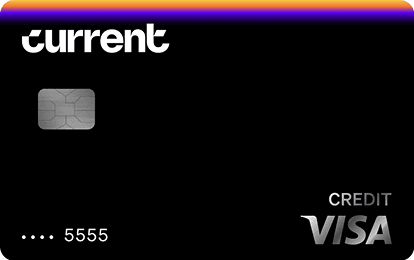
If a security deposit feels out of reach right now, Current Build Card launches with a $0 minimum deposit and no hard credit pull at signup, reporting to all three bureaus every month. Adding a fresh revolving line directly expands the denominator in your utilization ratio, which is often the fastest way to drop a number that's stuck in the 50%+ band.
Current Build Card
Current Build Card
$0 annual fee. No minimum deposit required. No credit check required. 1 point per dollar on eligible categories. Reports to Experian, TransUnion, Equifax.
Fee
$0
APR
0%
Minimum Deposit Amount
$0
Credit Check
No
Cashback
1 point/dollar on eligible categories (with qualifying payroll deposit)
Benefit
No credit check, no deposit minimum
Common utilization mistakes
A few traps catch people off guard.
Closing an old credit card removes its limit from the aggregate denominator and can spike utilization overnight. If a card has no annual fee, keep it open and use it for one small recurring charge per year to keep it active. (Closing also dings your average account age, the third factor working against you.)
Paying off a card and asking for the limit to be reduced voluntarily lowers your available credit. Some issuers do this automatically on inactive cards watch for the notification and call to keep your old limit if you can.
Mistaking debit cards or charge cards for revolving credit. Debit transactions never affect utilization. Charge cards (like American Express's pay-in-full cards) are usually excluded from the utilization calculation by FICO, though some VantageScore versions include them check your specific scoring report.
Cleaning up errors that fake-inflate your utilization
Sometimes a high utilization reading is the symptom of a reporting error rather than real debt: a closed account still showing a balance, a duplicate tradeline, or a paid-off card that never updated. Dovly is a free AI credit engine that disputes inaccuracies on your behalf across all three bureaus, with members reporting an average 34-point score lift once the errors come off.


Frequently Asked Questions
Does paying off my credit card immediately raise my credit score?
It raises your score on the next reporting cycle, not instantly. Your card issuer reports your balance to the bureaus once a month, usually on the statement closing date. If you pay off the balance before the statement closes, the lower balance is what gets reported and your score adjusts when the bureaus refresh. Most people see the change within 30 to 45 days.
Can credit utilization hurt my score even if I always pay in full?
Yes. If your statement closes with a high balance, that balance is what gets reported even if you pay it off in full a week later. To keep reported utilization low, pay the card down before the statement closing date, not the due date.
What is the ideal credit utilization ratio?
For maximum score impact, single-digit utilization (under 10%) is the target. People in the highest FICO band typically report 1–7%. Going all the way to 0% is a slight under-optimization the scoring models prefer to see you using credit responsibly, not avoiding it entirely.
Does credit utilization apply to my mortgage or car loan?
No. Utilization is calculated only for revolving accounts credit cards and lines of credit. Mortgages, auto loans, student loans, personal loans, and credit-builder loans are installment debt and are tracked under different scoring factors. Their balance-to-original-loan ratio matters for some VantageScore calculations but does not feed into the standard utilization ratio.
Related Reading
- How Credit Scores Are Calculated — where the 30% utilization weight fits inside the full FICO formula.
- Credit Mix Impact on Credit Score — why an installment loan can help offset high revolving utilization.
- Credit History Length Impact — the third factor that closing an old card can hurt.
- How to Improve Your Credit Score — the broader playbook beyond utilization.
- Best Credit Cards for Bad Credit in 2026 — cards that report monthly to all three bureaus, useful for adding credit-line capacity.




