Firstcard
Get Started
Menu

What Is a Roth IRA? Beginner's Guide to Tax-Free Retirement

May 23, 2026

About 60% of Americans say they are behind on retirement savings. A Roth IRA is one of the most powerful tools available for catching up, or getting ahead, because your money can grow completely tax-free.

But what exactly is a Roth IRA? How does it differ from a Traditional IRA? And who qualifies? This guide answers all of that in plain language.

Investing involves risk, including the possible loss of principal. This article is for educational purposes only and is not financial advice.

What Is a Roth IRA?

A Roth IRA (Individual Retirement Account) is a special savings account you fund with after-tax dollars. Because you already paid tax on the money going in, all growth inside the account is tax-free, and qualified withdrawals in retirement are also tax-free.

The IRS sets the rules: contribution limits, income eligibility, and when you can take money out without penalty.

Roth IRA vs. Traditional IRA

The biggest difference comes down to when you pay taxes.

FeatureRoth IRATraditional IRA
ContributionsAfter-taxPre-tax (often deductible)
GrowthTax-freeTax-deferred
Withdrawals in retirementTax-freeTaxed as ordinary income
Required Minimum DistributionsNoneStarting at age 73
Income limitsYesNo (for contributions)

If you expect to be in a higher tax bracket in retirement than you are today, a Roth IRA often makes more sense. If you expect a lower bracket, a Traditional IRA may win out. For a side-by-side comparison, see our Roth vs Traditional IRA guide.

2026 Contribution Limits

For 2026, you can contribute up to $7,000 per year to a Roth IRA. If you are age 50 or older, you get a catch-up contribution of an extra $1,000, bringing the total to $8,000.

These limits apply across all your IRAs combined. If you also have a Traditional IRA, your total contributions to both cannot exceed $7,000 (or $8,000 with catch-up). For the full list of rules covering limits, phase-outs, and backdoor strategies, see Roth IRA contribution rules 2026.

Income Phase-Out Ranges

Not everyone qualifies for a full Roth IRA contribution. The IRS reduces how much you can contribute once your income passes certain thresholds.

For 2026:

  • Single filers: Phase-out begins at $150,000, ends at $165,000
  • Married filing jointly: Phase-out begins at $236,000, ends at $246,000

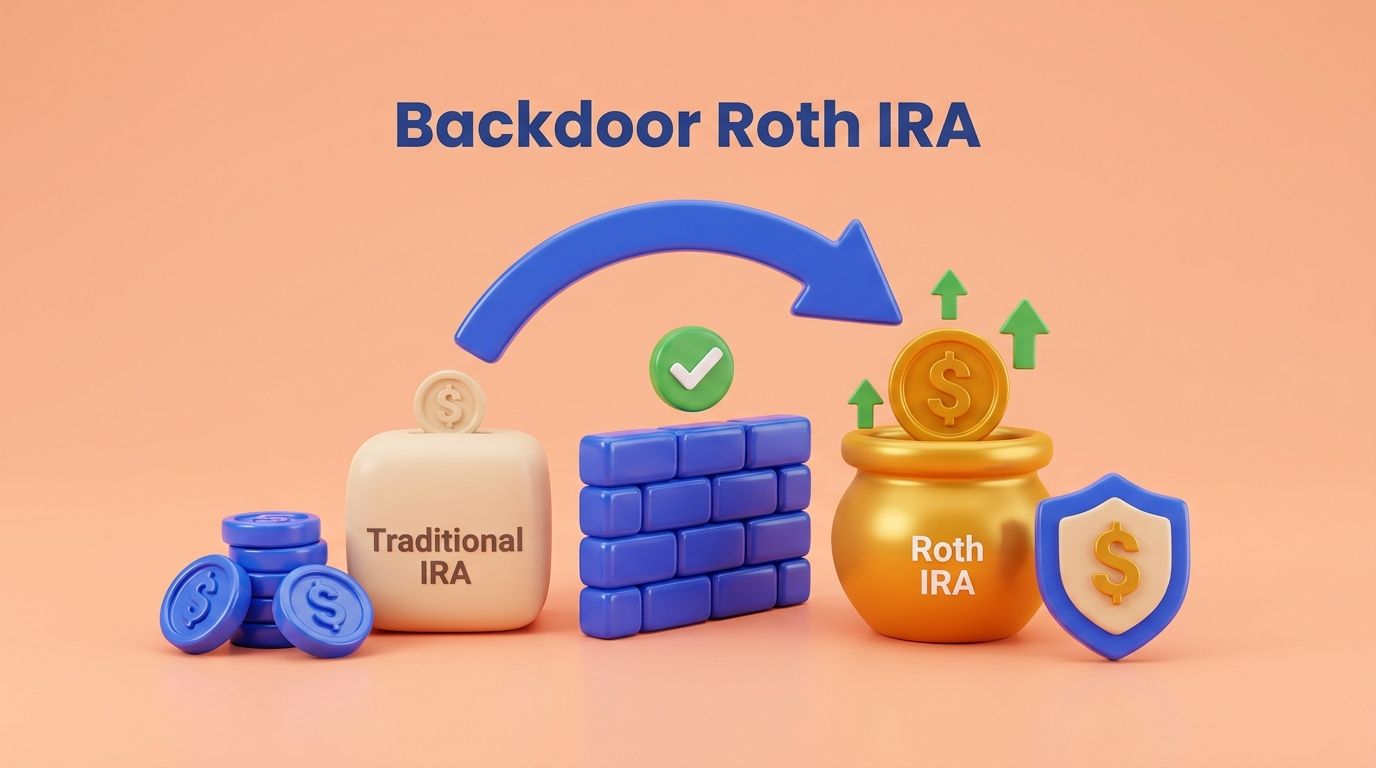
If your income is above the top of the range, you cannot contribute directly to a Roth IRA. You may still be able to use a strategy called a backdoor Roth, which involves making a nondeductible Traditional IRA contribution and then converting it. Consult a tax advisor before attempting this.

How Roth IRA Withdrawals Work

The flexibility of a Roth IRA is one of its most underrated features.

Your contributions (not earnings) can be withdrawn any time, tax-free and penalty-free. You already paid tax on that money.

Your earnings can be withdrawn tax-free and penalty-free once you meet two conditions:

  1. You are at least 59½ years old.
  2. Your account has been open for at least five years (the five-year rule).

Early withdrawals of earnings may trigger a 10% penalty plus ordinary income tax, with some exceptions for first-home purchases, disability, and other situations.

How to Open a Roth IRA

Opening a Roth IRA takes about 15 minutes online. You will need:

  • A Social Security number
  • A bank account to fund the IRA
  • Basic personal information

Once open, you choose your investments. Common choices include index funds, ETFs, and individual stocks, depending on the platform. For a step-by-step walkthrough, see our guide on how to set up a Roth IRA.

Robinhood offers a Roth IRA through Robinhood Retirement with no account minimums and a 1% match on eligible contributions (terms apply). It is a low-friction option for beginners who want to start investing for retirement.

Best for: All-in-one investing across stocks, options, futures, and crypto

Robinhood

Robinhood
5Firstcard rating

Robinhood is a trading platform that brings stocks, ETFs, options, futures, prediction markets, crypto, and retirement accounts together in one app.

Standout feature

One platform for stocks, ETFs, options, futures, prediction markets, and crypto

Fees

$0 commission on stocks, ETFs, and options.

Pros

Zero-commission trading on stocks, ETFs, and options

Cons

Best perks (high APY, lower margin rates) require Gold subscription ($5/month)

Who Should Open a Roth IRA?

A Roth IRA tends to work well for:

  • Young earners who are in a lower tax bracket now and expect higher income later
  • People who want flexibility, since contributions can be accessed without penalty
  • Those who want no required minimum distributions in retirement
  • High earners who are still within the income limits

If you are in a high tax bracket today and expect a lower one in retirement, a Traditional IRA or 401(k) may save you more in taxes now.

Common Questions

Many people wonder if they can have both a Roth IRA and a 401(k). Yes, you can. The contribution limits are separate. Maxing both is one of the most effective retirement strategies available. If you're wondering whether to use Robinhood specifically for your IRA, see our guide on should I open a Roth IRA with Robinhood for a clear breakdown.

You can also convert a Traditional IRA to a Roth IRA (called a Roth conversion). You pay taxes on the converted amount in the year of conversion. This can make sense if you have a low-income year or if you believe tax rates will rise in the future. Again, a tax advisor can help you decide.

Frequently Asked Questions

What is the difference between a Roth IRA and a 401(k)?

A 401(k) is an employer-sponsored plan with higher contribution limits ($23,500 in 2026 for most workers). A Roth IRA is an individual account you open on your own, with lower limits but more investment choices and no required minimum distributions. Many people use both at the same time.

Can I lose money in a Roth IRA?

Yes. A Roth IRA is an account, not an investment. The value of your account depends on what you invest in. Stocks, ETFs, and funds can go up or down. The tax benefit is on the growth, but growth is not guaranteed.

What happens to my Roth IRA if I exceed the income limit?

If you contribute to a Roth IRA but your income turns out to be over the limit, you may owe a 6% excise tax on the excess contribution for each year it stays in the account. You can fix this by withdrawing the excess before your tax filing deadline. A tax professional can walk you through the correction process.

Is a Roth IRA better than a savings account for retirement?

For most people, yes, for long-term retirement savings. A savings account offers FDIC insurance but very low interest. A Roth IRA offers tax-free growth over decades, which can be far more valuable for retirement. That said, a savings account is better for short-term goals or emergency funds because you can access it freely without any IRS rules.


Firstcard Educational Content Team

Firstcard Educational Content Team - May 23, 2026

Credit building
for all

Build credit early, earn cashback, grow your savings all in one place.

Credit building for all