Firstcard
Get Started
Menu

The Best Way to Invest Money: 5 Approaches Worth Knowing

May 22, 2026

Asking about the best way to invest money is a little like asking for the best meal. The right answer depends on your taste, your budget, and what you are in the mood for. Still, a handful of investing approaches tend to come up again and again because they work for a wide range of people. Below are five worth knowing as you build your plan.

1. Index Funds for Broad, Low-Cost Diversification

Index funds are mutual funds or ETFs that aim to match the performance of a market benchmark like the S&P 500. Instead of trying to pick winning stocks, the fund holds the same companies as the index. A low-cost S&P 500 ETF is one of the most common starting points.

This approach has become popular because of its low fees and historical track record. Expense ratios on many popular funds are well under 0.10 percent, which leaves more of your return in your account. For new investors looking for the best way to invest money without daily attention, index funds are often near the top of the list.

2. Retirement Accounts for Tax Advantages

A tax-advantaged retirement account is one of the most efficient places to invest money for long-term goals. A 401(k) through your employer often comes with a matching contribution, which is essentially free money you should not leave on the table.

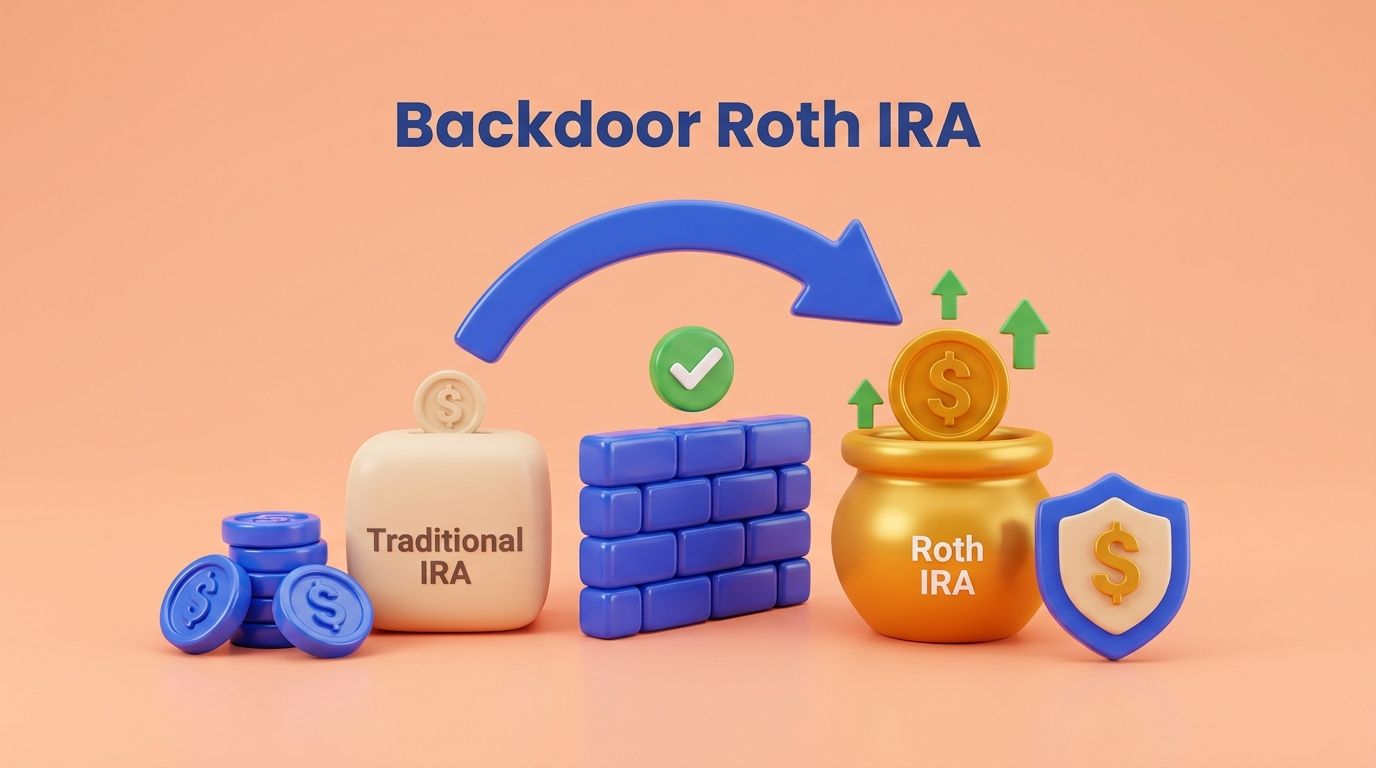
Individual retirement accounts also offer benefits. A traditional IRA can lower your taxable income today, while a Roth IRA grows tax-free and offers tax-free qualified withdrawals later. If you do not have one open yet, here is how to set up a Roth IRA. Each has contribution limits and rules, so it is worth checking the current IRS guidance or asking a tax professional which structure fits your income and goals.

3. Broker-Managed Portfolios for Hands-Off Investing

If you want to invest but do not want to choose individual funds, a managed portfolio can help. Robo-advisors and managed accounts at major brokers will build a diversified mix for you, usually based on a short questionnaire about your goals and risk tolerance.

Services like Schwab Intelligent Portfolios, Fidelity Go, and Wealthfront fall in this category. Fees vary, with some robo-advisors charging between 0.25 and 0.50 percent annually. The trade-off is that you pay a small ongoing fee in exchange for automatic rebalancing and tax management. Whether the convenience is worth the cost depends on your preferences.

4. ETFs for Flexibility and Easy Trading

Exchange-traded funds, or ETFs, are similar to mutual funds but trade like stocks. You can buy or sell them throughout the trading day, and many have low expense ratios. ETFs cover everything from broad market exposure to specific sectors and themes.

Many investors build entire portfolios from a handful of ETFs. A common starter mix includes a US stock ETF like VTI, an international stock ETF like VXUS, and a bond ETF like BND. You can buy these through almost any modern broker. Robinhood supports commission-free ETF trading with no account minimum, and so do Fidelity, Schwab, and Vanguard. The Robinhood vs Fidelity comparison breaks down which platform might fit you better. ETFs are not risk-free, since they move with the markets they track.

Best for: All-in-one investing across stocks, options, futures, and crypto

Robinhood

Robinhood
5Firstcard rating

Robinhood is a trading platform that brings stocks, ETFs, options, futures, prediction markets, crypto, and retirement accounts together in one app.

Standout feature

One platform for stocks, ETFs, options, futures, prediction markets, and crypto

Fees

$0 commission on stocks, ETFs, and options.

Pros

Zero-commission trading on stocks, ETFs, and options

Cons

Best perks (high APY, lower margin rates) require Gold subscription ($5/month)

5. Dividend Stocks for Income Over Time

Dividend stocks are shares of companies that pay regular cash distributions to shareholders. Investors often use them to build a stream of passive income, especially in retirement or as a supplement to other earnings.

Well-known dividend payers include large companies in sectors like utilities, consumer staples, and finance. Some investors prefer dividend-focused ETFs to spread the risk across many companies. Dividends can be cut at any time, especially during economic downturns, so concentration in a single dividend stock carries real risk.

Matching the Best Way to Invest Money to Your Goals

The best way to invest money for a short-term goal like a house down payment looks very different from a long-term goal like retirement. Short-term money is often better left in high-yield savings or short-term Treasuries, where the value will not swing sharply. Keeping a separate emergency fund outside the market is another common rule.

Long-term money has more room to handle market ups and downs. That is where index funds, retirement accounts, ETFs, and dividend stocks tend to fit. Many investors blend several approaches, using retirement accounts for the bulk of their long-term savings and a taxable brokerage for goals in between.

What About Crypto, Real Estate, and Alternative Assets?

These options often come up in articles about investing, but they tend to suit specific situations. Real estate can offer income and appreciation, but it is illiquid and management-heavy. Cryptocurrencies are highly volatile, and many financial professionals suggest treating them as a small portion of a broader plan, if at all.

Alternative assets like private equity, commodities, and collectibles can play a role for some investors, but they usually require more capital, more research, or more time. Sticking with simpler core building blocks is often a reasonable starting point.

A Few Habits That Matter More Than Picks

Research suggests that the way you invest often matters more than what you invest in. Investing regularly through dollar-cost averaging, keeping fees low, and avoiding panic selling have all been linked to better long-term outcomes.

Matching contributions, automation, and tax-advantaged accounts can quietly add years of growth. Nothing in this article is personalized advice, so consider speaking with a licensed financial professional about your situation before making major changes.

Frequently Asked Questions

What is the best way to invest money for beginners?

Many professionals point new investors toward low-cost index funds inside a tax-advantaged account like a 401(k) or IRA. The approach is simple, diversified, and tends to perform well over long periods. Picking the best investment app can make automating that habit much easier.

How much money do I need to start investing?

With fractional shares and no-minimum accounts, you can often start with just a few dollars. Building a meaningful balance takes consistent contributions over time. Even small monthly amounts can grow significantly with compounding.

Is investing in stocks risky?

Yes, all investing carries some risk. Stocks can drop sharply during downturns, and even diversified funds can lose value in the short term. Spreading your money across different asset classes and keeping a long time horizon can help reduce some risks.

Should I use a financial advisor?

A licensed financial advisor can be helpful, especially for complex situations like inheritance, business ownership, or retirement planning. Robo-advisors offer a lower-cost option for straightforward needs. Choosing the right help depends on your goals, balance, and comfort managing your own money.


Firstcard Educational Content Team

Firstcard Educational Content Team - May 22, 2026

Credit building
for all

Build credit early, earn cashback, grow your savings all in one place.

Credit building for all