March 26, 2026
Credit Builder Card Monthly Payments: How They Work & Build Credit
Your monthly payment on a credit builder card isn't just moving money from your bank account to the card issuer.
It's a signal to three credit bureaus that you're responsible with credit. It's proof that you showed up and did what you said you would do. That's why payment history is 35% of your credit score.
But here's where people get confused: they don't understand how the payment system works, what actually gets reported, or how to avoid interest. That confusion costs them thousands of dollars and hundreds of credit score points over time.
How Monthly Billing Cycles Work on Credit Builder Cards
Every credit builder card operates on a monthly billing cycle. Here's exactly how it works.
Days 1 to 29 or 30 (your billing period): Every purchase you make gets added to your bill. If you spend $50 on groceries on day 5 and $20 on gas on day 18, those charges are sitting in your account.
The statement closing date: Let's say your statement closes on the 15th. On the 15th, the card issuer tallies up everything you spent that month and generates a statement. Your statement shows:
- Statement balance (what you owe for purchases made this period)
- Minimum payment due (smallest amount you can pay without penalty)
- Due date (usually 21 to 25 days after statement closes)
- Interest rate (APR, usually 18% to 36% on credit builder cards)
Days after statement closes to due date: You now have 21 to 25 days to pay. If you pay your statement balance in full by the due date, you owe zero interest. If you pay less, interest kicks in on the unpaid amount.
Example: Your statement closes on the 15th showing a $45 balance. Your due date is April 6th. If you pay $45 by April 6th, you're done. No interest. If you pay only $20, the remaining $25 starts accruing interest at your APR.
The key point: if you pay your statement balance in full every month, you never pay interest. That's the responsible way to use a credit builder card and also the fastest way to build credit.

Self Visa® Credit Card
Start the path to financial freedom.
Fee
$25 (Intro annual fee for new customers (first year): $0)
APR
27.49%
Minimum Deposit Amount
$100
Credit Check
No
Cashback
N/A
Benefit
High approval rates
What Gets Reported to the Credit Bureaus Each Month
Here's the critical part: not everything on your statement gets reported, and timing matters.
The three credit bureaus (Equifax, Experian, TransUnion) receive monthly reports from credit card issuers. Understanding the difference between your credit report vs credit score helps you know which metrics to focus on. The monthly report shows:
- Whether your payment was on time, late, or missing
- Your statement balance at the end of the billing cycle
- Your credit limit
- Your account status (open, closed, delinquent, etc.)
What they DON'T see: Individual purchases. They don't see what you bought or how many transactions you made. They only see the final balance at the end of the month.
This is important. If you spend $200 on a $200 card and then pay it off, the bureau sees you had a $200 balance at the end of the billing cycle. For that one month, you're at 100% credit utilization, and your score gets penalized. The fact that you paid it off is a separate report next month.
The report timing: Most card issuers report to the bureaus around the same time they close your statement. So on the 15th when your statement closes, that balance gets reported. Your payment is typically reported separately after you make it.
How Payment History Affects Your Credit Score
Payment history is 35% of your FICO score. Miss one payment and it costs you more points than anything else.
On-time payments: Every on-time payment is recorded. Bureaus are looking for a pattern. Six on-time payments start to convince them you're stable. Twelve on-time payments is compelling proof.
Late payments: A payment 30 days late appears on your report as "30+ days past due." These stay on your report for seven years, but they hurt most in your first two years.
The scoring impact:
- First 6 on-time payments: expect 10 to 30 point increases per month
- Months 7 to 12: expect 5 to 20 point increases per month
- After 12 months: expect slower increases (5 to 10 points per month) but compounding with other factors
One late payment can drop your score 50 to 150 points depending on your overall profile. That's why autopay is non-negotiable.
Related: Does a Credit Builder Card Really Help Your Credit Score?
Statement Balance vs Minimum Payment: What to Pay
This is where people sabotage themselves without realizing it. Let's be crystal clear.
Statement balance is the total amount you owe for purchases made during the billing cycle. If you spent $50, your statement balance is $50. This is what you should pay.
Minimum payment is the smallest amount you can legally pay without being considered delinquent. Most issuers calculate this as 1% to 3% of your statement balance plus interest and fees.
The trap: If you pay only the minimum, you're barely paying interest plus a tiny chunk of principal.
Example: You have a $200 limit card and spend $100. Your minimum payment is $5. If you pay only minimums:
- Month 1: You pay $5. Balance is now $96 plus $1.92 in interest. You're still underwater.
- Month 12: You've paid $60 in minimum payments but still carry most of your original balance. You've spent $40+ in interest on a $100 charge.
The right way: Pay your statement balance in full every month. Spend $100, pay $100. Zero interest. Your credit history shows on-time full payment. Bureaus reward you for this.
An important detail: Always pay the statement balance shown on your billing statement. Your "current balance" may include recent charges not yet on your statement.
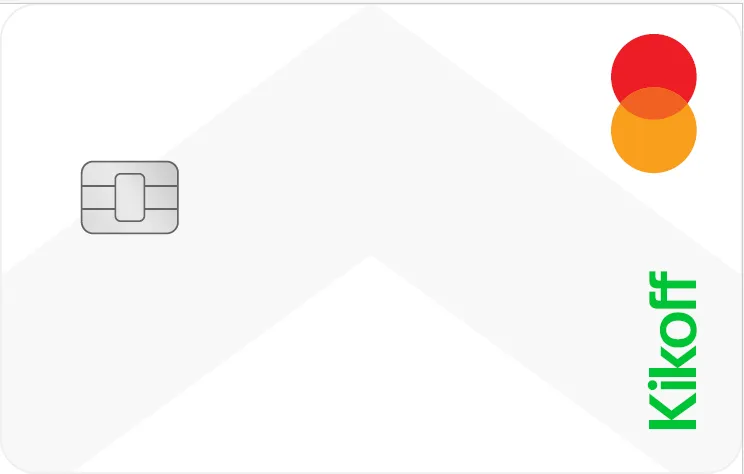
Kikoff Secured Credit Card
Kikoff Secured Credit Card works like a debit card & checking account and performs like a credit builder. Build credit with your everyday purchases.
APR
0%
Minimum Deposit Amount
$0
Credit Check
No
Cashback
Yes
Benefit
0% interest. No credit check.
Loan Amount
$750-$3,500
Term
12 months
Admin Fee
$0
Monthly Fee
$5/month, $20/mo, $35/mo
Average Score Increase
+86 pts on average in a year
How a Late Payment Can Hurt Your Progress
A late payment is when you don't pay by your due date. Even one missed payment can be reported to the bureaus.
30 days late: Your payment is reported as 30+ days past due. Your score drops 50 to 100 points. You also pay a late fee (usually $25 to $35). Your APR may jump to a penalty rate.
60 days late: Your score drops another 50 to 100 points. The account is delinquent.
90 days late: Your account may be charged off or sold to a collection agency. This stays on your report for seven years.
The timeline: Most issuers don't report you late until you're 30 days past due. But don't rely on this grace period. Pay on time.
Recovery: If you miss a payment, call your issuer immediately. Some issuers have programs for first-time late payers. The late mark stays for seven years, but if you're trying to recover, see how to remove late payments from your credit report.
Setting Up Autopay for Consistent Credit Building
Autopay is the most important thing you can do. Set it up correctly and you'll build credit on schedule.
Step 1: Log into your credit builder card account and navigate to autopay settings.
Step 2: Select "statement balance" or "pay in full" as your autopay amount. Do NOT select "minimum payment."
Step 3: Choose your payment date a few days after your statement closes. If your statement closes on the 15th, set autopay for the 18th.
Step 4: Link your checking account. Use your primary account where you keep the money to cover autopay.
Step 5: Verify autopay is active and confirm the first charge posts correctly.
Step 6: Set a phone reminder to check your account balance once a month before autopay runs. This catches problems like a changed bank account before a missed payment occurs.
Autopay set up correctly is a fire-and-forget system that builds credit every single month with zero effort. Pair it with using your credit builder card responsibly to maximize your gains. Creditship.ai offers free credit monitoring so you can track when your payments get reported and watch your progress.
Once you've set up autopay, you're 90% done. The remaining 10% is just not making costly mistakes for the next two years. Keep using your credit builder card, keep paying on time, and watch your credit grow.

OpenSky
Maximize your credit building with more spending power from Opensky Plus. No hidden fees, no gotchas. Just a clear path forward.
Minimum Deposit Amount
$0
Credit Check
No
Benefit
No hidden fees
FAQ
What's the difference between my statement balance and current balance?
Statement balance is the total you owe for charges made during your billing cycle. It's final and shown on your statement. Current balance is everything you owe right now, including charges made after your statement closed. Always pay your statement balance.
Do I have to use the card every month to build credit?
Not every month, but regularly is better. A month with no activity still shows in your payment history ($0 balance, $0 due). It doesn't hurt, but it doesn't help as much either. Use the card at least once or twice a month.
Will paying off my balance early hurt my credit?
No. Paying early is fine. You don't need to carry a balance to build credit. Pay in full, avoid interest.
What if I can't pay my full statement balance this month?
Pay as much as you can. You'll pay interest on the unpaid balance. If you can't afford your charges consistently, reduce your spending on the card next month.
How long do monthly payments stay on my credit report?
Your payment history stays on your report for seven years. But the impact gets weaker over time. Current behavior matters more than distant past behavior. Consistent, recent on-time payments are powerful for score improvement.

Firstcard Educational Content Team - March 26, 2026