
Picture this. You pay every bill on time, never miss a due date, and your score still sits stuck at 640. The culprit is usually one number most people never think about: credit utilization.
Credit utilization is the percentage of your available credit you are using at any moment. It makes up 30% of your FICO score, second only to payment history. The good news is that unlike payment history, you can change your utilization this week and see results next month.
Let's break down exactly what credit utilization is, why it matters so much, and the simple moves you can make to lower it fast.
What Credit Utilization Actually Means
Credit utilization is a ratio. Take the total balance across your revolving accounts and divide it by your total credit limits. Multiply by 100 and you have your utilization percentage.
Here is a simple example. If you have one credit card with a $1,000 limit and a $300 balance, your utilization is 30%. If you have two cards, one with a $1,000 limit and one with a $2,000 limit, and your balances are $300 and $200, your total utilization is $500 divided by $3,000, or about 17%.
Credit scoring models look at this number two ways. They calculate your overall utilization across all revolving accounts and your per-card utilization for each individual card. Both matter. For a deeper look at how this ratio works, see our guide on credit card utilization.
Why Credit Utilization Affects Your Score So Much
Lenders use utilization as a signal of financial stress. When you are using most of your available credit, scoring models assume you may be living beyond your means or relying too heavily on borrowed money.
Low utilization tells the opposite story. It shows you have credit available but choose not to max it out. That looks like discipline, and lenders reward discipline with higher scores.
Utilization is also one of the few credit factors that updates every month. Your card issuer reports your statement balance to the bureaus once per cycle. That means the number you carry on your statement closing date is the number the bureaus see.
Watching the number that actually moves your score
Because utilization resets every reporting cycle, your fastest feedback loop is a free monitor that catches the change as it happens. Creditship is an AI-powered credit monitor that tracks all three bureaus and tells you exactly which actions are moving your score, so you can see a utilization drop translate into a real point gain instead of guessing.
Creditship

Creditship
Get free credit monitoring and concrete advice how to improve your credit from Creditship AI.
Standout feature
AI Credit Coach. AI analyzes your credit report in depth and gives you tailored, actionable steps to raise your score.
Fees
Free
Pros
Free credit report access plus monitoring and alerts
Cons
No credit repair feature
The Ideal Credit Utilization Ratio
The old rule was to keep utilization under 30%. That is still a decent guideline, but scoring research shows the highest scores come from people who keep it much lower.
Under 10% is the real target if you want to maximize your score. People with credit scores above 800 typically run utilization between 1% and 7%. Zero utilization is not ideal either because scoring models want to see that you actually use credit, just responsibly.
A few benchmarks:
- 0% utilization: not ideal, may slow credit building
- 1% to 9%: excellent, the sweet spot
- 10% to 29%: good, still healthy
- 30% to 49%: fair, starts dragging your score
- 50% to 74%: poor, real score damage
- 75% to 100%: severe, can drop your score 50 points or more
Watch your per-card numbers too. If your overall utilization is 8% but one card is maxed out at 95%, that single card can still hurt your score. Learn more about why higher credit utilization decreases your credit score.
Keep in mind that different lenders pull different scoring models, so the utilization impact you see on your phone app may not match what an auto dealer or mortgage underwriter sees. Our explainer on the car dealership credit score vs your actual score walks through why dealer pulls often look 30 to 100 points different from your free score app.
How Utilization Gets Reported to Credit Bureaus
This is the part most people get wrong. Your card issuer does not report your daily balance. They report the balance on your statement closing date, which is different from your due date.
If your statement closes on the 15th, that is the balance the bureaus see, even if you pay the whole thing off on the 16th. So paying in full by the due date keeps you out of debt, but it does not guarantee low reported utilization.
The fix is to pay down your balance before the statement closes. Log into your account, check your statement closing date, and make a payment a few days before that date if your balance is climbing.
Fast Ways to Lower Your Credit Utilization
If you need to drop your utilization quickly, you have several options.
Make a mid-cycle payment. Pay your balance down a week or two before the statement closes. This is the single fastest way to lower reported utilization.
Ask for a credit limit increase. Most issuers let you request one online. A higher limit with the same balance instantly drops your ratio. Just make sure the issuer does a soft pull, not a hard inquiry.
Open a new credit line. Adding available credit can lower your overall ratio. A starter card like the Self Visa Credit Card can add available credit without requiring a strong history.

Spread spending across multiple cards. If one card is hitting 50% utilization while others sit at 5%, redistribute. Keep each card under 30% individually.
Pay twice a month. Splitting your payment into two cycles keeps the reported balance lower regardless of when the statement closes.
Stacking a no-deposit revolving line
If the security deposit on a secured card isn't realistic right now, Current Build Card launches with a $0 minimum deposit and no hard credit check at signup, reporting to all three bureaus every month. Stacking a second revolving tradeline grows your total available credit, which immediately drops aggregate utilization without you paying down a single dollar of balance.
Current Build Card
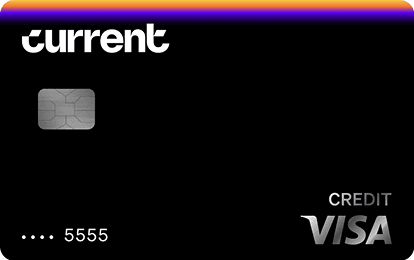
Current Build Card
$0 annual fee. No minimum deposit required. No credit check required. 1 point per dollar on eligible categories. Reports to Experian, TransUnion, Equifax.
Fee
$0
APR
0%
Minimum Deposit Amount
$0
Credit Check
No
Cashback
1 point/dollar on eligible categories (with qualifying payroll deposit)
Benefit
No credit check, no deposit minimum
Common Credit Utilization Mistakes
Many people sabotage their score without realizing it. Closing an old credit card is one of the biggest mistakes. When you close a card, you lose its available credit. Your overall utilization jumps even if your spending stays the same.
Maxing out a single card during a big purchase is another. Even if you pay it off before the due date, the reported balance can show 90%+ utilization for that card. Consider splitting the charge or paying it down before the statement closes.
Ignoring authorized user effects also trips people up. If you are an authorized user on a maxed-out card, that utilization can hurt your score. Ask the primary cardholder to pay it down or remove you if it is dragging you.
When utilization looks high because of a reporting error
Not every high-utilization reading is real debt. A closed card still showing a balance, a duplicate tradeline, or a paid-off card the bureau never updated can each inflate your ratio without you spending a dime. Dovly is a free AI credit engine that files disputes on your behalf across all three bureaus, with members reporting an average 34-point lift once the errors come off the report.

Tools That Help You Track Utilization
You do not need to do math every month. Most credit-building apps now track utilization automatically and alert you when it climbs.
Firstcard shows your utilization in real time and sends a reminder before your statement closes. Kikoff lets you see your utilization across cards. Free services like Credit Karma also display utilization, though they update less often.
If you are starting your credit journey, products like Kikoff Secured Credit Card or the Current Build Card help you build payment history and a low utilization ratio at the same time. Both report to all three bureaus.
When Low Utilization Stops Being Enough
Utilization is powerful, but it is one of five FICO factors. If your score is still stuck after months of low utilization, look at the others: payment history, credit age, credit mix, and new inquiries.
A single late payment can wipe out months of low utilization work. Older accounts boost your average age of credit, which is why closing old cards hurts twice. Having a mix of credit types, like a card plus an installment loan, also helps.
Think of utilization as the fastest lever, not the only lever. Combine it with on-time payments and a long account history and you have the foundation of a strong score.
Frequently Asked Questions
What is the best credit utilization ratio for a high credit score?
Keep your overall utilization between 1% and 9% if you want to maximize your FICO score. People with scores above 800 typically stay in this range. Zero utilization is not ideal because scoring models want to see active, responsible use.
Does credit utilization reset every month?
Yes. Credit utilization is recalculated each time your card issuer reports your statement balance to the bureaus, which happens monthly. That is why a high balance last month does not have to follow you. Pay it down and next month's report will reflect the lower number.
Can I lower my utilization without paying down debt?
You can. Requesting a credit limit increase or opening a new credit line adds available credit, which lowers your utilization ratio even if your balance stays the same. Just make sure any new application does not trigger a hard inquiry that could offset the gain.
Does utilization affect my credit score immediately?
Not instantly, but quickly. Your utilization updates each month when your card issuer reports your statement balance. Pay down a balance and you typically see the score change within 30 to 45 days.
Terms and conditions apply for all products mentioned. APRs and fees vary by creditworthiness.




