
P2P payments have replaced cash and checks for most Americans under 40. More than 80% of U.S. adults now use a peer-to-peer payment app at least once a month, according to a 2025 Federal Reserve report. Splitting dinner, paying rent, sending birthday money, it all happens with a tap.
But P2P payments come with their own rules, fees, and risks. If you have ever sent money to the wrong number or had a Venmo charge fail at the worst moment, you know how confusing the system can feel.
This guide breaks down how P2P payments actually work, the most popular apps, and what to do if something goes wrong.
What Are P2P Payments?
P2P stands for peer-to-peer. A P2P payment is a digital transfer of money directly from one person's bank account or wallet to another person's account, usually through a mobile app.
Unlike traditional bank transfers, which can take one to three business days, P2P payments are typically instant or near-instant. You don't need to know the other person's bank details. A phone number, email, or username is enough.
Popular P2P apps include Venmo, Cash App, Zelle, PayPal, Apple Cash, and Google Pay. Each handles transfers slightly differently behind the scenes.
How P2P Payments Work
Most P2P apps link to your debit card, bank account, or in some cases a credit card. When you send money, the app debits your funding source and credits the recipient.
The steps are usually:
- Open the app and enter the recipient's username, phone, or email.
- Type in the amount.
- Add a note (optional).
- Confirm with a PIN, face ID, or fingerprint.
- The money moves in seconds.
Behind the scenes, the app uses payment rails like the ACH network, debit card networks, or in the case of Zelle, the bank-owned RTP (real-time payments) network. Zelle is unique because it transfers funds bank-to-bank directly, with no holding wallet. The transfer typically shows up as one of your pending transactions for a few moments before clearing.
Most Popular P2P Payment Apps
Here is a quick rundown of the major U.S. P2P services as of 2026:
- Venmo: Free for basic transfers from a bank or debit card. 3% fee for credit card transfers. Owned by PayPal. Venmo also offers its own rewards card, and our Venmo Credit Card review covers whether it is worth carrying.
- Cash App: Free standard transfers. 1.5% fee for instant deposits to your bank. Includes a free Cash Card debit card.
- Zelle: Free, built into most U.S. bank apps. Transfers are bank-to-bank and usually arrive in minutes.
- PayPal: Free for friends and family from a bank. Fees apply for goods and services or credit card funding.
- Apple Cash: Free transfers between iPhone users via iMessage. Linked to your Apple ID.
Most people use two or three of these depending on who they need to pay.
P2P Payment Fees You Should Know
P2P payments are often advertised as free, but fees show up in specific cases:
- Sending money from a credit card (usually 3%)
- Instant transfers to your bank account (1% to 1.75%)
- Currency conversion for international payments
- Business transactions (PayPal and Venmo charge 1.9% to 3.5%)
- ATM withdrawals from a P2P debit card
Standard bank-to-bank transfers are almost always free, but they can take one to three days. Pay attention to which option you select when you cash out.
P2P Payments and Your Credit
P2P payments don't directly affect your credit score. Sending or receiving money does not show up on your credit report. However, there are a few indirect connections worth knowing.
If you fund a P2P payment with a credit card, that purchase counts toward your credit utilization. If you carry the balance, you pay interest just like any other purchase. Apps like Self Visa® Credit Card report to all three bureaus, so card spending through Venmo or PayPal still counts toward building credit.
Using a credit-building debit product like Current Build Card lets you fund P2P payments while still building credit history.
Current Build Card
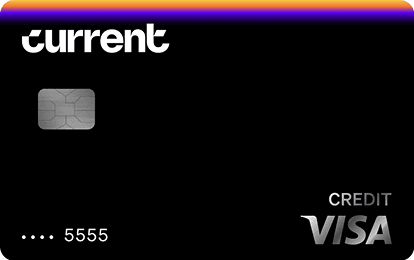
Current Build Card
$0 annual fee. No minimum deposit required. No credit check required. 1 point per dollar on eligible categories. Reports to Experian, TransUnion, Equifax.
Fee
$0
APR
0%
Minimum Deposit Amount
$0
Credit Check
No
Cashback
1 point/dollar on eligible categories (with qualifying payroll deposit)
Benefit
No credit check, no deposit minimum
Safety Tips for P2P Payments
P2P payments are convenient, but they are also a top target for scams. The FTC reported $210 million in losses from P2P payment scams in 2024 alone. Most apps treat completed transfers as final, so getting your money back can be difficult.
Protect yourself by:
- Only sending money to people you know personally
- Double-checking the recipient's username before hitting send
- Turning on two-factor authentication in the app
- Never paying someone you have not met for a product or service
- Watching out for fake emails or texts pretending to be from the app
If you get scammed, report it to the app immediately and file a complaint with the FTC at reportfraud.ftc.gov.
Tools like Monarch Money can help you spot unusual P2P activity across all your linked accounts. Brigit monitors spending and flags transactions that look off.
Brigit

Brigit
Need cash sooner than expected? Brigit is your go-to solution for instant cash. Access between $25–$500 on the free plan with no interest, no tips, and no hidden fees.
Standout feature
Trusted by over 10 million people
Fees
$8.99/mo or $15.99/mo
Pros
Get Cash in minutes, No Credit Score Needed
Cons
Monthly fee is needed
P2P Payments vs. Traditional Bank Transfers
The biggest difference is speed and ease. Traditional transfers like wire transfers and ACH require routing and account numbers. They can take days and often cost $15 to $45 per wire.
P2P payments need only a username or phone number. They are usually free for standard transfers and arrive in seconds.
The trade-off is consumer protection. Banks and credit card networks offer strong dispute rights. P2P apps offer limited or no protection on most transfers, especially Zelle and Cash App. If you need protection on a large purchase, a credit card is still the safer choice.
When to Use a P2P Payment vs. Other Options
Use P2P payments for:
- Splitting bills with friends
- Paying back small loans
- Sending money to family
- Tipping or paying small vendors
Avoid P2P payments for:
- Large purchases from strangers (use a credit card instead)
- Anything that requires buyer protection
- Business transactions where you need a receipt or refund option
- International transfers (use a service like Wise or Western Union)
What Happens If You Send Money to the Wrong Person?
This is one of the most common P2P payment problems. The standard answer is that once a transfer is complete, the only way to get your money back is to ask the recipient nicely.
If they refuse, you can:
- Contact the app's customer support, though success is rare
- File a complaint with the Consumer Financial Protection Bureau (CFPB)
- Dispute the charge if you funded it with a credit card
- Report it to your bank as a possible scam
The best prevention is double-checking the username and amount before confirming. Many apps now show a profile photo or last four of the phone number to help verify the recipient.
Frequently Asked Questions
Are P2P payments safe?
P2P payments are generally safe when you send money to people you know. The biggest risks come from scams and sending money to the wrong recipient. Use two-factor authentication, double-check usernames, and avoid using P2P apps for purchases from strangers.
Do P2P payments show up on my credit report?
No. P2P payments are not reported to credit bureaus. They don't affect your credit score directly. If you fund a payment with a credit card, that credit card purchase shows up on your report and affects your utilization, but the P2P transfer itself does not.
Is there a limit on how much I can send?
Yes. Most P2P apps have daily and weekly limits. Venmo lets verified users send up to $60,000 per week, while Zelle limits vary by bank, usually $500 to $5,000 per day. Check your app for your specific limit.
Can I send money internationally with P2P apps?
Most U.S. P2P apps only work for domestic transfers. PayPal supports international transfers in many countries, but it charges currency conversion fees. For international transfers, dedicated services like Wise or Remitly usually offer better rates.
Current Banking

Current Banking
Current is a mobile-first banking app with no monthly fee and no minimum balance. Members can earn up to 4.00% APY with a qualifying direct deposit of $200, receive direct-deposit paychecks up to 2 days early, and overdraft up to $200 fee-free.
Standout feature
4.00% APY on Savings Pods (with a $200+ qualifying direct deposit) plus paycheck up to 2 days early — both included on the standard account for free
Fees
Free
Pros
$0 monthly fee; up to 4.00% APY on Savings Pods with qualifying direct deposit; paycheck up to 2 days early;
Cons
No physical branches




