
Imagine a cash back card that pays you 3% in whatever category you spend the most on each month, with no quarterly sign-up. That is the pitch behind the Venmo Credit Card, and for some shoppers it actually delivers.
This review walks through the rewards math, the catch hiding in the category list, and whether the Venmo Visa belongs in your wallet alongside (or instead of) a Citi Double Cash or Apple Card. Terms and conditions apply.
How the Venmo Credit Card rewards work
The Venmo Credit Card is issued by Synchrony Bank on the Visa network. Every billing cycle, Synchrony looks at your spending across eight eligible categories and awards 3% cash back on your top spend category, 2% on your second, and 1% on everything else.
The eight categories cover most everyday spending: groceries, dining and nightlife, gas, travel, entertainment, transportation, health and beauty, and bills and utilities. You do not have to opt in or enroll. The card auto-detects your top two each month, so the high earn rates rotate as your spending shifts.
There is no annual fee, no foreign transaction fee disclosed prominently, and no minimum redemption. Rewards drop into your Venmo balance after each billing cycle, where you can pay friends, transfer to a bank, or spend through Venmo's existing checkout flows.
Welcome offer and other perks
The Venmo Credit Card does not run a traditional sign-up bonus the way Chase or Capital One do. From time to time, Venmo offers small statement credits for new cardholders, but the value is typically under $100. Check Venmo's official site for current promotions.
The card uses a personalized QR code on the back for in-person payments and instant card controls in the Venmo app. You can freeze the card, see purchases in real time, and split charges with friends without leaving the app. If you like app-native banking, our SoFi Credit Card review covers another digital-first 2% cash back card with similar in-app controls.
Apple Pay, Google Pay, and Samsung Pay all work out of the box. Auto-pay from your linked Venmo balance or bank account is built in.
APR and fees to watch
Variable APR runs from the high teens into the high 20s depending on credit profile. Late payment fees can reach $40, and cash advances cost the greater of $10 or 5% of the advance. Check Venmo's official site for current APR ranges.
There is no penalty APR, which is a small plus, but a missed payment still triggers a fee and a credit report ding. As with any rewards card, the math only works if you pay in full each month.

New to credit? Build a base first
The Venmo Credit Card runs a hard credit pull on application, and Synchrony tends to approve applicants with fair to good credit, roughly 640 FICO and up. Thin or damaged files often get declined.
If your score is not there yet, start with a credit builder before applying. The Self Visa Credit Card is designed exactly for this stage. You begin with a Self Credit Builder Account, and after three on-time payments plus $100 in savings, Self invites you to open the Visa, no extra credit pull required. Your savings act as the security deposit, so approval is straightforward, it has the highest approval rate of any credit-builder card, and Self reports to all three bureaus. Read our Self Credit Builder Card review for the full walkthrough.
Six to twelve months of on-time payments on a Self Visa typically lifts your score into a range where Synchrony approves Venmo card applications. That sequence often beats applying cold and getting denied with a hard pull on your report. In the meantime, our list of the best no annual fee credit cards for bad credit in 2026 covers approval-friendly cards that still pay something back.
Want cash back now, even if Venmo denies you?
If the Venmo application gets denied, an unsecured card you can actually qualify for is the most common stepping-stone — and you can still earn rewards while you build. The Aspire® Cash Back Rewards Mastercard is unsecured, takes no security deposit, accepts 580+ FICO, pays up to 3% cash back, and reports to all three bureaus, so the on-time history you build with it is what unlocks a card like Venmo in 12 months. Read our full Aspire Mastercard review to understand the year-two fee structure before you apply.
Aspire® Cash Back Rewards Mastercard
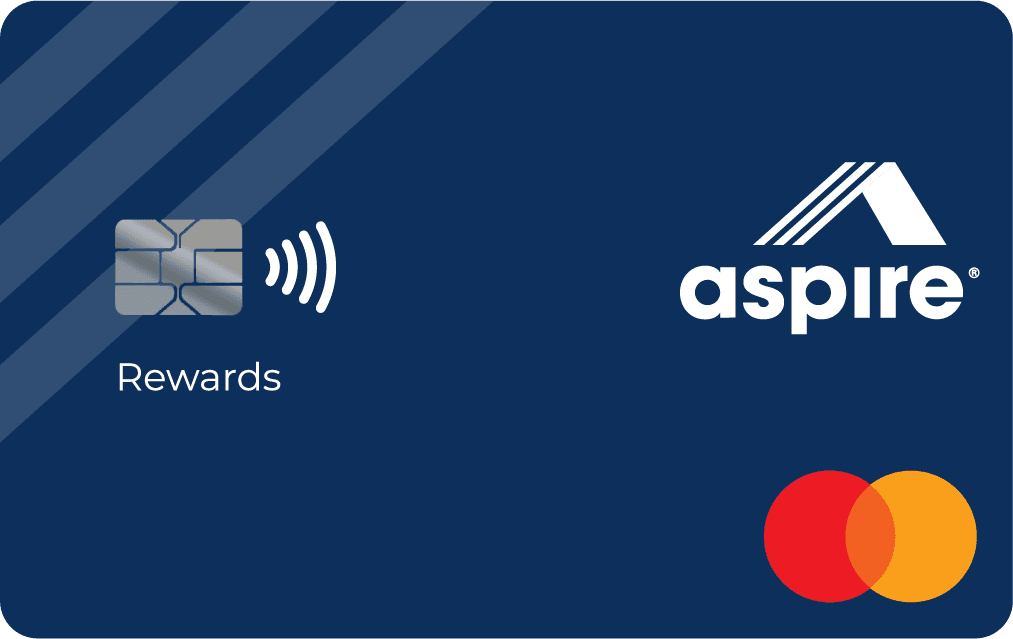
Aspire® Cash Back Rewards Mastercard
Aspire® Cash Back Rewards Mastercard. Prequalify* For Up To $1000 Credit Limit. No security deposit. Packed with great benefits, it’s designed to give you more flexibility—and purchasing power—along with up to 3% cash back rewards!** Good anywhere Mastercard is accepted, it’s the go-to card for any lifestyle.
Standout feature
Up to 3% cashback rewards**
Fees
$85–$175 first year, $229 thereafter (maintenance fees already included)
Pros
No Deposit Required. Prequalify* for up to $1000 credit limit
Cons
High APR, 36% Fixed.
Track your score until you hit the 640+ approval range
Building credit is faster when you can see what's working. Creditship is a free AI-powered credit monitor that tracks all three bureaus and tells you exactly which actions are moving your score — so you know the month your file finally clears the roughly 640 FICO bar Synchrony wants before you spend a hard inquiry on the Venmo application. Watching your score in real time turns a guess into a timed, confident apply.
Creditship

Creditship
Get free credit monitoring and concrete advice how to improve your credit from Creditship AI.
Standout feature
AI Credit Coach. AI analyzes your credit report in depth and gives you tailored, actionable steps to raise your score.
Fees
Free
Pros
Free credit report access plus monitoring and alerts
Cons
No credit repair feature
Who should consider the Venmo card
Heavy Venmo users get the most value. If your friends already split rent, dinner, or weekend plans through Venmo, redeeming cash back inside the app is frictionless.
The rotating top-category math works best for people with concentrated spending. If groceries and gas always lead your month, you effectively earn 3% on groceries and 2% on gas all year, which beats many flat-rate cards.
It does not work as well for diversified spenders. Someone who splits spending evenly across six categories never builds enough volume in any one to lock in the 3% rate, so the effective rate slides closer to 1.5%.
How it compares to other no-fee cash back cards
Citi Double Cash pays a flat 2% on everything (1% when you buy, 1% when you pay). Apple Card pays 2% on Apple Pay and 1% on the physical card. Chase Freedom Unlimited pays 1.5% flat plus higher rates on dining and drugstores.
The Venmo card beats those on your top category but trails on the long tail. If your top two categories combined make up at least 60% of your spending, Venmo wins. If your spending is spread thin, a flat 2% card wins. For a full leaderboard of the highest cash back credit cards with no annual fee in 2026, see our side-by-side comparison.
Many people pair the Venmo card with a flat 2% card. Use Venmo for the categories where it shines, and the 2% card for everything else.
Frequently Asked Questions
Is the Venmo Credit Card a real Visa?
Yes. The Venmo Credit Card is a Visa Signature card issued by Synchrony Bank. You can use it anywhere Visa is accepted, online and in person, in the United States and abroad.
How is the 3% top category chosen?
Synchrony automatically tracks your spending across eight eligible categories during each billing cycle. The category where you spent the most earns 3%, the second-highest earns 2%, and everything else earns 1%. You do not pick or opt in.
Can I use my Venmo cash back outside the app?
Yes. Cash back lands in your Venmo balance, but you can transfer it to a linked bank account, use it to send money to other Venmo users, or spend it through any merchant that accepts Venmo. Standard bank transfers are free.
Does the Venmo Credit Card report to all three credit bureaus?
Yes. Synchrony Bank reports the Venmo Credit Card to Experian, Equifax, and TransUnion every month. On-time payments help build your score, and missed payments hurt it like any other credit card.




