Moving to the United States means starting fresh in more ways than one. Your credit history from your home country doesn't transfer here, which means you're essentially invisible to US lenders, even if you had excellent credit abroad.
The good news: several credit cards and financial products are specifically designed for people in exactly this situation. You can start building a US credit profile within your first few months.
Our Top Picks
Here are the best credit cards for new immigrants in the US, focusing on products that accept limited or no US credit history.
1. Secured Credit Cards
Secured credit cards for immigrants are the most widely available option for newcomers. You put down a refundable deposit, which becomes your credit limit, and the issuer reports your payment history to the major credit bureaus.
Many secured cards only require a valid US address and a Social Security Number (SSN) or Individual Taxpayer Identification Number (ITIN). Some accept a passport and visa documentation at account opening. Annual fees vary but many strong options exist under $35 per year.
2. Cards Designed for Immigrants
A growing number of fintech companies specifically target immigrants and international students. These products often use alternative underwriting, meaning they may look at your international credit history, employment verification, or visa status instead of a US credit score.
Some do not require a SSN to apply and accept an ITIN or even just a valid passport. This can be a significant advantage when you first arrive and are still in the process of getting your identification documents. A credit card for immigrants can help you start building credit from day one without needing an existing US credit file.
3. Credit-Builder Cards
Credit-builder cards help you build a US credit score from scratch. They report to all three major credit bureaus and typically have lower barriers to entry than standard unsecured cards.
The Current Build Card is one option designed for people building credit with no existing history. You set a spending limit, pay it off regularly, and Current reports your payments to help establish your credit profile. It's accessible for those still in the early stages of building a US credit file. You can read more in the Current Credit Builder Card review.
Current Build Card
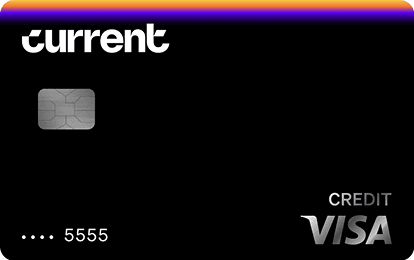
Current Build Card
$0 annual fee. No minimum deposit required. No credit check required. 1 point per dollar on eligible categories. Reports to Experian, TransUnion, Equifax.
Fee
$0
APR
0%
Minimum Deposit Amount
$0
Credit Check
No
Cashback
1 point/dollar on eligible categories (with qualifying payroll deposit)
Benefit
No credit check, no deposit minimum
4. Store and Retail Cards
Retail store cards often have lower approval thresholds than major bank cards. They can be a starting point when you're first establishing credit in the US, though APRs tend to be high, so paying your balance in full each month is critical.
5. Becoming an Authorized User
If you have a trusted contact in the US (a friend, colleague, or family member) who has good credit, being added as an authorized user on their account can help you build credit history faster. The primary cardholder's positive payment history may appear on your credit report.
What You'll Need to Apply
Requirements vary by issuer, but most credit card applications for immigrants will need some combination of the following:
- SSN or ITIN: Most traditional banks require a SSN. ITINs are accepted by some issuers. Fintech companies may accept a passport. See our guide on credit cards that accept ITIN for a full list of options.
- US address: You'll need a current US mailing address.
- Proof of income: Pay stubs, an employment offer letter, or bank statements showing regular deposits.
- Visa or immigration documentation: Some issuers will ask for this to confirm your legal status.
If you don't yet have a SSN, focus on fintech issuers first while your documentation processes. You can also explore a credit card without SSN that accepts ITIN or passport as identification.
Building Credit as a New Immigrant
Getting the card is just the beginning. How you use it determines how quickly your credit score grows.
Pay your full balance every month if possible. Carrying a balance means paying interest, which is expensive, and it also pushes up your utilization ratio. Staying under 30% utilization is a standard guideline.
Don't apply for multiple cards at once. Each application may trigger a hard inquiry that temporarily lowers your score. Start with one card, use it for 6-12 months, and then consider expanding.
Check your credit report regularly. After 3-6 months, you should start seeing a credit score. You can access your reports for free at AnnualCreditReport.com. Our guide on how immigrants can establish credit in the US covers each step of this process in detail.
Immigrant-Friendly Features to Look For
Beyond basic accessibility, certain features can make a card more useful when you're new to the US.
No foreign transaction fees matter if you're still making purchases in your home country or sending money abroad. Many cards charge 2-3% on foreign transactions.
App-based account management makes it easier to manage your account without visiting a branch.
Customer service in multiple languages can be helpful when you're navigating financial products in a new country.
For a broader view of options, our guide to best credit cards for immigrants compares products across different visa types, documentation requirements, and credit-building goals.
Frequently Asked Questions
Can I get a credit card in the US without a Social Security Number?
Yes, some issuers accept an ITIN (Individual Taxpayer Identification Number) in place of a SSN. Certain fintech companies also accept a passport and visa documentation. Your options may be more limited without a SSN, but secured cards and credit-builder products from fintech issuers are often accessible.
Does my credit history from my home country transfer to the US?
In most cases, no. US credit bureaus (Equifax, Experian, TransUnion) do not automatically receive international credit data. Some programs, like Nova Credit, can translate your credit history from certain countries into a US-equivalent report, which a handful of issuers now accept. Check if your home country is supported.
How long does it take to build a credit score as a new immigrant?
Most people see their first US credit score within 3-6 months of opening an account that reports to the major bureaus. Reaching a good score (above 700) typically takes 12-24 months of consistent on-time payments and low utilization. Read our breakdown of how long to build credit as a new immigrant for a realistic timeline.
What happens to my credit if I leave the US?
Your US credit history stays on file with the bureaus even if you move abroad. If you return to the US later, you can pick up where you left off. However, if accounts go unpaid while you're away, negative marks will remain on your report for up to 7 years, which can make it harder to get credit when you return.