
F-1 students working under Optional Practical Training (OPT) face a specific credit-building challenge: you have a Social Security number, you have legal employment income, but your visa status is temporary, and most card issuers' algorithms don't know how to handle it. Building credit during OPT is absolutely doable — millions of international students do it every year — but the strategy is different from what a U.S. citizen with the same income would follow.
Step 1: Confirm Your SSN Is on File Everywhere
Once OPT is approved and you've started working, your SSN should appear on every financial application you submit. Banks, credit-card issuers, and credit-builder products all check SSN against the credit bureaus to establish your file. Make sure your bank's records have your SSN on file — many F-1 students opened bank accounts with an ITIN before OPT and never updated to SSN, which can prevent positive credit reporting.
If your SSN is on file but no credit report exists yet, you have a "no-hit" file (no record at all). The first product you open with that SSN will create your file.
Step 2: Open a No-Credit-Check Credit-Builder Card
The fastest way to start a U.S. credit file from zero is a no-credit-check, no-deposit card that reports to all three bureaus. The Current Build Card fits this profile — no credit pull at application, no annual fee, and reports monthly to Experian, Equifax, and TransUnion. Apply for a Current Build Card to create your first tradeline.
Current Build Card
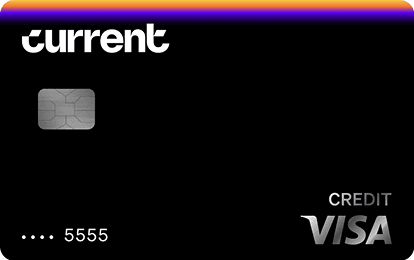
Current Build Card
$0 annual fee. No minimum deposit required. No credit check required. 1 point per dollar on eligible categories. Reports to Experian, TransUnion, Equifax.
Fee
$0
APR
0%
Minimum Deposit Amount
$0
Credit Check
No
Cashback
1 point/dollar on eligible categories (with qualifying payroll deposit)
Benefit
No credit check, no deposit minimum
Alternative options include the Petal 1 Visa (uses banking data instead of credit history for approval), the Discover It Secured (small refundable deposit, full Discover-network benefits), and the Capital One Platinum Secured (small deposit, eligible for graduation to unsecured). If your SSN isn't fully established yet, our roundup of credit cards that accept ITIN covers the issuers that approve thin-file applicants without an SSN.
Step 3: Use the Card Carefully for 6 to 12 Months
Charge a small recurring expense to the card — a $9 streaming subscription, a phone bill — and pay it off in full every month. Set up autopay so you never miss. Keep the reported balance under 10% of the limit (if your limit is $300, never carry more than $30 across statement closing dates).
After 6 months of perfect history, you'll have a real FICO score (FICO requires 6 months of activity and at least one tradeline that's been open for 6 months). Most consumers in this position score 660 to 720 at the 6-month mark.
Step 4: Add an Installment Tradeline
Once your card is reporting cleanly, add a credit-builder loan for credit-mix benefit. Self.Inc, Cheers Financial, and similar products offer installment loans designed for thin-file consumers. This step is what pushes your score from 700 to 750+ over the second 6 to 12 months.
What to Watch for With Visa Status
Some lenders ask for visa status, expected residency length, or sponsor information. Be honest. Lying on a credit application is fraud and can affect future immigration applications. A few card issuers won't approve OPT applicants regardless of credit score; others will. Discover and American Express are among the more OPT-friendly major issuers, and our list of the best credit cards for international students tracks which issuers currently accept OPT and F-1 applicants.
If you're moving to H-1B or pursuing a green card, your continuous credit history through OPT becomes the foundation that supports a mortgage application three to five years later. Treat the OPT period as the critical first chapter of your U.S. credit story.
Common Mistakes to Avoid
Don't open too many cards at once chasing sign-up bonuses — your file is too new to absorb multiple hard inquiries. Don't close your first card after upgrading to a better one — that first tradeline's age is your most valuable credit asset for the next decade. Don't let the card become inactive — issuers close cards with no activity, and a closed account hurts both length and mix. If you ever need to upgrade or replace your starter card, check the current list of the best credit cards available with an ITIN number for second-card options that fit thin-file or non-citizen profiles.
Free Credit Monitoring as You Build
Building credit on OPT works best when you can actually see what's posting to your file each month — a missing tradeline or a fraudulent inquiry can derail the timeline. Creditship offers free credit monitoring paired with concrete, AI-generated guidance on which next action is likeliest to move your score, useful for catching reporting gaps and confirming your strategy is working. Sign up free with Creditship for tradeline alerts, score tracking, and personalized recommendations at no cost.
Creditship

Creditship
Get free credit monitoring and concrete advice how to improve your credit from Creditship AI.
Standout feature
AI Credit Coach. AI analyzes your credit report in depth and gives you tailored, actionable steps to raise your score.
Fees
Free
Pros
Free credit report access plus monitoring and alerts
Cons
No credit repair feature
Key Takeaways
- Confirm your SSN is on file at every bank and card issuer once OPT is approved.
- A no-credit-check credit-builder card is the fastest way to start a U.S. credit file.
- After 6 months of clean activity, you'll have a real FICO score.
- Credit history follows the SSN, not the visa — your file persists through H-1B and beyond.
Frequently Asked Questions
Can I get a credit card with an OPT visa?
Yes. Most major issuers approve OPT students, especially with a Social Security number on file. Discover, American Express, and Capital One are among the more OPT-friendly issuers.
Do I need to wait until OPT is approved before opening a credit card?
You need an SSN, which OPT enables. Once OPT is approved and you have your SSN, you can apply for credit cards immediately.
What's the fastest way to build credit on OPT?
Open a no-credit-check credit-builder card or a secured card immediately, set up a small recurring autopay, and pay in full monthly. After 6 months, you'll have a real FICO score.
Will my credit history transfer when I move to H-1B or get a green card?
Yes. The credit history is tied to your SSN, not your visa status. Continuous credit history through OPT, H-1B, and beyond is fully preserved.




