
If you searched for a Cambridge Trust high yield online savings account, here is the honest answer up front: there is no dedicated online-only HYSA product from Cambridge Trust in 2026. Cambridge Trust merged into Eastern Bank in July 2024, and the consumer savings lineup is the standard Eastern Bank menu, priced like other brick-and-mortar New England banks.
That does not mean you cannot get a high-yield experience using the same money. It just means the high-yield part has to come from somewhere else. This guide walks through what Cambridge Trust offers today, what an online HYSA actually is, and how the math compares. If you want the broader picture first, our overview of Cambridge Trust's high savings account choices covers the full lineup.
What happened to Cambridge Trust
Eastern Bankshares completed its acquisition of Cambridge Bancorp on July 12, 2024, creating a roughly $26 billion combined bank. The Cambridge Trust brand still exists for private banking and wealth management. Consumer checking, savings, and CD products were folded into Eastern Bank and now live on Eastern's rate sheet.
If you opened a Cambridge Trust online savings account before the merger, it was converted to an Eastern Bank product on that conversion weekend. The login portal, app, and statements all updated. The headline interest rate did not magically jump. For the tier-by-tier numbers, see our comparison of Cambridge Trust high-yield savings account rates.
What an online high-yield savings account actually is
A high-yield savings account (HYSA) is a savings account that pays meaningfully more interest than a national average bank. As of May 2026, the leading online HYSAs pay between 3.80% and 4.20% APY, with no monthly fee and no minimum balance.
The key features that define an HYSA:
- APY usually 3% or higher
- No monthly maintenance fees
- FDIC insurance up to $250,000 per depositor
- Online and mobile account access (rarely a branch)
- Up to 6 outbound transfers per month was the traditional limit, though Regulation D restrictions have been suspended since 2020
Cambridge Trust's standard savings rate sits well below the HYSA cutoff. That is the entire reason searchers look for an online version, hoping it pays better. It does not. Our guide to Cambridge Trust online savings account rates lays out what is actually published.
A direct online banking alternative
Current Banking is a mobile-first option a lot of former regional-bank customers move to. With a qualifying direct deposit of $200 or more, members can earn up to 4.00% APY on Savings Pods, get paychecks up to two days early, and access fee-free overdraft up to $200. There is no monthly fee, no minimum balance, and the whole thing runs from a phone.
On a $10,000 balance, the difference between 0.05% APY and 4.00% APY is about $395 in interest per year. Over five years, that is close to $2,000 of leftover yield.
Current Banking

Current Banking
Current is a mobile-first banking app with no monthly fee and no minimum balance. Members can earn up to 4.00% APY with a qualifying direct deposit of $200, receive direct-deposit paychecks up to 2 days early, and overdraft up to $200 fee-free.
Standout feature
4.00% APY on Savings Pods (with a $200+ qualifying direct deposit) plus paycheck up to 2 days early — both included on the standard account for free
Fees
Free
Pros
$0 monthly fee; up to 4.00% APY on Savings Pods with qualifying direct deposit; paycheck up to 2 days early;
Cons
No physical branches
How to compare HYSAs without getting lost
The online savings market has dozens of products with similar APYs. To avoid analysis paralysis, focus on three filters:
- Headline APY net of conditions. A 4.50% promo APY that drops to 0.50% after three months is not a 4.50% account. Look at the standing rate.
- Direct-deposit requirement. Some accounts only pay the top APY if you route a paycheck in. If your paycheck has to stay at Eastern Bank for work reasons, factor that in.
- Transfer speed. Standard ACH transfers between your old bank and a new HYSA take 1 to 3 business days. If you need same-day access, an account at the same institution as your checking will feel faster.
Pairing a higher APY with budgeting
Moving to a higher-yield account only helps if the higher interest actually accumulates. The most common reason it does not is invisible spending, meaning small recurring charges, the gym you forgot to cancel, the streaming bundle that creeped up by $3 a month.
Monarch Money is a budgeting app that pulls every account into one view, tracks net worth over time, and surfaces subscriptions you might not remember. Firstcard readers get 50% off the first year of the Core plan. The point is not the app, it is making sure the $395 extra interest you earn is not getting quietly canceled out by $40 of forgotten subscriptions.
Monarch Money
Monarch Money
Monarch Money simplifies personal finance by uniting all your accounts in one place—secure, ad-free, and built for couples. 50% off your first year when you sign up via Firstcard!
Standout feature
#1 rated budgeting app (WSJ). 50% off first year via Firstcard.
Fees
$14.99/mo or $99.99/yr ($8.33/mo)
Pros
Beautiful, ad-free interface (4.9★ App Store). Best budgeting app for couples and families. Comprehensive account syncing and cash flow forecasting.
Cons
No free tier — requires paid subscription.
Why credit health matters more than savings APY long-term
For most people, the largest dollar wins in personal finance are not on the savings side. A 30-point credit score lift can shave 0.5% off a mortgage rate, save thousands on a car loan, and lower auto insurance premiums in many states.
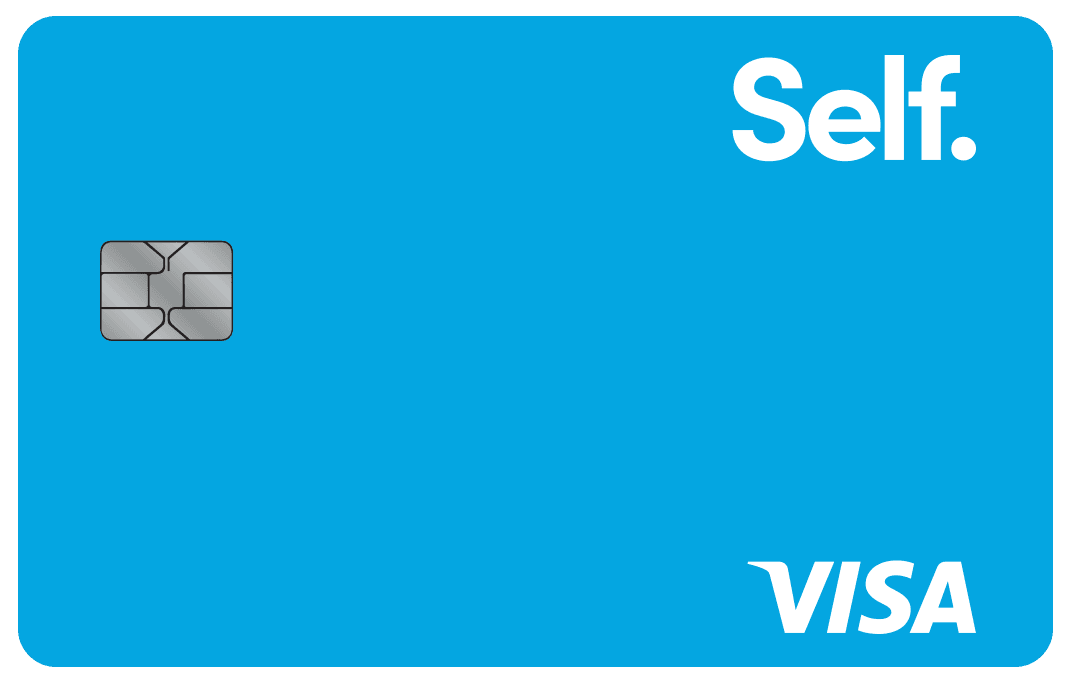
The Self Visa® Credit Card is one of the most beginner-friendly ways to start building credit. It is backed by your own Self Credit Builder Account savings, so approval rates are high. On-time activity reports to Experian, Equifax, and TransUnion, and the savings are returned to you when you close the account. For a Cambridge Trust customer who has been parking cash at near-zero APY for years, redirecting even a small piece of that into a credit-builder setup tends to compound much faster than chasing the extra yield.
A practical hybrid setup
Most people do not need a single perfect bank. A workable setup:
- Keep an Eastern Bank (formerly Cambridge Trust) checking account for the local-branch and bill-pay habits you already have.
- Move the bulk of your savings to an online HYSA paying 3.80% or higher.
- Use a budgeting app to keep an eye on where money is actually going.
- Build credit on the side with a low-risk credit builder product so a future mortgage or auto loan is cheaper.
No single product solves everything, and switching banks completely is rarely necessary.
The bottom line
Cambridge Trust does not offer a true high-yield online savings account in 2026, and the Eastern Bank merger did not introduce one. If a meaningfully higher APY is the goal, the path is an online HYSA from a separate institution. Pair it with disciplined budgeting and a small credit-building habit, and the long-term math works out far better than chasing yield alone.
Frequently Asked Questions
Does Cambridge Trust offer an online-only high-yield savings account?
No. Cambridge Trust's consumer savings products were folded into Eastern Bank after the July 2024 merger. The lineup is a standard regional-bank menu with APYs typically well below 1%.
What APY should a high-yield savings account pay in 2026?
As of May 2026, leading online HYSAs pay between roughly 3.80% and 4.20% APY with no monthly fee and no minimum balance. Anything labeled high-yield paying under about 3.50% is borderline.
Is it safe to move money from Cambridge Trust to an online bank?
As long as the online bank is FDIC insured and you stay under the $250,000 per depositor coverage limit, the protection is the same as at Cambridge Trust or Eastern Bank.
Can I keep my Cambridge Trust account and still use an online HYSA?
Yes. Most people do exactly this. Keep checking at Eastern Bank for branch access and link an external HYSA for the savings portion. Standard ACH transfers settle in 1 to 3 business days.




