Here is the frustrating loop every new adult runs into: you need a credit card to build credit, but lenders want to see credit history before they hand you a card. If you are 18 with no credit, that can feel like a locked door with the key on the wrong side.
The good news is that this exact situation is common, and several card types are built for it. Finding a credit card for an 18 year old with no credit is very doable in 2026, as long as you know which doors are actually open to you and what lenders need to see. Let's walk through your real options, how approval works when you are under 21, and how to turn that first card into a solid score.
Why Being 18 With No Credit Is Tricky
Credit scores are built from a track record of borrowing and repaying. At 18 with a thin or empty file, you have no track record yet, so most standard rewards cards will decline you. That is not a knock on you, it is just missing data.
There is a second wrinkle. Under the CARD Act, anyone younger than 21 must show independent income they can use to repay the card, or add a co-signer. Independent income can include a part-time job, scholarships and grants, or regular allowance, not just a full-time salary. Once you clear that bar, a few specific card types open up.
What You Actually Need to Qualify
Before you apply, get three things ready: proof of income (even modest income counts), a Social Security number, and a sense of your budget. Applying triggers a hard inquiry, which can dip a thin file by a few points, so it is smart to apply for one card you are likely to get rather than several at once.
Aim for a card with no annual fee that reports to all three credit bureaus. Reporting to all three is non-negotiable, because a card that does not report cannot build the history you are after.
Option 1: Student Credit Cards
If you are enrolled in college, student cards are often the easiest real credit cards to get with no history. As of July 2026, the Discover it Student Chrome has a $0 annual fee, does not require an established FICO history, and reports to all three bureaus. The Capital One Savor Student and Quicksilver Student cards also carry $0 annual fees and offer cash back, with the Savor Student advertising a $100 bonus after $300 in spending in the first three months.
These cards give you real rewards while you build, which is a nice bonus. The catch: you usually need to be a student and show that independent-income proof if you are under 21. If you are still in school, our picks for the best credit card for an 18 year old college student go deeper.
Option 2: Secured Credit Cards
No college enrollment, or got denied for a student card? A secured card is the most reliable path. You put down a refundable deposit, often $200, and that becomes your credit line. Because your own money backs the card, approval is far easier even with zero history.
Secured cards report to all three bureaus, and many graduate you to an unsecured card after several months of on-time payments, returning your deposit. Look closely at the fees before you pick one, since a few charge maintenance costs that eat into a small limit. Our guide to secured credit cards for college students breaks down low-deposit picks.
Option 3: Credit-Builder Cards and Accounts
If you want the lowest-risk on-ramp, credit-builder products are designed for people with no score at all. They report your payments to the bureaus without the risk of running up a balance you cannot repay.
The Self Visa Credit Card pairs a small credit-builder account with a secured card. You make fixed monthly payments that are reported as you go, then those savings unlock a secured card, so you build payment history and a small cash cushion at the same time. For an 18 year old with no income history, that structure is forgiving and hard to misuse.
Another strong option is the Current Build Card, which works more like a debit card that builds credit. There is no security deposit and no credit check to start, and your everyday spending gets reported as credit activity. That removes the deposit hurdle entirely, which matters when you are 18 and cash is tight. You can see the full breakdown in our Current Build Card review.
Current Build Card
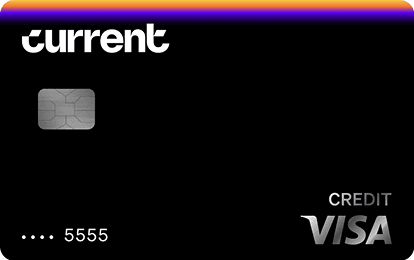
Current Build Card
$0 annual fee. No minimum deposit required. No credit check required. 1 point per dollar on eligible categories. Reports to Experian, TransUnion, Equifax.
Fee
$0
APR
0%
Minimum Deposit Amount
$0
Credit Check
No
Cashback
1 point/dollar on eligible categories (with qualifying payroll deposit)
Benefit
No credit check, no deposit minimum
A third pick is Kikoff, a low-cost credit-builder account. For a small monthly fee, it opens a revolving line you use for a modest amount, reports the on-time payments, and helps establish a positive history without a hard pull or a deposit. It is one of the cheapest ways to get your file moving before you graduate to a full rewards card.
Kikoff Credit Account

Kikoff Credit Account
Everything you need to build your credit, right in one app. Build credit, lower debt, and unlock progress with tools that actually work.
Standout feature
An avg increase of +86 points within a year with on-time payments
Fees
$5/month for Basic plan, $20/mo for Premium plan $35/mo for Ultimate plan
Pros
Helps both payment history and credit utilization, the two factors that move scores most
Cons
Monthly fee continues for as long as you keep the account open
Option 4: Become an Authorized User
You do not always have to open your own account first. If a parent or trusted family member with good credit adds you as an authorized user on their card, their positive history can appear on your report and give your score a head start. This is one of the fastest ways to build history, and it works even before you turn 18 in some cases, as we cover in how to build credit while in high school.
Just make sure the primary cardholder pays on time and keeps balances low, because their habits flow to your report too. Parents weighing this can read how to help your child build credit for the full playbook.
How to Use Your First Card the Right Way
Getting approved is step one. Building a good score is about what you do next. Two habits do most of the work: pay your full statement balance on time every month, and keep your balance well under 30% of your limit. On a $200 secured card, that means keeping the balance under about $60.
Set up autopay for at least the minimum so you never miss a due date, since payment history is the single biggest scoring factor. Most people see their score appear within about 60 to 90 days of activity, and a solid score builds over 6 to 12 months of steady, on-time use. Start small, stay consistent, and that locked door opens on its own.
Frequently Asked Questions
Can an 18 year old with no credit get approved for a credit card?
Yes. Student cards, secured cards, and credit-builder accounts are all designed for applicants with little or no history. If you are under 21, you will need to show independent income or add a co-signer under the CARD Act, but modest income like a part-time job or scholarships can qualify.
What is the easiest credit card to get at 18 with no credit?
Secured cards and credit-builder products like the Self Visa Credit Card, Current Build Card, or Kikoff are usually the easiest, because your deposit or account backs the line and approval does not depend on an existing score. Student cards are also very accessible if you are enrolled in college.
How fast can an 18 year old build credit?
Most people see a score appear within 60 to 90 days of their first reported activity. Reaching a genuinely good score usually takes 6 to 12 months of on-time payments and low balances. Consistency matters far more than how much you spend.
Does applying for a credit card hurt an 18 year old's credit?
Applying usually triggers a hard inquiry, which can lower a thin file by a few points temporarily. The impact fades within a few months of on-time payments, so it is minor compared to the benefit of starting your history. Apply for one card you are likely to get rather than several at once.
Terms and conditions apply, and approval depends on your income and other factors. Firstcard helps you compare starter cards so you can pick the one that actually fits your situation.