
Can you get a loan if disability benefits are your main income? Yes, and the law is on your side. The Equal Credit Opportunity Act makes it illegal for a lender to reject you based on your disability status, and most lenders accept SSI and SSDI as valid income.
Finding a loan for a handicapped person is mostly about knowing which lenders count disability benefits, how to prove that income, and how to protect your benefits while you borrow. The process is more manageable than many people expect.
This guide covers your real loan options, the income rules, the difference between SSI and SSDI when you borrow, and the steps that improve your approval odds.
Key Facts at a Glance
| Topic | Detail (as of June 2026) |
|---|---|
| Legal protection | Equal Credit Opportunity Act bars disability-based denial |
| Income accepted | Most lenders accept SSDI and SSI |
| Typical income minimum | Often $20,000 to $24,000 per year |
| Average SSDI payment | About $1,630 per month |
| Average SSI payment | About $737 per month |
| Proof of income | SSA award letter, bank statements, SSA-1099 |
| Loan types available | Personal, auto, home, and credit-builder loans |
What Loans You Can Actually Get
People who receive disability benefits are eligible for the same kinds of loans as everyone else. That includes personal loans, auto loans, home loans, and credit cards. There is no special restricted category of disability-only loans you are forced into.
The most common need is a personal loan, which can cover medical equipment, home modifications, a vehicle, or an unexpected expense. Personal loans are usually unsecured, meaning you do not have to put up collateral.
The key is finding a lender that accepts your benefits as income and whose minimum income requirement you can meet. Not every lender treats disability benefits the same way, so comparing several is worth the effort.
How Lenders Treat Disability Income
Most lenders will accept SSDI or SSI as verifiable income, but you have to document it. You will typically need a benefit verification letter from the Social Security Administration, bank statements showing the regular deposits, or your SSA-1099 tax form.
There is an income hurdle to be aware of. Many lenders require a minimum annual income of around $20,000 to $24,000. As of January 2026, the average SSDI payment was about $1,630 per month, which works out to roughly $19,600 a year, so SSDI recipients are often close to the line. SSI recipients, averaging about $737 a month, frequently fall below typical minimums.
If your benefits alone fall short, you may be able to add other income, like a part-time job or a co-signer, to qualify. Some lenders also weigh factors beyond income, which can help.
Comparing Offers Without Hurting Your Score
Because income minimums vary so much, the smartest move is to compare several lenders before applying. Upstart is a lending marketplace that looks beyond a basic credit score, weighing factors like education and work history, and offers personal loans from $1,000 to $75,000. Checking your rate is a soft inquiry that does not affect your credit score, so you can see real numbers risk-free.
Upstart
Upstart
Upstart is an online lending marketplace that partners with banks to provide personal loans from $1,000-$75,000. Upstart goes beyond traditional lending metrics to help you find financing that considers many factors including your education and experience
Standout feature
AI-driven underwriting that goes beyond your credit score — checking your rate is a soft pull with no score impact, most applicants are approved instantly, and funds can arrive as soon as the next business day.
Fees
Origination fee 0%–12% of the loan amount
Pros
No minimum credit score required (AI-based approval)
Cons
Origination fee: up to 12%
It also pays to see offers from multiple lenders side by side, since one may count your benefits differently than another. MoneyLion runs a marketplace that shows personal loan offers from top providers in minutes with no credit score impact. Comparing a few offers at once helps you find a lender whose income rules actually fit your situation. APRs vary by creditworthiness, and terms and conditions apply.
MoneyLion
MoneyLion
Compare personal loan offers from top providers in minutes with no credit score impact with the MoneyLion Marketplace.
Standout feature
Soft-pull marketplace that surfaces prequalified personal loan offers from a network of lenders, with options up to $100,000 and partners that work with fair and bad credit
Fees
Free to use the marketplace
Pros
Compare multiple lender offers in minutes; soft credit pull to prequalify — no impact on your score
Cons
Final approval requires a hard pull from the chosen lender
SSI vs SSDI: A Crucial Difference When You Borrow
The type of benefit you receive changes how a loan affects you, and this is the single most important thing to understand.
For SSDI recipients, taking out a personal loan will not affect your benefits, because SSDI has no asset or resource limits. You can borrow and hold the funds without worrying about losing your monthly payment.
For SSI recipients, the rules are stricter. Loan funds themselves do not count as income or reduce your SSI payment in the month you receive them. But any borrowed money you do not spend that month counts toward your resource limit, and exceeding the $2,000 resource limit could reduce or suspend your benefits.
The practical lesson for SSI recipients: borrow only what you need, and spend it on the intended purpose quickly rather than letting it sit in your account across months.
Building Credit to Unlock Better Loan Terms
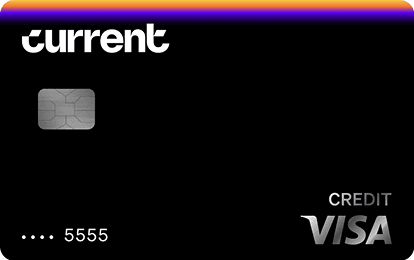
If your credit score is holding you back, building it before you borrow can mean lower rates and easier approval. A no-deposit credit-builder card like the Current Build Card reports to all three bureaus with no credit check to open, so every on-time payment adds positive history. Over a few months, that can move your score enough to qualify for noticeably better loan terms.
Current Build Card
Current Build Card
$0 annual fee. No minimum deposit required. No credit check required. 1 point per dollar on eligible categories. Reports to Experian, TransUnion, Equifax.
Fee
$0
APR
0%
Minimum Deposit Amount
$0
Credit Check
No
Cashback
1 point/dollar on eligible categories (with qualifying payroll deposit)
Benefit
No credit check, no deposit minimum
What Users Commonly Report
A common theme among borrowers on disability is that approval is very possible, but it takes shopping around, since lenders vary widely in whether and how they count benefits. Many people report that being upfront with documentation, like the SSA award letter, speeds approval.
A frequent frustration is hitting minimum-income walls, especially for SSI recipients whose monthly benefit is lower. Reviewers often suggest soft-inquiry prequalification tools to avoid wasted hard pulls. The overall pattern is that patience and comparison shopping make the biggest difference.
Steps to Get Approved
Start by gathering your proof of income: the SSA award letter, recent bank statements, and your SSA-1099. Having these ready makes any application faster.
Next, check your credit report and score so you know where you stand. Then use soft-inquiry prequalification tools to compare offers without hard pulls. Only submit a full application once you find a lender whose income requirement you can meet and whose rate works for your budget.
If you are an SSI recipient, plan how you will spend the funds within the month to stay under the resource limit. A little planning protects the benefits you rely on. Terms and conditions apply, and APRs vary by creditworthiness.
Frequently Asked Questions
Can I get a personal loan if I am on disability?
Yes. People on disability are eligible for the same loans as anyone else, and the Equal Credit Opportunity Act prohibits lenders from denying you based on disability status. Most lenders accept SSDI or SSI as income, though you will need to document it with an SSA award letter or bank statements.
Will a loan affect my SSI or SSDI benefits?
For SSDI, a loan will not affect your benefits because there are no asset limits. For SSI, the loan funds do not count as income, but money you do not spend within the month counts toward the $2,000 resource limit, which could affect your payment if exceeded.
What income do lenders accept for a disability loan?
Most lenders accept SSDI and SSI as verifiable income. You typically prove it with a benefit verification letter from the SSA, bank statements showing regular deposits, or your SSA-1099 tax form. Many lenders also have a minimum annual income requirement around $20,000 to $24,000.
How can I improve my chances of approval?
Gather your income documents in advance, check your credit score, and use soft-inquiry prequalification tools to compare lenders without hard pulls. Building your credit with an on-time payment history first can also lower your rate and improve your odds.



