No Penalty CD vs Savings Account: Which Is Better?

July 4, 2026

You want a safe place to keep your cash, but you are torn between a no-penalty CD and a savings account. Both protect your money, yet they work in different ways.

The right choice comes down to a trade-off between locking in a rate and keeping full flexibility. Get it wrong and you could earn less or tie up money you need.

This guide compares a no-penalty CD vs a savings account in plain English so you can pick with confidence.

The quick answer

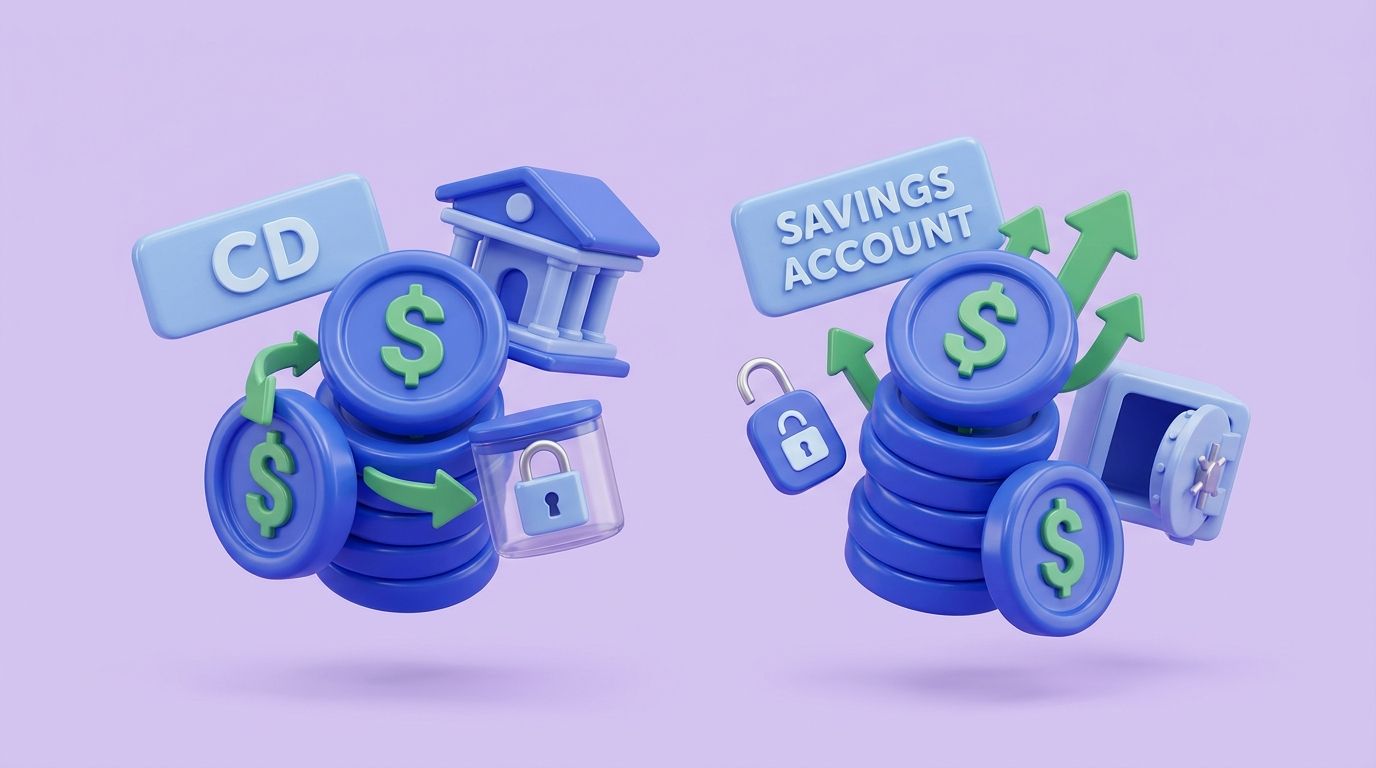
A no-penalty CD lets you lock in a fixed rate for a set term but withdraw early without the usual penalty. A savings account keeps your money fully flexible with a rate that can change anytime.

If you want to protect a good rate while keeping an escape hatch, a no-penalty CD shines. If you want maximum access and the chance to earn more when rates rise, a savings account fits better.

Choose a no-penalty CD to lock in today's rate with a safety valve, and a savings account when flexibility and rising-rate potential matter most.

No penalty CD vs savings account at a glance

FeatureNo Penalty CDSavings Account
RateFixed for the termVariable, can change
Early withdrawalAllowed, no penaltyAlways available
Rate locked inYesNo
Add money anytimeUsually noYes
Best when rates areFalling or high nowRising

What is a no-penalty CD?

A certificate of deposit, or CD, holds your money for a fixed term at a fixed rate. A normal CD charges a penalty if you take money out early, and there are other common CD account mistakes that can quietly eat into your interest.

A no-penalty CD removes that early-withdrawal penalty. You can usually take your full balance out after a short initial waiting period without losing interest.

The trade-off is that you generally deposit a lump sum up front and cannot add to it later. Unlike a regular savings account, this is a product where your money is stuck for a set time unless you use the no-penalty option. It is a set-it-and-forget-it product.

What is a savings account?

A savings account holds your money with no fixed term. You can deposit and withdraw whenever you like, within any monthly transfer limits. It is just one of several different types of savings accounts worth knowing before you commit.

The rate is variable, so it can rise or fall as the broader rate environment changes. Understanding how interest works on a savings account helps you see why high-yield savings accounts pay competitive rates while keeping this flexibility.

If you want a fee-free place to keep flexible savings, Chime offers a savings feature with no monthly maintenance fees and automatic round-ups that move spare change into savings for you.

Best for: People who want a no-fee, no-interest path to build credit plus fee-free everyday banking

Chime

Chime
5Firstcard rating

- Fee-free banking plus early pay access - Overdraft up to $200 without fees - 5% cash back and build credit everyday. - 3.75% APY on your savings.

Standout feature

No credit check, no interest, no annual fee, and no minimum deposit required.

Fees

$0

Pros

Fee-Free Banking and Get paid up to 2 days early

Cons

App/online-only support, no branches

When a no-penalty CD wins

A no-penalty CD is a smart pick when rates are high now and you expect them to fall. Locking in protects that rate even if the market drops.

Because there is no early-withdrawal penalty, you keep an escape hatch if you need the cash sooner than planned. That combination of a locked rate plus access is the whole appeal.

It suits money you probably will not touch soon but want to keep safe and earning a guaranteed rate. Think of it as a firmer version of savings.

When a savings account wins

A savings account is better when you want to add money regularly or expect rates to keep climbing. As rates rise, your variable APY can rise too, and comparing today's best high-yield savings account rates shows how much that flexibility can be worth.

It is also the right home for an emergency fund, since you may need to withdraw at any moment without waiting periods. Instant access is a real advantage in a crisis.

For a flexible savings home with no monthly fees, Current Banking offers fee-free accounts and savings features that make it easy to set money aside automatically and keep it accessible whenever you need it.

Best for: People who want a no-fee mobile bank with early direct deposit, high-yield account

Current Banking

Current Banking
4.6Firstcard rating

Current is a mobile-first banking app with no monthly fee and no minimum balance. Members can earn up to 4.00% APY with a qualifying direct deposit of $200, receive direct-deposit paychecks up to 2 days early, and overdraft up to $200 fee-free.

Standout feature

4.00% APY on Savings Pods (with a $200+ qualifying direct deposit) plus paycheck up to 2 days early — both included on the standard account for free

Fees

Free

Pros

$0 monthly fee; up to 4.00% APY on Savings Pods with qualifying direct deposit; paycheck up to 2 days early;

Cons

No physical branches

Watch the fine print on both

With a no-penalty CD, confirm the initial lock-up period before withdrawals are allowed and whether partial withdrawals are permitted. Some require you to withdraw the entire balance.

With a savings account, check for monthly fees, minimum balance rules, and any transfer limits. These details can quietly reduce your earnings.

Compare both by APY, not just the headline rate, and read the terms carefully. Terms and conditions apply, and rates vary by institution.

Can you use both?

Yes, and many savers do. A common approach is to keep your emergency fund in a savings account for instant access and put extra cash you want to lock in into a no-penalty CD.

This gives you flexibility for the unexpected and a guaranteed rate on the rest. You get the best of both worlds without over-committing, and letting compound interest work on both balances only speeds things up.

Deciding how to split your cash between the two comes down to your goals and how soon you might need the money. Balance is usually smarter than picking just one.

The bottom line

A no-penalty CD locks in a fixed rate while still letting you withdraw early, making it ideal when rates are high and you want protection. A savings account keeps your money fully flexible and can earn more when rates rise.

For emergency cash, lean toward savings. For money you want to lock in but keep accessible, a no-penalty CD is worth a look.

Compare both by APY, check the fine print, and consider using each for the job it does best.

Frequently Asked Questions

Is a no penalty CD better than a savings account?

Neither is universally better; it depends on your goals. A no-penalty CD is better when you want to lock in a high rate with an option to withdraw early, while a savings account wins on flexibility and can earn more when rates rise. Many people use both for different purposes.

Can you withdraw from a no penalty CD anytime?

Usually you can withdraw the full balance without penalty after a short initial waiting period, often around the first week. Some no-penalty CDs require you to take out the entire amount rather than a partial withdrawal. Always confirm the specific terms before opening one.

Do no penalty CDs pay more than savings accounts?

Sometimes, but not always. A no-penalty CD may pay slightly more or less than a top high-yield savings account depending on the rate environment. Compare the APYs of specific offers side by side before deciding.

Which is safer, a CD or a savings account?

Both are equally safe at an insured bank or credit union, since deposits are protected up to legal limits. The difference is in access and rate structure, not safety. Your principal is protected in either product at an insured institution.


Firstcard Educational Content Team

Firstcard Educational Content Team - July 4, 2026

Credit building
for all

Build credit early, earn cashback, grow your savings all in one place.

Credit building for all