Sample Budget Sheet: A Simple Template to Start Today

June 20, 2026

Most people who feel broke are not actually broke. They just have no idea where their money goes. A sample budget sheet fixes that in about 20 minutes by putting every dollar on paper, where you can finally see it.

This guide gives you a ready-to-copy sample budget sheet with real example numbers, then walks you through filling in each line for your own life. By the end you will have a working plan, not just a blank form.

What a Budget Sheet Actually Is

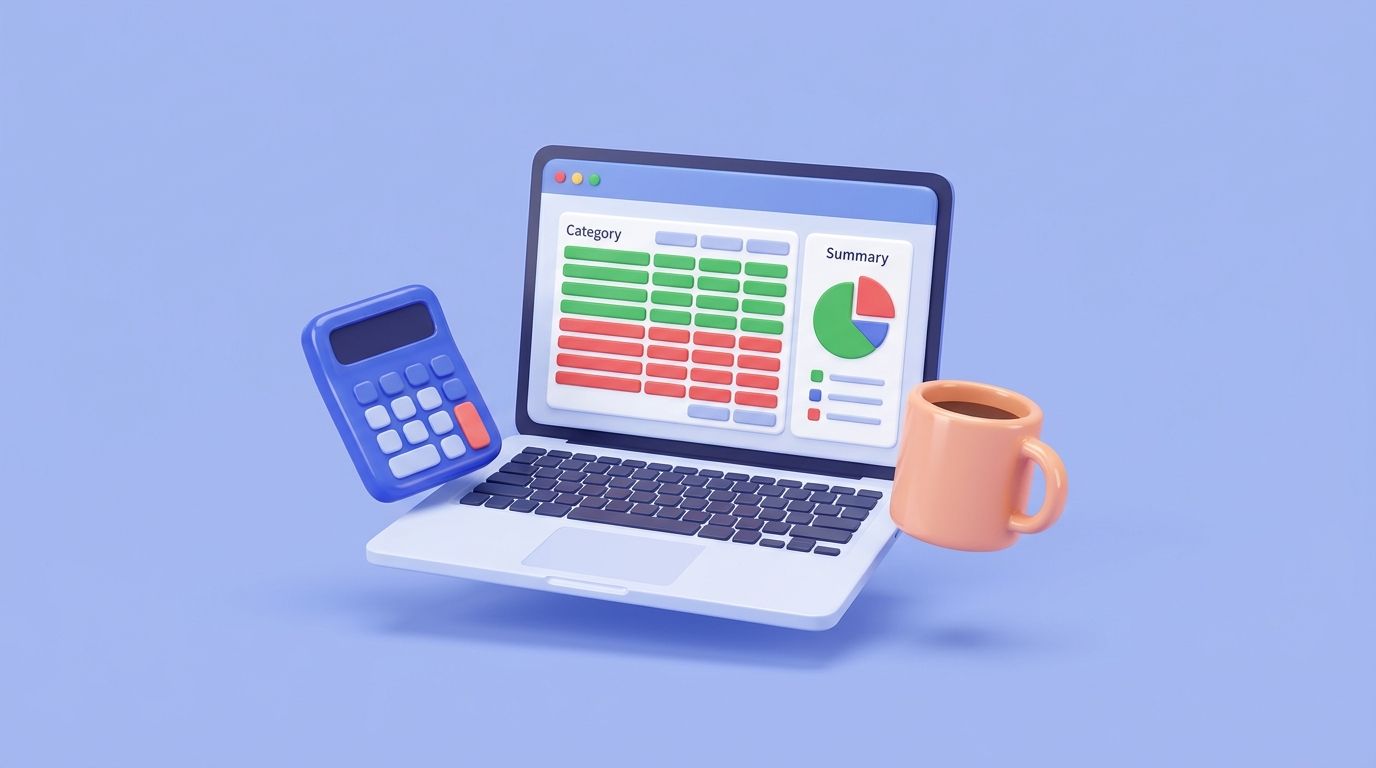
A budget sheet is a single page that lists your monthly income at the top and all your spending below it. The goal is simple: see what comes in, plan where it goes, and make sure you are not spending more than you earn. If you want a deeper primer on the format, our budget sheet guide covers the basics.

You can use paper, a printable PDF, or a spreadsheet. The format matters far less than the habit of filling it in every month before the money arrives. A ready-made personal household budget template can save you from building one from scratch.

Think of it as a plan you make in advance, not a record you check after the fact. The planning is what changes your spending.

A Sample Budget Sheet With Real Numbers

Here is a filled-in example for someone earning $3,500 per month after taxes. Use it as a starting template and swap in your own figures.

CategoryPlanned Amount
Take-home income$3,500
Rent$1,150
Utilities and phone$260
Groceries$450
Transportation and gas$300
Insurance$180
Debt payments$350
Savings$300
Dining out and fun$250
Subscriptions$40
Miscellaneous$220

Add up the spending lines and you get $3,500, which matches the income exactly. That balance is the whole point of a working budget sheet, and it is the same idea behind a zero-based budget template where every dollar gets a job.

How to Fill In Your Income

Start with your real take-home pay, the amount that actually lands in your account after taxes and deductions. Using your gross salary is the most common budgeting mistake because you never see that full amount.

If your pay changes week to week, use a conservative number. Add up your lowest three months from the past year and divide by three, then budget from that lower figure.

For anyone with side income or tips, list each source on its own line. Seeing $2,800 from a main job plus $700 from gig work helps you plan honestly.

How to Fill In Your Expenses

Work through your fixed bills first, since those rarely change. Rent, insurance, and loan payments are predictable, so they are the easiest lines to lock in.

Next come the flexible categories like groceries, gas, and entertainment. Pull up two months of bank statements and total what you actually spent, because a real number beats a guess every time.

Leave a miscellaneous line of at least $150 to $250. Something unplanned happens every month, and a buffer keeps one surprise from breaking the whole sheet.

Making the Math Balance

Once every line is filled, subtract total spending from total income. If you land at zero, your sheet is balanced and every dollar has a job. A popular framework for splitting those dollars is the 50/30/20 budget template.

If spending is higher than income, you have to cut somewhere. Start with the flexible lines like dining out, subscriptions, and miscellaneous, since trimming $80 from three of those can close a $240 gap fast.

If you have money left over, do not leave it floating. Send it to savings or extra debt payoff, ideally toward building an emergency fund, so it does not quietly disappear on small purchases.

Common Budget Sheet Categories to Include

Not every sheet needs every line, but most people benefit from covering these groups:

  • Housing: rent or mortgage, property tax, HOA fees
  • Utilities: electric, water, gas, internet, cell phone
  • Food: groceries and dining out, kept as separate lines
  • Transportation: car payment, gas, insurance, transit passes
  • Debt: credit cards, student loans, personal loans
  • Savings: emergency fund, retirement, specific goals
  • Personal: clothing, haircuts, gym, subscriptions

Keeping groceries and dining out separate is one of the most useful habits. People who combine them almost always underestimate how much they spend eating out.

Tracking Your Sheet Through the Month

A budget sheet only works if you check spending against it as the month goes on. Glancing at it once a week takes five minutes and stops small overages from piling up. If you prefer a downloadable form, a printable budget worksheet makes weekly tracking easy.

If manual tracking feels tedious, a budgeting app can connect to your accounts and sort transactions for you. Monarch Money pulls your spending into clear categories automatically, so the numbers on your sheet stay current without the manual data entry.

Best for: Comprehensive Budgeting App

Monarch Money

Monarch Money
4.8Firstcard rating

Monarch Money simplifies personal finance by uniting all your accounts in one place—secure, ad-free, and built for couples. 50% off your first year when you sign up via Firstcard!

Standout feature

#1 rated budgeting app (WSJ). 50% off first year via Firstcard.

Fees

$14.99/mo or $99.99/yr ($8.33/mo)

Pros

Beautiful, ad-free interface (4.9★ App Store). Best budgeting app for couples and families. Comprehensive account syncing and cash flow forecasting.

Cons

No free tier — requires paid subscription.

On a tight budget, the danger is not just tracking but timing: a bill clears a day before payday and you tip into the red. If you are budgeting that close to the line, Brigit helps you watch your cash flow and reach a small interest-free advance so one mistimed charge does not trigger an overdraft fee.

Best for: People who need cash instantly

Brigit

Brigit
4.8Firstcard rating

Need cash sooner than expected? Brigit is your go-to solution for instant cash. Access between $25–$500 on the free plan with no interest, no tips, and no hidden fees.

Standout feature

Trusted by over 10 million people

Fees

$8.99/mo or $15.99/mo

Pros

Get Cash in minutes, No Credit Score Needed

Cons

Monthly fee is needed

Where you keep your money matters too. A checking account with no monthly fee, fee-free overdraft, and early direct deposit gives your budget sheet more breathing room than an account that nickel-and-dimes you. Current is a mobile-first banking app built around exactly those features, which makes it a natural home base for the plan you just built.

Best for: People who want a no-fee mobile bank with early direct deposit, high-yield account

Current Banking

Current Banking
4.6Firstcard rating

Current is a mobile-first banking app with no monthly fee and no minimum balance. Members can earn up to 4.00% APY with a qualifying direct deposit of $200, receive direct-deposit paychecks up to 2 days early, and overdraft up to $200 fee-free.

Standout feature

4.00% APY on Savings Pods (with a $200+ qualifying direct deposit) plus paycheck up to 2 days early — both included on the standard account for free

Fees

Free

Pros

$0 monthly fee; up to 4.00% APY on Savings Pods with qualifying direct deposit; paycheck up to 2 days early;

Cons

No physical branches

The tool you pick matters less than reviewing the numbers regularly. A sheet you never look at again is just a wish.

Adjusting Your Budget Month to Month

Your first budget sheet will be wrong in a few places, and that is normal. Maybe you budgeted $400 for groceries and actually spent $480, so next month you raise that line and trim somewhere else.

Treat each month as a fresh copy of the template rather than a permanent document. Life changes, bills shift, and your sheet should move with them.

After three or four months, your numbers get accurate and budgeting starts to feel automatic. That is when the real financial progress shows up.

Frequently Asked Questions

What should a basic budget sheet include?

A basic budget sheet should list your take-home income at the top, followed by fixed bills, flexible spending, debt payments, and savings. The spending lines should add up to your income so every dollar is accounted for.

How do I make a budget sheet if my income changes every month?

Use your lowest recent months as your planning number rather than your best month. Budget your essential bills from that conservative figure, then add extra spending or savings in the months you earn more.

How often should I update my budget sheet?

Build a fresh budget sheet at the start of each month before you get paid, then check it weekly. Monthly resets let you adjust for changing bills, and weekly check-ins keep small overages from growing.

Is a paper budget sheet as good as an app?

A paper sheet works perfectly well if you fill it in consistently and review it. Apps like Monarch Money simply save time by sorting transactions automatically, but the habit of planning matters more than the format.


Firstcard Educational Content Team

Firstcard Educational Content Team - June 20, 2026

Credit building
for all

Build credit early, earn cashback, grow your savings all in one place.

Credit building for all