Firstcard
Get Started
Menu

Savings Account Types Available at a Credit Union

May 28, 2026

Walk into a credit union and the menu of savings products can look strangely different from your old bank. Instead of "checking" you see "share draft." Instead of "CD" you see "share certificate." The names change because at a credit union you are not a customer, you are a member-owner with a literal share of the institution. Once you decode the vocabulary, you may find a wider selection of savings buckets than your bank ever offered, often with better rates and lower fees.

Here is a clear breakdown of the savings type of account available at a credit union, what each one does, and how to think about pairing them with modern fintech tools.

Share Savings Account (The Starter)

The share savings account is the first product every credit union member opens. A small deposit, often $5 to $25, buys you a single share of the credit union and makes you a member. That share has to stay in the account as long as you are a member, but everything above it is fully accessible.

Think of share savings as the credit union version of a basic bank savings account. Interest, called a dividend, is typically modest. The main job of this account is to hold your membership stake and act as a hub that connects to every other product you open later.

Share Certificate (Credit Union CD)

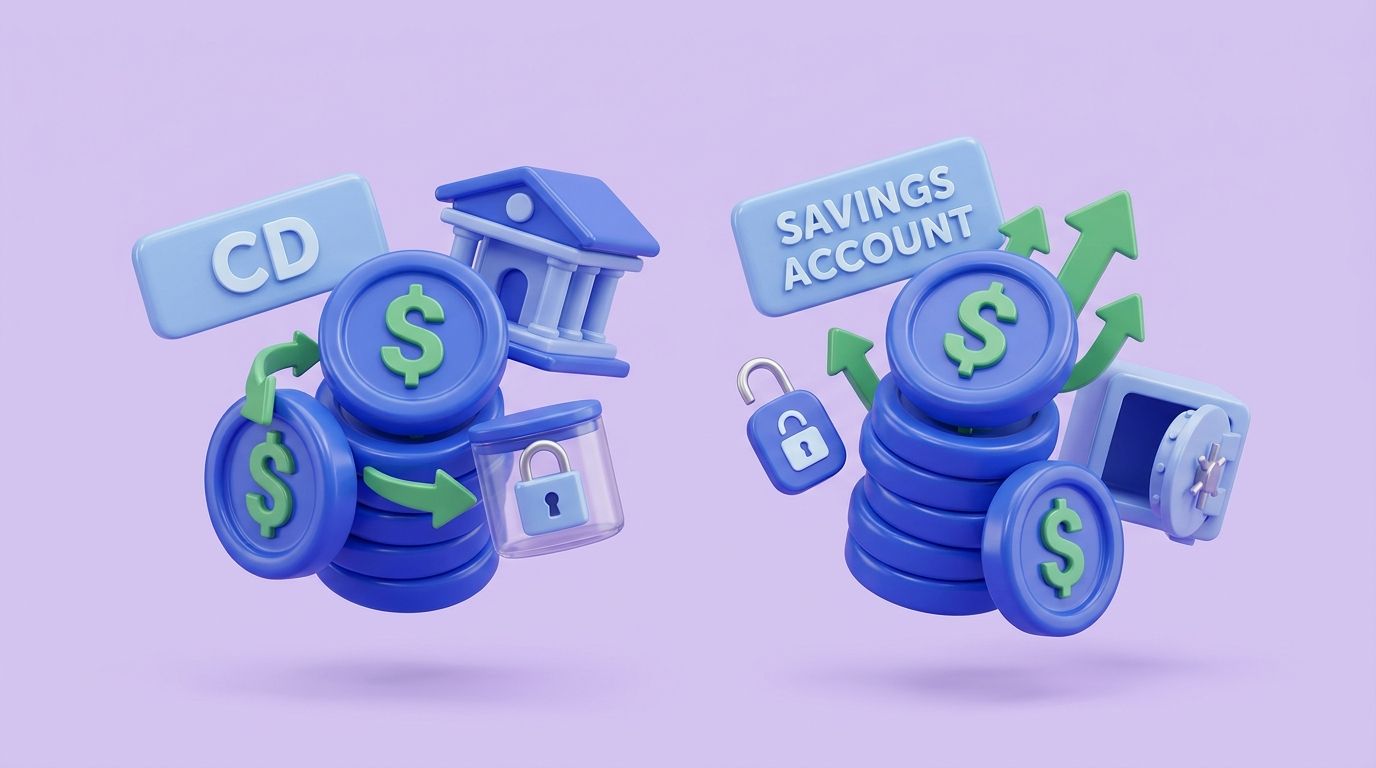
A share certificate is the credit union equivalent of a bank certificate of deposit. You commit a lump sum for a fixed term, usually three months to five years, and earn a fixed dividend rate in exchange. Withdraw early and you pay a penalty, often several months of dividends.

Certificates tend to pay more than share savings, and many credit unions offer specialty terms like 7-month or 13-month promo certificates with elevated APYs. They work well for money you know you will not touch, such as a down payment fund two or three years out.

Money Market Share Account

A money market share account sits between share savings and a certificate. Rates are tiered, so larger balances earn higher dividends, and you can usually write a limited number of checks or send transfers each month. Minimum balance requirements are common, often $1,000 to $2,500.

This account makes sense for an emergency fund you want to grow faster than basic savings while still keeping access. If you also want a fintech option with a high-yield feel, you can pair a credit union money market with Current Banking for spending that also reports to the credit bureaus.

Best for: People who want a no-fee mobile bank with early direct deposit, high-yield account

Current Banking

Current Banking
4.6Firstcard rating

Current is a mobile-first banking app with no monthly fee and no minimum balance. Members can earn up to 4.00% APY with a qualifying direct deposit of $200, receive direct-deposit paychecks up to 2 days early, and overdraft up to $200 fee-free.

Standout feature

4.00% APY on Savings Pods (with a $200+ qualifying direct deposit) plus paycheck up to 2 days early — both included on the standard account for free

Fees

Free

Pros

$0 monthly fee; up to 4.00% APY on Savings Pods with qualifying direct deposit; paycheck up to 2 days early;

Cons

No physical branches

Christmas Club and Vacation Club Accounts

Club accounts are a credit union tradition. A Christmas club lets you save small amounts all year, then pays the balance out as a lump sum in October or November, just in time for holiday shopping. A vacation club works the same way but pays out before your chosen travel month.

Dividend rates on clubs are modest, but the structure builds discipline. You automate a weekly deposit, lose easy access until the payout date, and avoid charging holidays or vacations to a credit card you would later regret. For tracking how those clubs fit your full budget, a tool like Monarch Money can connect to the credit union and show every bucket on one dashboard.

Best for: Comprehensive Budgeting App

Monarch Money

Monarch Money
4.8Firstcard rating

Monarch Money simplifies personal finance by uniting all your accounts in one place—secure, ad-free, and built for couples. 50% off your first year when you sign up via Firstcard!

Standout feature

#1 rated budgeting app (WSJ). 50% off first year via Firstcard.

Fees

$14.99/mo or $99.99/yr ($8.33/mo)

Pros

Beautiful, ad-free interface (4.9★ App Store). Best budgeting app for couples and families. Comprehensive account syncing and cash flow forecasting.

Cons

No free tier — requires paid subscription.

Share Draft Account (Checking)

A share draft account is simply a credit union checking account. You get a debit card, paper checks, bill pay, and direct deposit, often with no monthly fee and free access to a large shared-branch ATM network. Many credit unions also pay a small dividend on share draft balances, which most banks do not.

Share draft accounts pair naturally with overdraft protection lines, early direct deposit features, and budgeting apps. If you want a more flexible workflow than a credit union app provides, services like Brigit can act as a backup for small cash gaps between paychecks.

Health Savings Account (HSA) Share

If you are enrolled in a high-deductible health plan, you can open an HSA share at a participating credit union. Contributions are tax-deductible, growth is tax-free, and qualified medical withdrawals are tax-free, making the HSA one of the most tax-advantaged savings vehicles available.

Many credit unions let you start as a simple cash HSA and later add an investment sleeve once you cross a balance threshold like $1,000 or $2,500. Used carefully, an HSA doubles as a stealth retirement account.

IRA Share Account (Traditional and Roth)

Credit unions also offer IRA shares, which are retirement accounts wrapped around either a savings, money market, or certificate structure. You can pick a traditional IRA for an upfront tax deduction or a Roth IRA for tax-free withdrawals in retirement, subject to IRS income limits.

Dividend rates inside an IRA share are usually similar to regular share or certificate rates, so the appeal is the tax treatment, not the yield. If you want to build retirement savings and credit history at the same time, the Self.Inc Credit Builder Account reports payments to all three bureaus while you build a small savings balance you receive at the end of the term.

Best for: Credit builder loan

Self.Inc: Credit Builder Account

Self.Inc: Credit Builder Account
4.5Firstcard rating

Build credit and savings at the same time. Whether you have low or no credit, the Self Credit Builder Account is designed for you.

Term

24 months

APR

15.51% - 15.92%

Admin Fee

$9 admin fee

Credit Check

No

Custodial and Youth Savings

Most credit unions offer youth or minor share accounts, sometimes with bonus rates on the first few hundred dollars. They are a great way to teach kids about deposits and dividends, and they often unlock additional products like teen checking once a child turns 13.

If you are building credit for yourself while teaching kids about money, Firstcard offers a secured credit-building card that can run alongside whatever savings system you set up at your credit union.

How Credit Union Savings Compare to Banks

In most categories, credit unions match the bank product one for one but use different names. Share savings equals basic savings. Share certificate equals CD. Money market share equals money market. Share draft equals checking. The legal structure is different (member-owned cooperative versus for-profit corporation), but the federal insurance through NCUA up to $250,000 mirrors FDIC coverage at banks.

The practical difference is often pricing. Because credit unions return profits to members, dividend rates can be higher and fees lower. The trade-off is fewer branches and sometimes a less polished app, which is why many members layer in fintech tools like Monarch Money or Current Banking to fill the gaps.

Frequently Asked Questions

Are credit union savings accounts insured?

Yes. Federal credit unions and most state credit unions carry insurance from the National Credit Union Administration (NCUA) up to $250,000 per member, per ownership category. That coverage is functionally equivalent to FDIC insurance at banks and is backed by the full faith and credit of the U.S. government.

What is the difference between a share account and a regular savings account?

A share account is simply a savings account at a credit union. The word "share" reflects the fact that depositors are member-owners, not customers. Mechanically it works the same way as a bank savings account, with deposits, withdrawals, and dividends that function like interest.

Do credit unions usually pay higher rates than banks?

On average, credit unions tend to pay slightly higher dividend rates on savings and certificates and charge lower fees on checking, but the gap varies by institution and by product. Always compare current APYs side by side before moving money, since promotional rates at online banks can sometimes beat local credit unions.

Can opening multiple savings accounts hurt my credit?

Opening deposit accounts typically does not affect your credit score because most credit unions pull ChexSystems, not a credit bureau. Credit-related products like loans or credit-builder accounts may generate a hard inquiry, so review the disclosures before applying.


Firstcard Educational Content Team

Firstcard Educational Content Team - May 28, 2026

Credit building
for all

Build credit early, earn cashback, grow your savings all in one place.

Credit building for all