If a quiz asked you to pick the best description of savings and checking accounts, the short answer is this: checking accounts are for spending, and savings accounts are for setting money aside to grow. That one sentence captures the core difference.
But the real value comes from understanding why each account exists and how they work together. Used well, the two cover almost everything you need from day-to-day banking.
This guide breaks down the purpose of each account, how they differ, and how to split your money between them.
What a Checking Account Is For
A checking account is your everyday spending hub. It holds the money you use for bills, groceries, rent, and swiping your debit card.
Its whole purpose is easy, frequent access. You can withdraw cash, write checks, pay bills online, and make unlimited transactions without penalty.
The trade-off is interest. Most checking accounts pay little or no interest, because they are designed for movement, not growth. There are many good reasons to open a checking account, and convenience is the biggest one.
Apps like Chime and Current offer modern checking with features like early direct deposit and low fees, which can make daily money management simpler.
Current Banking

Current Banking
Current is a mobile-first banking app with no monthly fee and no minimum balance. Members can earn up to 4.00% APY with a qualifying direct deposit of $200, receive direct-deposit paychecks up to 2 days early, and overdraft up to $200 fee-free.
Standout feature
4.00% APY on Savings Pods (with a $200+ qualifying direct deposit) plus paycheck up to 2 days early — both included on the standard account for free
Fees
Free
Pros
$0 monthly fee; up to 4.00% APY on Savings Pods with qualifying direct deposit; paycheck up to 2 days early;
Cons
No physical branches
What a Savings Account Is For
A savings account has the opposite job. Its purpose is to hold money you do not plan to spend right away, while earning interest over time.
Think of it as the account where your emergency fund, your vacation money, or your down payment savings live. The money stays safe and grows a little, then you move it to checking when you actually need to spend it.
Because savings accounts are not built for daily spending, they often limit certain withdrawals. In fact, you usually cannot write checks from a savings account the way you can from checking.
There are several different types of savings accounts, from basic savings to high-yield options. The higher the rate, the faster your set-aside money grows. A tool like Self can pair saving with credit building if you want to do both at once.
The Key Differences at a Glance
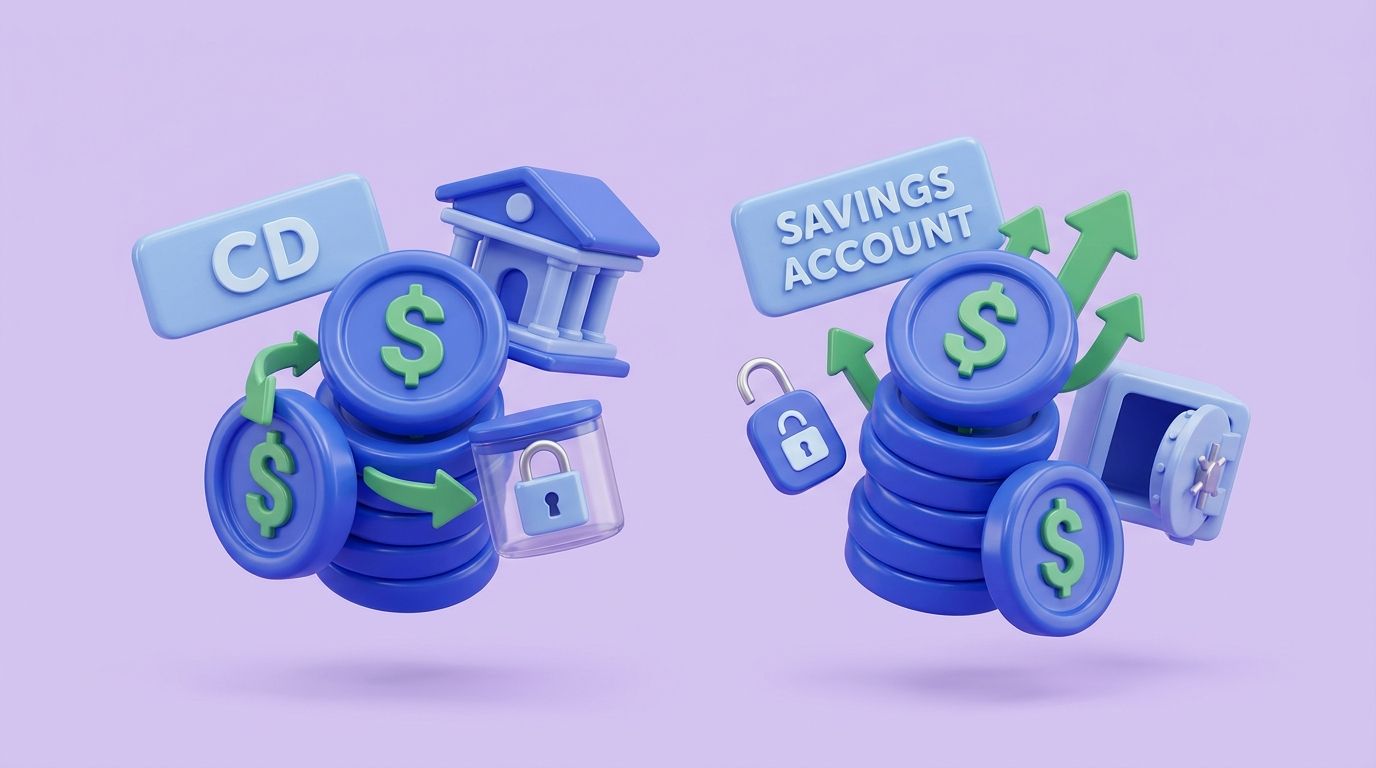
The clearest way to see the contrast is by purpose. Checking is for access and spending. Savings is for storing and growing.
Checking accounts usually allow unlimited transactions and pay little interest. Savings accounts pay more interest but may limit how often you withdraw.
Checking comes with a debit card and check-writing. Savings often does not, by design. Both are typically FDIC-insured at a bank, so your money is protected up to the legal limit either way.
How to Use Both Together
The smart setup uses both accounts for what each does best. Your paycheck lands in checking, you pay bills from there, and you move a set amount to savings each month.
A common approach is to keep enough in checking to cover your monthly spending plus a small buffer. Our guide on how much money to keep in checking walks through the math.
Everything beyond that buffer can sweep into savings, where it grows. Tying that habit to clear savings goals makes it stick. Chime makes this automatic by rounding up purchases into savings.
Chime

Chime
- Fee-free banking plus early pay access - Overdraft up to $200 without fees - 5% cash back and build credit everyday. - 3.75% APY on your savings.
Standout feature
No credit check, no interest, no annual fee, and no minimum deposit required.
Fees
$0
Pros
Fee-Free Banking and Get paid up to 2 days early
Cons
App/online-only support, no branches
Choosing the Right Accounts
When picking a checking account, look at fees, ATM access, and features like early direct deposit. Our guide on how to choose the right checking account covers what matters most.
For savings, compare the interest rate, any minimum balance, and withdrawal limits. If you want a higher rate, weigh a money market account vs high yield savings to see which fits.
Many people keep checking and savings at the same bank for easy transfers, but you can mix and match. Terms and conditions apply, and rates can change at any time.
Frequently Asked Questions
What is the main difference between a checking and savings account?
A checking account is built for everyday spending with unlimited transactions, a debit card, and check-writing. A savings account is built for storing money you do not need right away while earning interest. In short, checking is for access, savings is for growth.
Do you need both a checking and a savings account?
Most people benefit from both. Checking handles daily spending and bills, while savings keeps your emergency fund and goals separate so you are less tempted to spend them. Using both together is the most common and practical setup.
Which account earns more interest?
Savings accounts almost always earn more than checking, and high-yield savings accounts earn the most. Checking accounts are designed for movement, not growth, so they typically pay little or no interest. That is why extra cash usually belongs in savings.
Can I spend directly from a savings account?
Usually not in the same easy way as checking. Savings accounts often limit certain withdrawals and rarely include a debit card or check-writing. To spend the money, you typically transfer it to checking first.