
Money is one of the most common things couples argue about, and a shared credit card can either ease that tension or add to it. The right setup lets two people pool rewards, track spending in one place, and build toward shared goals like a vacation or a first home.
The challenge is that most cards were not built for two equal owners. Understanding the difference between a joint account, an authorized user, and a truly shared card is the key to choosing well in 2026.
Joint Account vs Authorized User
A true joint credit card makes both partners equally responsible for the balance, and both build credit history from the account. These are harder to find in 2026, since most major issuers have phased them out.
The more common setup is a primary cardholder plus an authorized user. The primary owner is legally responsible for the bill, while the authorized user can spend and often benefits from the account's payment history on their own credit report. Pick the structure that matches how much shared responsibility you both want.
Cash Back Cards Built for Shared Spending
For couples who want simple rewards on groceries, gas, and everyday bills, a flat or category cash-back card usually wins. The PNC Cash Rewards Visa is often highlighted because PNC still allows joint applications, which is rare among big banks.
Cards like the Capital One Venture X let you add authorized users at no extra cost, and those users receive the same lounge access as the primary holder. As of July 2026, that card carries a $395 annual fee, so it fits couples who travel enough to use the perks. APRs and terms vary by creditworthiness.
If a premium joint or authorized-user card feels out of reach because one partner's credit is still thin, the Aspire® Cash Back Rewards Mastercard is an unsecured card with no security deposit that lets you prequalify for a limit up to $1,000 with a FICO score around 580 and earns up to 3% cash back. Each partner can pursue their own approval and start earning rewards while their scores catch up.
Aspire® Cash Back Rewards Mastercard

Aspire® Cash Back Rewards Mastercard
Aspire® Cash Back Rewards Mastercard. Prequalify* For Up To $1000 Credit Limit. No security deposit. Packed with great benefits, it’s designed to give you more flexibility—and purchasing power—along with up to 3% cash back rewards!** Good anywhere Mastercard is accepted, it’s the go-to card for any lifestyle.
Standout feature
Up to 3% cashback rewards**
Fees
$85–$175 first year, $229 thereafter (maintenance fees already included)
Pros
No Deposit Required. Prequalify* for up to $1000 credit limit
Cons
High APR, 36% Fixed.
Travel Cards for Couples Who Explore Together
If you travel as a pair, pooling points on one account can speed up free flights and hotel nights. The Chase Sapphire Reserve charges a high annual fee and adds a per-authorized-user fee, but both partners get lounge and guest privileges.
The upside is that two people funneling all travel and dining spend into one rewards pool reach redemption thresholds much faster than two separate cards would. The downside is the yearly cost, so run the math on whether your combined travel justifies the fee.
Building Credit Together as a Couple
Not every couple is ready for a premium rewards card. If one or both partners have thin or damaged credit, chasing points is the wrong first move. A better plan is to build both scores first, then upgrade later.
Adding a partner as an authorized user on an established card is one path, since the account's history can appear on both reports. Another is for each partner to open a credit-builder card. The Self Visa Credit Card combines a savings-style builder account with a secured card, and the Kikoff Secured Credit Card works well for someone starting from scratch.
The Chime Credit Builder card charges no annual fee and no interest, using money you set aside as your limit, which keeps a budgeting couple from overspending. The Current Build Card takes a similar no-interest approach. Building in parallel means both partners qualify for better shared cards down the road. A free tool like Creditship.ai lets you both watch your scores climb together.
For a couple where a hard credit pull is a worry, the Perpay Credit Card offers a different on-ramp: it is paycheck-powered, needs no security deposit and no credit check to begin, and earns 2% in rewards. It suits a partner with steady income who wants to build history in parallel without risking a denial on a shared application.
Perpay Credit Card

Perpay Credit Card
Meet the only card powered by your paycheck. With automatic transfers from your paycheck, you can manage payments stress-free and build credit with ease.
Fee
$9/month plus $9 account opening fee
APR
Marketplace: 0% / Credit Card: 27.74% to 29.99% depending on your creditworthiness.
Minimum Deposit Amount
$0
Credit Check
No
Cashback
2% reward on purchases made in Perpay Marketplace
Benefit
2% rewards, no security deposit
How Shared Rewards Actually Work
When a couple uses one account, all spending earns into a single rewards balance, which is the main appeal. That pooled balance can be redeemed by the primary cardholder for cash back, statement credits, or travel.
Authorized users usually cannot redeem rewards or change the account themselves, so decide in advance who manages redemptions. Keeping the conversation open avoids friction when it is time to book a trip or cash out.
Watch the Fine Print Before You Both Sign On
Authorized-user fees add up on premium cards, sometimes $75 to $195 per person each year, so confirm the cost before adding your partner. Also check whether the issuer reports authorized-user activity to the bureaus, since not all do, and that reporting is what helps a partner's credit.
Finally, agree on how you will split payments. Only the primary cardholder is legally on the hook, so a missed payment hurts that person's credit most. A shared budgeting habit protects both of you.
If you would rather start with a low-risk card in each person's own name, the Arro Card is an unsecured starter with no deposit and no hard pull that can grow from a $300 limit toward $2,500 as you pay on time, earning 1% cash back on gas and groceries. Two partners each building on their own Arro account can strengthen both credit files before applying for a shared premium card together.
Arro Card
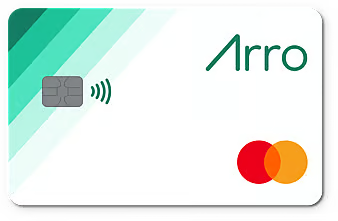
Arro Card
No deposit. No hard credit check. Start with up to $300 and grow your credit line to $2,500 by completing in-app tasks. Earn 1% cash back on gas and groceries — including Walmart and Target.
Standout feature
Unsecured — no deposit required
Fees
up to $60/ year
Pros
1% cash back on gas & groceries
Cons
Starting credit limit: $50–$300
What Couples Commonly Report
Many couples say pooling spend onto one card made rewards add up noticeably faster than juggling two separate accounts. Others appreciate seeing all household spending in a single statement, which makes monthly budgeting easier.
A frequent complaint is that authorized users cannot redeem points or dispute charges, which frustrates the partner who is not the primary holder. Some also report tension when one person overspends on a shared card, since the primary owner carries the legal risk. The common lesson is that clear rules matter as much as the card itself.
Frequently Asked Questions
Is a joint credit card better than adding an authorized user?
It depends on how much shared responsibility you want. A joint account makes both partners equally liable and builds both credit files, but these are rare in 2026. An authorized-user setup is easier to find and can still help both scores, though only the primary holder is legally responsible for the balance.
Can adding my partner as an authorized user help their credit?
Often yes, if the issuer reports authorized-user activity to the credit bureaus and the account stays in good standing. On-time payments and low balances on that card can appear on your partner's report. Confirm the issuer reports authorized users before relying on this strategy.
Do both partners earn and share the rewards?
All spending on a shared card earns into one rewards balance, so in that sense the rewards are pooled. However, the primary cardholder usually controls redemptions, and authorized users typically cannot cash out points on their own. Agree in advance on who manages the rewards.
What if one of us has bad credit?
Start by building credit before applying for a premium shared card. Credit-builder options like the Self Visa Credit Card, Kikoff Secured Credit Card, Chime Credit Builder, and the Current Build Card report on-time payments to the bureaus. Once both scores improve, you can qualify for stronger rewards cards together.
Your next step is to talk with your partner about goals and responsibility, then pick the structure, joint or authorized user, that fits. Terms and conditions apply, and APRs vary by creditworthiness.




