
Booking a flight to Tokyo is the fun part. Then you remember your current card charges 3% on every euro, yen, or peso you spend, and suddenly that ramen dinner costs more than it should.
A good credit card for international travel removes that hidden tax and adds protections you actually want when you are 6,000 miles from home. Want to actively grow your score so you stay in approval range for cards like this? Creditship is a free AI-powered credit monitor that tracks all three bureaus and gives you personalized steps to keep your score moving in the right direction. For a no-foreign-transaction-fee deep-dive on one mid-tier travel card, see our Citi Strata Premier foreign transaction fee guide.
What Makes a Credit Card Good for International Travel
The basics come down to four features. Miss any of them and you will feel it the moment you tap your card at a Parisian cafe.
No Foreign Transaction Fees
This is the big one. A foreign transaction fee is a charge, usually 1% to 3%, on any purchase processed outside the United States. It applies whether you swipe in person or buy from an overseas website while sitting on your couch.
Good travel cards waive this fee entirely. If you spend $4,000 abroad on a 3% card, you just paid $120 for nothing. On a no-fee card, you paid $0.
Wide Network Acceptance
Visa and Mastercard are accepted almost everywhere. American Express has improved its global reach but still sees gaps in smaller European towns and parts of Asia. Discover acceptance overseas is more limited. If you carry only one card, Visa or Mastercard is the safer pick for general use.
Creditship

Creditship
Get free credit monitoring and concrete advice how to improve your credit from Creditship AI.
Standout feature
AI Credit Coach. AI analyzes your credit report in depth and gives you tailored, actionable steps to raise your score.
Fees
Free
Pros
Free credit report access plus monitoring and alerts
Cons
No credit repair feature
Chip and PIN Capability
Most U.S. cards default to chip and signature. In Europe, automated kiosks like train ticket machines and gas pumps often require a PIN. A card that supports chip and PIN, or at least lets you set a PIN for your account, prevents getting stranded at a Munich train station.
Travel Protections
Look for trip delay insurance, lost luggage coverage, primary rental car insurance, and emergency assistance. These benefits quietly save real money when flights cancel or bags vanish in transit. If you also want to make sense of those benefits on your monthly bill, see how to read your credit card statement.
Cards Travelers Commonly Pick
These show up again and again in traveler picks. None of this is a recommendation, just a snapshot of how each card is positioned.
Chase Sapphire Preferred
A mid-tier card with no foreign transaction fees, a strong sign-up bonus, and points that transfer to airline and hotel partners like United, Hyatt, and Air France. The $95 annual fee stays modest. It is often called the entry point to award travel.
Capital One Venture X
A premium card with a $395 annual fee that includes a $300 annual travel credit, Priority Pass lounge access, and Capital One lounge access. Transfer partners include Air Canada Aeroplan and Turkish Airlines. The effective annual fee feels lower once you use the travel credit.
American Express Platinum
The $695 annual fee buys Centurion Lounge access, Global Entry credit, Uber credit, hotel status, and more. Best for travelers who fly often and use lounges. Acceptance overseas is improving but still spotty in small towns.
Capital One Venture
A simpler card with a $95 annual fee and a flat 2x miles on every purchase. No foreign transaction fees. Good for travelers who do not want to optimize categories.
Bilt Mastercard
No annual fee, no foreign transaction fees, and points that transfer to airlines including American, United, and Air France. Bilt also lets you earn points on rent payments, which is unusual.
Transfer Partners Explained
A transfer partner is an airline or hotel loyalty program that accepts your credit card points one-for-one or close to it. So 50,000 Chase points become 50,000 United miles. The reason this matters: airlines often price award flights cheaper than the cash fare, sometimes a lot cheaper.
If you only ever redeem points for statement credit at one cent each, you are leaving value on the table. If you transfer thoughtfully to a partner with a good award chart, the same points can be worth two cents or more.
Not every card has transfer partners. Cash-back cards do not. This is one reason heavy travelers gravitate to Chase, American Express, Capital One, and Citi.
Airport Lounge Access
Lounges offer free food, drinks, Wi-Fi, showers, and quiet seating. The two main networks are Priority Pass and the issuer-owned networks like Centurion, Capital One Lounges, and Chase Sapphire Lounges.
Lounge access usually comes attached to premium cards with annual fees of $395 or higher. If you do not fly often enough to use lounges, the cheaper card without lounge access usually wins on math. Hoping to get into a lounge without paying a premium annual fee? Our guide on whether a credit card with lounge access and no annual fee actually exists walks through the few realistic ways to do it.
What If Your Credit Is Not There Yet
Most cards listed above need good to excellent credit, typically FICO scores of 690 and up. Some premium picks expect 720 or higher. If you are still building, secured credit card deposit explains the secured-card path, while how to build credit with a car loan covers an installment route. If you are unsure how subprime cards fit in, see what a subprime credit card is.
If you are not in that range yet, the path is usually a starter card first. The Aspire Mastercard is designed as a graduation path: use it to build a payment history and on-time record, then graduate to a travel rewards card once your score crosses into the approval zone.
Aspire® Cash Back Rewards Mastercard

Aspire® Cash Back Rewards Mastercard
Aspire® Cash Back Rewards Mastercard. Prequalify* For Up To $1000 Credit Limit. No security deposit. Packed with great benefits, it’s designed to give you more flexibility—and purchasing power—along with up to 3% cash back rewards!** Good anywhere Mastercard is accepted, it’s the go-to card for any lifestyle.
Standout feature
Up to 3% cashback rewards**
Fees
$85–$175 first year, $229 thereafter (maintenance fees already included)
Pros
No Deposit Required. Prequalify* for up to $1000 credit limit
Cons
High APR, 36% Fixed.
Self Visa Credit Card (Graduation Path)
If the Aspire approval feels out of reach, the Self Visa pairs a Self Credit Builder Account with a secured Visa. Your savings double as your credit line, the on-time history flows to all three bureaus, and after a year of clean payments many cardholders are positioned to apply for a travel card with confidence.

Current Build Card
For travelers who want zero out-of-pocket cost while they build, the Current Build Card has a $0 annual fee, no minimum security deposit, and no credit check at signup. It runs on your existing Current banking deposits and reports to all three major bureaus. Useful for newcomers, students, and anyone who wants a no-risk on-ramp before applying for a higher-tier travel rewards card.
Current Build Card
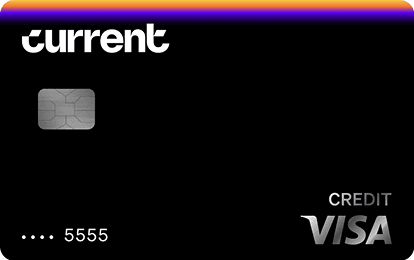
Current Build Card
$0 annual fee. No minimum deposit required. No credit check required. 1 point per dollar on eligible categories. Reports to Experian, TransUnion, Equifax.
Fee
$0
APR
0%
Minimum Deposit Amount
$0
Credit Check
No
Cashback
1 point/dollar on eligible categories (with qualifying payroll deposit)
Benefit
No credit check, no deposit minimum
Smart Habits When Using Your Card Abroad
Notify Your Issuer or Trust Their Algorithm
Many issuers no longer require travel notices because their fraud detection improved. Check your card's policy. If they recommend it, set a travel notice in the app a few days before you fly.
Always Pay in Local Currency
If a payment terminal asks whether to charge you in dollars or euros, choose euros. The dollar option uses something called Dynamic Currency Conversion, which slaps a 3% to 7% hidden markup onto your bill. Local currency uses your card network's clean exchange rate.
Carry a Backup
Network outages happen. A second card from a different network gives you a fallback if your primary stops working at a hotel checkout in Lisbon.
Use Tap to Pay When You Can
Contactless payment is faster and avoids the chip-and-PIN issue at many terminals. Mobile wallets like Apple Pay also tokenize your card number, which adds a layer of fraud protection.
How Issuers Actually Convert Your Foreign Charges
When you buy a coffee in Paris, the merchant charges your card in euros. The Visa or Mastercard network converts that amount to dollars using a wholesale exchange rate, usually within a fraction of a percent of the mid-market rate. Your statement shows the dollar amount.
If your card has no foreign transaction fee, that conversion is the only adjustment. If your card has a 3% fee, you pay the network rate plus 3% on top. That is why no-foreign-transaction-fee cards beat currency-exchange kiosks at the airport every time.
A Quick Decision Framework
Ask yourself three questions before applying for a travel card.
How many international trips will you take this year? One short trip does not justify a $695 annual fee. Three or more might.
Do you redeem points or just want simple cash back? Heavy redeemers benefit from transfer partners. Simple travelers may prefer flat-rate cash back with no foreign transaction fees.
What is your credit score today? If it is below 690, focus on building first. Approval odds matter more than perks if you are likely to be declined.
Related Reading
- Citi Strata Premier foreign transaction fee
- How to read your credit card statement
- Secured credit card deposit guide
- How to build credit with a car loan
- What a subprime credit card is
Frequently Asked Questions
Is it better to use a credit card or cash abroad?
For most purchases, a no-foreign-transaction-fee credit card is cheaper and safer than exchanging cash. Cards use wholesale exchange rates, while currency exchange kiosks at airports often charge 5% to 10% markups. Carry a small amount of local cash for taxis and tipping, then put the rest on a card.
Do debit cards work overseas?
Most U.S. debit cards work at international ATMs but charge a foreign ATM fee plus a foreign transaction fee, often 3% or more combined. Some credit unions and online banks waive both. Debit cards also offer weaker fraud protection than credit cards, so be cautious about using them at restaurants and unfamiliar shops.
Will using my card abroad hurt my credit score?
No. International purchases are reported the same as domestic ones. As long as you pay your bill on time and keep your utilization under 30%, foreign spending will not affect your score differently. Just watch for fraud alerts that might pause your card mid-trip.
How do I avoid the dynamic currency conversion trap?
At any payment terminal abroad, always select the local currency when given a choice. Dynamic Currency Conversion converts the charge to dollars at the terminal using an inflated rate, often costing 3% to 7% more than letting your card network handle the conversion.




