Seen a pre-approval offer for the Destiny credit card and wondering whether it is a smart move? For people rebuilding credit, the first approval you find is tempting. But the Destiny Mastercard comes with real costs worth understanding before you say yes. This review covers the issuer, the APR, the fee structure straight from the cardholder agreement, the credit limit, and who it actually fits.
Firstcard exists to make these choices clear and transparent. So we cover the Destiny card honestly first, then point to a couple of lower-cost options if your goal is simply building credit for less.
Key Facts at a Glance
| Issuer | The Bank of Missouri (also First Electronic Bank variant), serviced by Concora Credit |
| Network | Mastercard, usable anywhere Mastercard is accepted |
| Annual fee | $0 (agreement variant) or $175 first year / $49 after (marketed variant) |
| Monthly fee | $5/mo ($60/yr) agreement variant, or $12.50/mo starting year two |
| Purchase APR | 35.9% (cash advance 35.9%) |
| Rewards | None |
| Welcome bonus | None |
| Other fees | Cash advance $5 or 5% (max $100); 1% foreign transaction; late/returned/over-limit up to $41 each |
| Credit limit | Typically starts around $700 |
| Credit score | For limited/poor credit; prequalify with soft pull, hard pull at application |
| Reports to | Experian, TransUnion, Equifax |
All figures as of June 2026.
Destiny® Mastercard®
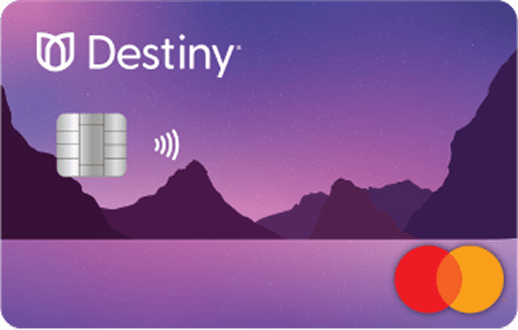
Destiny® Mastercard®
The Destiny® Mastercard® is built for imperfect credit: a full $700 unsecured credit limit if approved, no security deposit, and acceptance everywhere Mastercard works nationwide. Your activity is reported to all three credit bureaus monthly, and seeing if you qualify won't touch your score.
Standout feature
Unsecured — no security deposit required
Fees
Annual Fee: $175 the first year; $49 thereafter. Monthly Fee: $0 the first year (billed $0 each month); $150 annually thereafter (billed $12.50 each month)
Pros
$700 credit limit guaranteed if approved
Cons
High 35.9% APR
What Is the Destiny Credit Card?
The Destiny credit card is an unsecured Mastercard for consumers with limited or poor credit, issued by The Bank of Missouri and serviced by Concora Credit. Because it is unsecured, you do not put down a refundable security deposit, which is the main draw for people who cannot or do not want to tie up cash. As a Mastercard it works anywhere Mastercard is accepted, not just at one store.
You can prequalify online to see your odds with no impact to your credit score (a soft pull); applying triggers a hard inquiry. Approved cardholders typically start with a credit limit around $700. The card reports to all three major bureaus, Experian, TransUnion, and Equifax, so on-time payments can help build history.
Destiny Credit Card Fees and APR
The fees are the headline, and the exact amount depends on which Destiny offer you are approved for. The Bank of Missouri cardholder agreement on file with the CFPB discloses a 35.9% APR on purchases and cash advances, a $0 annual fee, and a monthly fee of $5 per month ($60 per year). It also lists a cash advance fee of $5 or 5% (whichever is greater, up to $100), a 1% foreign transaction fee, a $1 minimum interest charge, and late, returned-payment, and over-limit fees of up to $41 each. There is no welcome bonus and no rewards program.
Widely marketed Destiny prequalified offers also appear with a different fee tier: a $175 annual fee the first year, around $49 after that, plus a $12.50 monthly fee starting in year two. Both are real Destiny offers, so read your specific prequalified terms closely to see which applies to you. Either way, the 35.9% APR is high, and the fees make this an expensive card to carry if you revolve a balance.
How Fees Affect Your Credit Limit
With a starting limit around $700, any upfront annual fee is charged when the account opens, so your available credit begins lower than the full limit. A smaller cushion can raise your utilization ratio, which is one factor that may influence your score. Paying off the Destiny card in full each month dodges both the 35.9% interest and a creeping utilization problem.
Who Is the Destiny Credit Card For?
This card serves a narrow need: getting an approval when other cards have declined you. If you have a thin or damaged file and no cash for a deposit, an unsecured subprime card may be one of your few options, and adding a positive account with on-time payments can help your mix over time.
Still, the high cost means it usually works best as a short-term stepping stone. The goal should be qualifying for a cheaper card down the road, then closing or downgrading this one.
Lower-Cost Alternatives to the Destiny Credit Card
Before committing to these fees, it pays to compare options that may cost far less. If you want an unsecured card without a deposit, the Aspire Mastercard is the closest like-for-like option. It prequalifies for up to a $1,000 limit with no deposit and no hard pull at prequalification, accepts scores around 580 and up, reports to all three bureaus, and pays up to 3% cash back, which Destiny does not offer at all.
Aspire® Cash Back Rewards Mastercard

Aspire® Cash Back Rewards Mastercard
Aspire® Cash Back Rewards Mastercard. Prequalify* For Up To $1000 Credit Limit. No security deposit. Packed with great benefits, it’s designed to give you more flexibility—and purchasing power—along with up to 3% cash back rewards!** Good anywhere Mastercard is accepted, it’s the go-to card for any lifestyle.
Standout feature
Up to 3% cashback rewards**
Fees
$85–$175 first year, $229 thereafter (maintenance fees already included)
Pros
No Deposit Required. Prequalify* for up to $1000 credit limit
Cons
High APR, 36% Fixed.
If you would rather build with a dedicated credit-builder product instead of a subprime card, the Current Build Card links everyday purchases to a credit-building account. It has a $0 annual fee, no minimum deposit, and no credit check, and it reports to Experian, TransUnion, and Equifax, so you build payment history without a 35.9% APR or monthly fees hanging over you.
Current Build Card
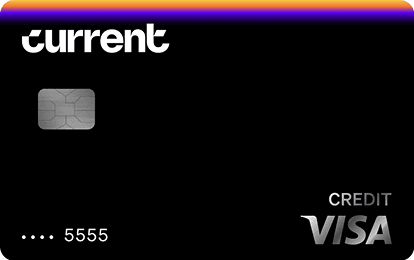
Current Build Card
$0 annual fee. No minimum deposit required. No credit check required. 1 point per dollar on eligible categories. Reports to Experian, TransUnion, Equifax.
Fee
$0
APR
0%
Minimum Deposit Amount
$0
Credit Check
No
Cashback
1 point/dollar on eligible categories (with qualifying payroll deposit)
Benefit
No credit check, no deposit minimum
Secured vs. Unsecured for Building Credit
A secured credit card asks for a refundable deposit, often $200 or more, but usually charges much lower fees. Over a year, a low-fee secured card can cost a fraction of what an unsecured subprime card like Destiny does once you add the $5 to $12.50 monthly fee and any annual fee.
If you can spare even the minimum deposit a starter secured card asks for, that route can build credit more affordably, and the deposit comes back when you close in good standing or upgrade.
Is the Destiny Credit Card Worth It?
For most people, the smart move is to compare before applying. The Destiny credit card may offer access when other cards decline you, but its 35.9% APR and monthly fee make it a costly way to build credit, and it earns no rewards. If you can qualify for a no-fee credit builder or a low-fee secured card, you may reach the same goal for far less. Read your prequalified terms, run the numbers, and choose the card whose total cost makes sense.
Destiny® Mastercard®
Destiny® Mastercard®
The Destiny® Mastercard® is built for imperfect credit: a full $700 unsecured credit limit if approved, no security deposit, and acceptance everywhere Mastercard works nationwide. Your activity is reported to all three credit bureaus monthly, and seeing if you qualify won't touch your score.
Standout feature
Unsecured — no security deposit required
Fees
Annual Fee: $175 the first year; $49 thereafter. Monthly Fee: $0 the first year (billed $0 each month); $150 annually thereafter (billed $12.50 each month)
Pros
$700 credit limit guaranteed if approved
Cons
High 35.9% APR
Frequently Asked Questions
How much is the Destiny credit card annual fee?
It depends on your offer. The Bank of Missouri agreement on file with the CFPB lists a $0 annual fee with a $5 monthly fee ($60 per year). Widely marketed Destiny offers also appear at $175 the first year and around $49 after, plus a $12.50 monthly fee starting in year two. Read your specific prequalified terms to see which tier applies.
What is the starting credit limit on the Destiny credit card?
Approved cardholders typically start with a credit limit around $700. Because any upfront annual fee is charged at opening, your available credit begins lower than the full limit. Keeping balances low helps protect your utilization.
Does the Destiny credit card build credit?
Yes. The Destiny Mastercard reports to all three major credit bureaus, so paying on time can help build your history. The key is on-time payments and low balances. Lower-cost cards like the Aspire Mastercard or the Current Build Card can help you reach the same goal for less.
Is there a cheaper alternative to the Destiny credit card?
Yes. Unsecured starters and credit builders often cost much less. The Aspire Mastercard pays up to 3% cash back with no deposit, and the Current Build Card has a $0 annual fee and no monthly fee. Compare the total first-year cost before deciding.

Firstcard was founded in 2020 by Kenji Niwa, an immigrant founder who was turned down for his first U.S. credit card because he had no credit score. So he set out to build the card he couldn't get. Firstcard launched its own card, the Firstcard Secured Credit Builder Card. The program received more than 250,000 applications and served tens of thousands of cardholders. In February 2026, Firstcard became a marketplace for financial products, with the same mission: to help people build credit and reach financial freedom. Today we compare credit cards, cash advance apps and credit builders, so you can choose the right one with confidence. This editorial team is led by Chief Editor Kenji Niwa. We check fees, APRs and terms against each provider's own documents and note the date we checked. We also interview real users and the companies that offer credit cards and loans. Our ratings use the same standards whether or not Firstcard earns money from a product. Full profile and latest articles →