
You just landed a job on your OPT visa, you have a paycheck coming, and then the credit card application asks for years of U.S. credit history you do not have. It is one of the most frustrating parts of starting your career in the United States. The good news is that OPT visa credit card options for international workers do exist, and several of them do not require a Social Security number, a cosigner, or any credit at all.
This guide breaks down exactly which cards work while you are on Optional Practical Training, what they need from you, and how to turn a first card into a real credit score within a year. For a wider view of the building strategy, see our guide on how to build credit on an OPT visa.
Why OPT Workers Struggle to Get Approved
Most traditional credit cards run a hard credit check and look for an established U.S. credit file. As a recent arrival, you usually have a thin credit file or nonexistent record, so the automated system rejects you even with a solid salary.
Lenders also want to verify identity. Many ask for a Social Security number, which you can get on OPT once you have a job offer, but the card you need today may not wait for that paperwork. Cards that accept an Individual Taxpayer Identification Number (ITIN) or use alternative verification solve this gap, and you can learn the exact steps to apply for a credit card with ITIN instead of an SSN.
The second hurdle is the deposit. A traditional unsecured card extends credit on trust you have not built yet. A secured or deposit-backed card flips that around, which is why it is the realistic starting point for most OPT holders. The best secured credit cards for immigrants are designed for exactly this situation.
Credit-Builder Cards That Work Without a Long History
The most reliable OPT visa credit card options are credit-builder and secured products that report to all three bureaus and do not demand years of history. These are the cards designed for exactly your situation.
A strong first choice is the Current Build Card. It pairs a spending account with a credit-building feature, there is no traditional hard credit pull to get started, and it can work for newcomers who do not yet have a deep U.S. file. Because it ties your building activity to money you already set aside, you are not taking on debt you cannot cover, which matters when your income may pause between OPT and an H-1B transition.
Current Build Card
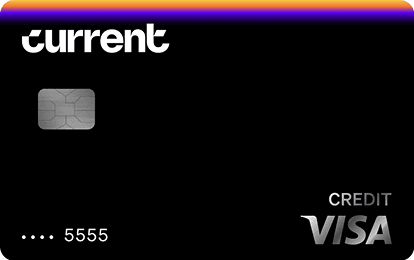
Current Build Card
$0 annual fee. No minimum deposit required. No credit check required. 1 point per dollar on eligible categories. Reports to Experian, TransUnion, Equifax.
Fee
$0
APR
0%
Minimum Deposit Amount
$0
Credit Check
No
Cashback
1 point/dollar on eligible categories (with qualifying payroll deposit)
Benefit
No credit check, no deposit minimum
Another widely used option is the Self Visa Credit Card. Self works in two steps. You open a small credit-builder account, your on-time payments are reported to Experian, Equifax, and TransUnion, and once you build up savings you can unlock a secured Visa card backed by that money. There is no hard credit check to start, which is ideal when your file is empty. Self also accepts applicants without a Social Security number in many cases, using alternative identity verification.

Key Facts at a Glance
| Feature | What OPT workers should know |
|---|---|
| Hard credit pull | Credit-builder cards above start with no hard pull |
| SSN required | Often optional; ITIN or alternative ID frequently accepted |
| Reports to bureaus | Look for cards reporting to all three (Experian, Equifax, TransUnion) |
| Deposit | Secured cards need a refundable deposit; some builders use your own savings |
| Annual fee | Varies by product; confirm before applying |
Always confirm the current terms on each issuer's page, since fees and APRs vary by creditworthiness and change over time. Terms and conditions apply.
A Third Option for Small, Predictable Building
If you want the lowest possible entry point, the Kikoff Credit Account is worth a look. Kikoff offers a small revolving line you use for a flat monthly subscription, and it reports your payments to the bureaus to build history. It does not require a hard credit check and is built for people starting from zero, which describes most workers in their first OPT year.
Kikoff Credit Account

Kikoff Credit Account
Everything you need to build your credit, right in one app. Build credit, lower debt, and unlock progress with tools that actually work.
Standout feature
An avg increase of +86 points within a year with on-time payments
Fees
$5/month for Basic plan, $20/mo for Premium plan $35/mo for Ultimate plan
Pros
Helps both payment history and credit utilization, the two factors that move scores most
Cons
Monthly fee continues for as long as you keep the account open
How to Choose the Right Card on OPT
Start with what you actually need. If you mainly want to build a score quickly and safely, a credit-builder account like Self or Kikoff does the job with minimal money at risk. If you want a card you can swipe for daily purchases while building, the Current Build Card fits better.
Check three things before you apply. First, does it report to all three bureaus? A card that does not report cannot build your credit. Second, can you apply without an SSN, or will you wait for one? Third, what does it cost monthly or annually, since some builder products charge a subscription. If you are still waiting on work authorization paperwork, our guide to getting a credit card with an EAD only covers that scenario.
Avoid cards that promise approval but charge high monthly maintenance fees and tiny limits. Those can build credit, but they cost more than the safer builder options above. For broader picks beyond builder cards, compare the best credit cards for immigrants.
How to Build Credit Fast During OPT
OPT can be as short as 12 months, so speed matters. The two factors that move your score the fastest are payment history and utilization.
Pay every bill on time, every month, with no exceptions. Set autopay so a busy work week never costs you a missed payment. Even one late payment can set you back months.
Keep your balance low relative to your limit. On a small starter limit, aim to use under 30 percent, and ideally under 10 percent. If your limit is 300 dollars, keep the reported balance under 90 dollars. Many people see score movement within 60 to 90 days of steady on-time, low-utilization activity.
What Users Commonly Report
Many OPT and international users report that credit-builder cards were the only products that approved them with no U.S. history. A common piece of praise is how fast a thin file turns into a usable score once payments start reporting. A frequent complaint is that starting limits feel low, and that some builder apps charge a monthly fee that adds up over a year. Reviewers often suggest treating the first card as a stepping stone, then applying for a standard unsecured card once your score crosses into fair or good territory.
Frequently Asked Questions
Can I get a credit card on an OPT visa without a Social Security number?
Yes, in many cases. Several credit-builder and secured cards accept an ITIN or use alternative identity verification instead of requiring an SSN. Once you receive your SSN on OPT, you can add it to your profile and apply for more cards later.
Will applying for a credit-builder card hurt my credit score?
Most credit-builder cards listed here start with no hard credit pull, so opening one does not ding your score. Traditional unsecured cards usually do run a hard inquiry, which can lower your score by a few points temporarily.
How long does it take to build credit on OPT?
Many people see early score movement within 60 to 90 days of on-time payments and low balances. Building a strong score that qualifies you for premium cards usually takes 6 to 12 months of consistent positive activity.
What happens to my credit card when my OPT ends?
Your credit history stays with you as long as your accounts remain open and in good standing, which helps if you transition to an H-1B or other status. Keep at least one account active and paid on time so your file does not go dormant.




