
You found a place you love and the rent fits your budget, but then the landlord mentions a credit check and your stomach drops. So what credit score do I need to rent a house? Most landlords look for a score around 620, though the real answer is more flexible than a single number.
Your credit score matters, yet landlords weigh several things when they decide whether to hand you the keys. Let's walk through exactly what you need, what landlords check, and the steps you can take right now to boost your odds.
What Credit Score Do I Need to Rent a House?
As of July 2026, most landlords want to see a credit score of about 620 to 650 for an apartment, and roughly 640 to 680 for a single-family house. Houses often carry a slightly higher bar because the monthly rent tends to be larger.
Scores of 700 or higher usually speed up approval and can help you skip a bigger deposit. Scores between 580 and 619 can still get approved, often with a larger deposit or a co-signer. Below 580, you may need a private landlord who is willing to be flexible.
Keep in mind these are general ranges, not hard rules. A landlord in a quiet suburb may accept a 600. A competitive building in a major city might want 740 or more. For a deeper breakdown of the exact score by property type and market, see our guide on what credit score is needed to rent a house.
What Landlords Actually Look For
Your score is just the start. In 2026, more property managers blend your credit with other signals to judge how reliable you will be.
Income
Many landlords want your gross monthly income to be about three times the rent. Pay stubs, an offer letter, or bank statements can prove it.
Payment history
Late payments, collections, and unpaid debts stand out on a credit report. A history of on-time payments tells a landlord you are likely to pay rent on time too.
Rental history
A past landlord's reference can carry real weight. Steady, on-time rent in the past is a strong sign.
Background and banking activity
Some landlords now review bank-account activity, sometimes called cash-flow analysis, to see your deposits and spending. Others run a background check for evictions or criminal records.
How to Prepare Before You Apply
A little prep can make a weaker score matter less. Try these steps before you fill out an application.
Check your own credit report first so there are no surprises. You can dispute errors that drag your score down.
Gather your documents early. Have recent pay stubs, bank statements, and references ready to go.
Write a short cover note explaining any rough patches, like a medical bill that went to collections. Honesty can help.
Offer a larger deposit or a few months of rent up front if you can. This lowers the landlord's risk. And line up a co-signer with strong credit if your score is on the edge.
What to Do If Your Credit Score Is Too Low to Rent a House
A low score does not lock you out. You have options, and you can start improving today.
Ask about private landlords, who often have more room to say yes than large management companies. Smaller buildings may skip a formal credit pull altogether.
Show strength in other areas. A bigger deposit, proof of steady income, and solid references can balance out a lower number.
If your rent history is good but not on your credit report, look into a rent-reporting service. On-time rent that shows up on your report can lift your score over time.
If you want to start adding positive history right away, a low-cost credit account like Kikoff reports to the credit bureaus and can be an easy first step to build a track record while you search for a place.
Kikoff Credit Account

Kikoff Credit Account
Everything you need to build your credit, right in one app. Build credit, lower debt, and unlock progress with tools that actually work.
Standout feature
An avg increase of +86 points within a year with on-time payments
Fees
$5/month for Basic plan, $20/mo for Premium plan $35/mo for Ultimate plan
Pros
Helps both payment history and credit utilization, the two factors that move scores most
Cons
Monthly fee continues for as long as you keep the account open
Build Credit Before You Try to Rent a House
If your move is a few months out, that window is a gift. You can raise your score with tools built for exactly this.
A credit-builder product can help. The Self Visa® Credit Card pairs a small savings plan with a secured card, so your on-time payments can build history.

The Current Build Card is another option that reports your activity to help you grow credit as you spend.
Products like these will not fix your score overnight, and results vary from person to person. Still, several months of on-time payments before you apply can move you closer to that 620 mark.
Pair a credit-builder with simple habits: pay every bill on time, keep card balances low, and avoid opening many new accounts at once.
Current Build Card
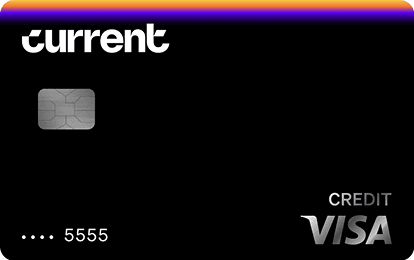
Current Build Card
$0 annual fee. No minimum deposit required. No credit check required. 1 point per dollar on eligible categories. Reports to Experian, TransUnion, Equifax.
Fee
$0
APR
0%
Minimum Deposit Amount
$0
Credit Check
No
Cashback
1 point/dollar on eligible categories (with qualifying payroll deposit)
Benefit
No credit check, no deposit minimum
Watch Your Credit So There Are No Surprises
Before a landlord ever pulls your report, you should know what it says. Checking your own credit does not hurt your score.
A monitoring tool like Creditship.ai can track changes, flag errors, and help you spot problems early. Catching a mistake before you apply gives you time to fix it.
Watching your credit is not a guarantee of approval, but it puts you in control. When you walk into an application knowing your numbers, you can plan around them instead of hoping for the best.
Frequently Asked Questions
Can I rent a house with a 600 credit score?
Yes, in many cases. A 600 sits just below the typical 620 target, so you may need a larger deposit, a co-signer, or a private landlord. Strong income and good references also help your case.
Do all landlords check credit scores?
No. Large property managers almost always run a credit check, but smaller private landlords sometimes skip it. They may rely more on income proof, references, and a face-to-face meeting instead.
Will applying to several rentals hurt my credit?
Multiple applications can add hard inquiries, which may lower your score slightly. Try to focus on places you truly want. Some landlords use a soft check that does not affect your score at all.
How long does it take to raise my credit score to rent?
It depends on your starting point. With on-time payments and low balances, some renters see gains in a few months. Deeper issues like collections can take longer to fully recover from.




