


Soft vs Hard Credit Checks: What’s the Difference?
.svg)
Soft vs hard credit check questions usually show up at high-stress moments. A credit card application, a car loan, a new apartment, or a phone plan can all involve a credit check. The catch is that “credit check” does not always mean “score drop.”
Here is the simplest way to remember soft vs hard credit check rules:
- A soft credit check helps a company verify or review credit information, but it does not affect your credit score.
- A hard credit check connects to a credit application, and it can affect your credit score.
This guide breaks down soft vs hard credit check differences with real examples, common surprises to watch for, and the best ways to minimize unnecessary inquiries.
What is a credit check?
A credit check is a request to review your credit report so someone can make a decision. That decision can relate to credit approval, housing, insurance pricing, or employment screening where permitted. The credit check shows up on your credit report as an inquiry.
There are two main categories:
- Soft inquiries
- Hard inquiries
Soft vs hard credit check matters because the categories do not play the same role in credit scoring.
Soft vs hard credit check: the quick difference
Soft vs hard credit check comes down to intent.
Soft credit check
A soft credit check happens when a company reviews your credit file for a reason that does not involve a firm application for new credit. A soft credit check does not affect your score.
Hard credit check
A hard credit check happens when you apply for credit and the lender pulls your credit report to decide whether to approve you. A hard credit check can affect your score.
If you remember one thing, remember this: soft vs hard credit check equals no score impact versus possible score impact.
What Is a Soft Inquiry?
A soft inquiry is a credit check that supports review or screening, not a full credit application.
Common examples of a soft inquiry
A soft inquiry often appears when:
- You check your own credit reports or credit score
- A lender runs a prescreen for a marketing offer
- A current lender runs a routine account review
- An insurer reviews credit data in states where that practice applies
- An employer requests a credit check for screening where permitted and with proper permission
Soft vs hard credit check confusion often starts with “prequalified” language. Many prequalification tools rely on a soft inquiry, which helps you explore options without a score change.
Does a soft inquiry hurt your credit?
No. A soft inquiry does not lower your score. It also does not signal “new debt risk” in the way hard inquiries do, which is why it does not play a role in most scoring models.
What Is a Hard Inquiry?
A hard inquiry is the credit check that usually follows a formal application for credit. It shows lenders that you recently asked for new credit.
Common examples of a hard inquiry
A hard inquiry often appears when you apply for:
- A credit card
- A personal loan
- An auto loan
- A mortgage
- Certain credit line increases (issuer rules vary)
- Some “pay over time” financing plans (provider rules vary)
Housing can create confusion. Some landlords run a hard credit check. Some rely on a soft check or a tenant screening report that does not hit your score. The only safe approach is a quick question before you authorize anything: “Will this run a hard inquiry?”
Does a hard inquiry hurt your credit?
A hard inquiry can cause a small score dip, and the impact often fades. One recent overview puts the typical impact around 5 to 10 points, with the strongest impact in the early months after it appears.
Soft vs hard credit check matters most when you have more than one hard inquiry close together. One inquiry rarely causes major damage. A cluster can.
Hard inquiry vs. soft inquiry: what to know
Soft vs hard credit check rules feel simple, but real life adds a few “watch this” moments.
1) A “credit check” message does not tell you which one it is
Many websites and applications use “credit check” as a generic phrase. That is why you should ask for the type before you submit.
The best script:
- “Is this a soft inquiry or a hard inquiry?”
- “Will this affect my credit score?”
2) Soft inquiries can appear on your personal view, but lenders do not treat them the same way
Soft inquiries can show in your report view, but they do not carry the “new credit request” signal that matters for scoring.
3) Prequalified is not the same as approved
Prequalification can help narrow options. The full application triggers the hard inquiry.
This is one reason soft vs hard credit check knowledge helps you apply with more confidence. Soft inquiry for research. Hard inquiry for decision time.
How can hard credit inquiries impact your credit score?
Hard inquiries matter because they show recent credit seeking. Scoring models can treat frequent new credit requests as a risk signal.
A single hard inquiry often causes a modest change. Many people see a small drop, often in the 5 to 10 point range.
Hard inquiries tend to matter more when:
- Your credit history stays short
- Several inquiries hit close together
- You also add new accounts, which can lower average account age
- Your credit card balances rise at the same time
The pattern matters more than the single event.
How long do hard inquiries stay on your credit report?
Two timelines matter:
- How long the inquiry remains visible
- How long it counts in score math
Hard inquiries typically remain on your credit report for up to 2 years.
Many FICO score versions only consider hard inquiries from the most recent 12 months.
So a hard inquiry can show up for 2 years, but the scoring impact usually fades earlier.
Soft vs hard credit check and rate shopping for auto loans and mortgages
This section saves people the most stress.
Rate comparisons for installment loans often get special treatment. When you shop for an auto loan, mortgage, or student loan, many scoring systems treat multiple inquiries for the same loan type within a short time window as one event for scoring purposes.
The common grouping window falls between 14 and 45 days, depending on scoring model and version.
There is also guidance that, for common scoring models, auto, mortgage, and student loan inquiries that occur 30 days prior to scoring may have no effect at all on the score.
A simple way to use rate-shopping rules
- Pick a short window for lender quotes
- Keep the loan type consistent
- Avoid mixing a mortgage shop with credit card applications in the same period
Credit card applications usually do not work the same way as auto loan or mortgage shopping. Each credit card application is its own request for revolving credit.
How to minimize credit inquiries
Soft vs hard credit check strategy should feel practical, not restrictive. These habits help most people.
1) Use soft checks for research
Use prequalification tools when available. They can help you narrow options before a full application.
2) Apply with a plan
Before any hard inquiry, ask:
- Do I need this credit right now?
- Do I meet the basic eligibility requirements?
- Do I have a second option that fits better?
3) Keep credit card applications spaced out
A single credit card application can be fine. Several in a short window can stack hard inquiries and make your profile look unstable for a short period.
4) Bundle auto loan and mortgage shopping
Do lender quotes in a tight window so inquiries group as one event.
5) Protect the bigger score drivers while you apply
A hard inquiry often has a smaller impact than missed payments or high card balances. When you plan a major application, keep payments on time and keep balances low.
Can you remove a hard inquiry?
A hard inquiry that you authorized usually stays until it ages off. Removal usually only applies when the inquiry does not belong to you.
If you see an inquiry you do not recognize:
- Confirm it is not tied to a broker or dealership that sent your application to multiple lenders
- Contact the company name that appears with the inquiry
- Dispute the inquiry with the bureau if it appears unauthorized
- Treat it as possible fraud if you did not apply for that account
Hard inquiry cleanup should focus on accuracy, not optimization.
Common soft vs hard credit check scenarios
Apartment applications
Apartment screening can involve different report types. Ask before you authorize the check. Many landlords can answer in seconds.
Phone plans and utilities
Some providers use a hard inquiry for financed devices or larger deposits. Others rely on a soft check or alternative data.
Credit cards
Most credit card applications trigger a hard inquiry. Use prequalification tools first where possible.
Auto loans and mortgages
Rate shopping can protect you, but only if you keep it in a tight time window.
Credit Cards That Do Not Require A Hard Credit Check
Self Visa® Secured Credit Card
- High approval rates (positioned as easier to get)
- Low $100 minimum deposit to get started
- No credit inquiry required to apply
- $0 intro annual fee for the first year, then $25 after
- Reports to all three major credit bureaus to build credit history
- Simple setup: apply online → fund deposit (debit/bank/Self Credit Builder Account) → use card + pay on time
OpenSky Secured Cards
- No credit check approval model (secured deposit-based)
- Cash back rewards up to 10% (program-based)
- Multiple card options depending on what you want:
- OpenSky Secured Visa®: $200 minimum deposit, $35 annual fee, 23.89% APR
- OpenSky Launch Visa®: $100 minimum deposit, $2 monthly fee, 28.24% APR
- OpenSky Plus Secured Visa®: $300 minimum deposit, $0 annual fee, rewards up to 10%

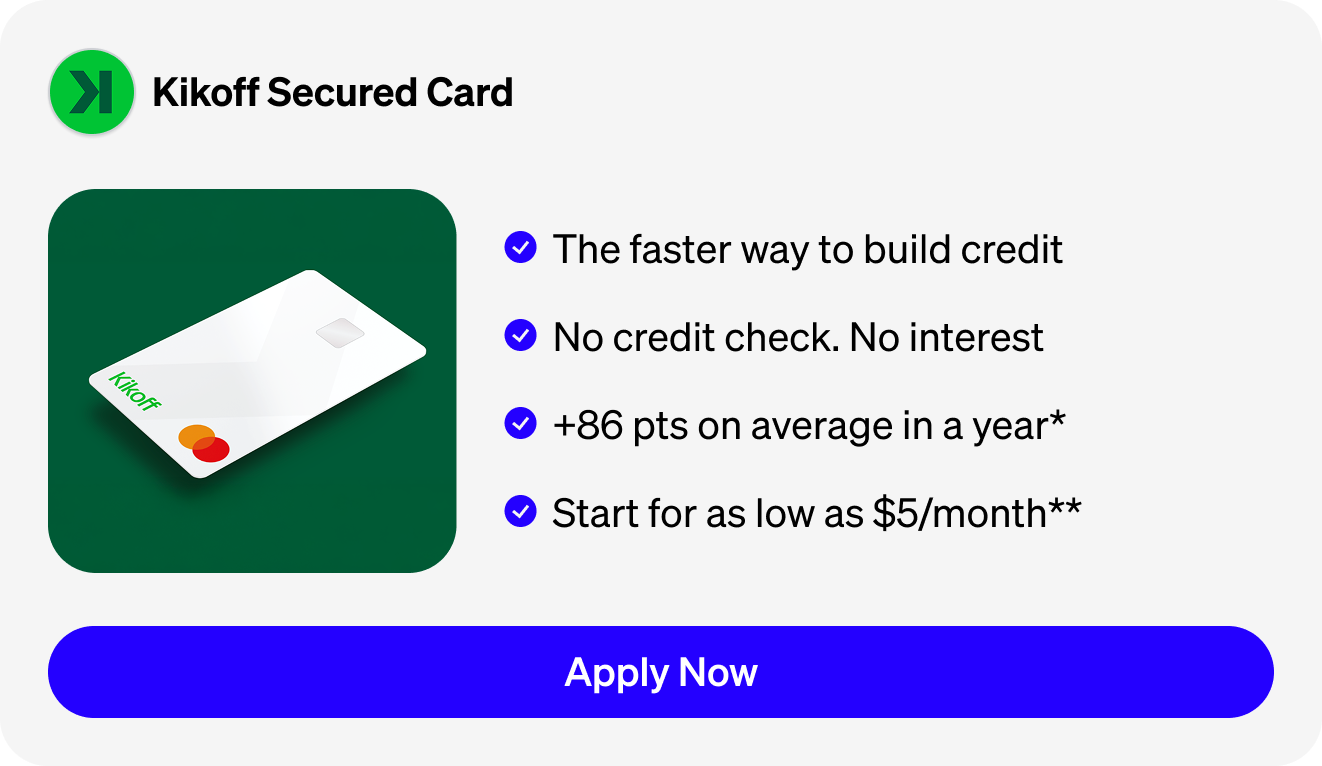
Kikoff Credit Builder Card
- No credit check
- No APR (no interest)
- No minimum deposit requirement
- Plan-based pricing:
- Basic: $5/month
- Premium: $20/month
- Ultimate: $25/month
- Simple flow: create account → pick a plan that includes the card → activate → use responsibly + pay on time
- Note: purchases are limited to the Kikoff store
Current Credit Builder
- No credit checks required
- Build credit, not debt: spend only what’s in your account + enable AutoPay
- Earn points on swipes: 1x points on eligible dining and grocery purchases (redeem for cash back)
- Extra banking perks (with qualifying direct deposit):
- Get paid up to 2 days faster
- Fee-free overdraft
- No annual fees, plus no in-network ATM fees, no bank transfer fees, no minimum balance fees
Chime Credit Builder
- No credit check required
- Build credit using the money in your Chime account (no interest-based debt)
- No annual fees, no maintenance fees, no international fees, and no interest
- 1.5% cash back on rotating categories (with Chime+ and qualifying direct deposit)
- Extra perks with direct deposit: fee-free overdraft, higher savings features, “payday when you say,” and more
- Quick setup: sign up in minutes → choose Chime Card → use for everyday spending + on-time payments
FAQ
Does a soft vs hard credit check change my score every time?
Soft vs hard credit check matters because soft inquiries do not change your score, while hard inquiries can. A hard inquiry usually causes a small drop, and the impact usually fades.
Will checking my own credit hurt my score?
No. Checking your own credit counts as a soft inquiry.
How many points does a hard inquiry drop a score?
Many people see a small impact. One recent summary puts the typical range around 5 to 10 points.
Does rate shopping count as one hard inquiry?
Often yes, for installment loans, as long as you shop within a short window. The common window falls between 14 and 45 days, depending on the scoring model.
Final thoughts
Soft vs hard credit check rules help you avoid surprises and protect momentum while you build credit. Use soft inquiries for research and prequalification. Use hard inquiries when you feel ready to apply, and keep major rate shopping in a tight window.
A hard inquiry does not ruin a score. Poor timing and too many applications can cause setbacks. A simple plan keeps you in control.
Start Building Credit with Firstcard
- Build credit faster
- No credit check or hard inquiry
- Accepts international students, immigrants and foreigners without SSN
- 0% APR
- Get up to 1% unlimited cashback
- Get up to 4.00% APY
Credit building
for all
.webp)
.png)


.svg)