Building credit from scratch or recovering from bad credit feels daunting. The first step many people take is a secured credit card — one backed by a cash deposit. But when you're already tight on cash, even a $200 deposit can feel impossible.
The good news: in 2026, you have options. Secured credit cards with deposits under $200 exist, and some cards require no deposit at all.
This guide walks you through the 7 best low-deposit secured cards available right now, from traditional cards requiring modest deposits to newer no-deposit alternatives. Whether you can afford a $49 deposit or nothing at all, there's a card designed for your situation. If you're a heavy Amazon shopper, also take a look at our Amazon Prime Secured Credit Card review for a retail-specific option that bakes credit building into everyday Prime purchases. Another product worth comparing is the Varo Believe secured credit card, which requires no deposit and no credit check but ties into a Varo checking account.
Why Low-Deposit Cards Matter
Every month your money sits locked up as a security deposit is a month you're not using it for rent, food, or emergencies. A $500 deposit is a big ask when you're rebuilding. Low-deposit options mean you can start building credit without draining your savings.
But there's a trade-off to consider: lower deposits often mean lower credit limits. A $49 deposit might give you a $200 limit (which is enough for credit building), but it's tighter than a $500 deposit. The key is choosing a card that matches both your budget and your credit goals.
All the cards in this guide report to the three major credit bureaus (Equifax, Experian, TransUnion), which means your on-time payments build real credit scores.
What Is a Secured Credit Card?
A secured credit card works exactly like a regular credit card, except you provide a cash deposit upfront. That deposit becomes your collateral and typically equals your credit limit.
Here's the key: your deposit isn't used to pay your bill. You still make monthly payments like any cardholder. Your deposit sits in a protected, FDIC-insured account. If you miss payments, the card issuer can use it to cover what you owe.
Most secured cards graduate to unsecured cards after 6–18 months of on-time payments, and you get your deposit back in full. You're essentially building credit history while keeping your deposit safe.
Secured cards are perfect for people with no credit history, bad credit, or recovering credit because approval is nearly automatic. The deposit removes the lender's risk.
Why the Deposit Amount Matters
Your deposit is both an opportunity and a constraint.
Opportunity: A larger deposit gives you a higher credit limit, which makes it easier to keep your credit utilization low. A 10% utilization rate on a $300 limit means only $30 in charges — quite restrictive. The same 10% on a $1,000 limit gives you $100 in flexibility.
Constraint: You need cash available now. If you can only spare $49, a card requiring $200 isn't an option, no matter how good the rewards.
Low-deposit cards let you start with what you have and increase your deposit later if you want a higher limit. Many cards allow you to add funds to your deposit after opening the account.
The best strategy is to deposit what you can comfortably afford and keep locked up for 6–18 months, then graduate to unsecured and reclaim that cash.


The 7 Best Low-Deposit Secured Credit Cards in 2026
1. OpenSky Secured Visa — $200 Deposit, No Credit Check
Deposit: $200–$3,000 (your deposit = your credit limit) APR: 25.64% variable Annual Fee: $35 (or $0 for OpenSky Plus) Rewards: None Credit Bureau Reporting: All three (Equifax, Experian, TransUnion) Best For: People with very low or no credit scores who can't pass a credit check; the no-credit-check requirement makes OpenSky accessible to anyone.
OpenSky stands out because it doesn't require a credit check at all. Most secured cards run a hard inquiry, which temporarily dings your score. OpenSky skips that entirely.
The $35 annual fee is on the higher end, but the OpenSky Plus version offers $0 annual fee if you want to avoid the cost. The 25.64% APR is typical for secured cards—just avoid carrying a balance.
Graduation timeline varies; OpenSky reviews accounts on an individual basis. Keep on-time payments for 6–18 months and you'll likely qualify for unsecured status.
2. Self Visa Secured Credit Card — $100 Deposit, No Setup Fee Year 1
Deposit: $100–$2,000 (your deposit = your credit limit) APR: 27.49% variable Annual Fee: $0 first year, $25 after Rewards: None Credit Bureau Reporting: All three (Equifax, Experian, TransUnion) Best For: People starting from scratch who want the lowest possible opening deposit with no annual fee in year 1.
Self Visa requires just $100 to start — one of the lowest minimums available. The no annual fee in year 1 is generous, especially compared to OpenSky's $35 charge.
Like OpenSky, Self doesn't require a credit check. The 27.49% APR is slightly higher than OpenSky, but you're paying for convenience and the low deposit minimum.
Self reports on-time payments to all three bureaus, so even a small deposit can build significant credit history. Many users graduate within 12–18 months.
3. Discover it Secured — $200 Deposit, Best Rewards
Deposit: $200–$2,500 APR: 26.49% variable Annual Fee: $0 Rewards: 2% cash back at gas and restaurants (up to $1,000/quarter), 1% everywhere else. Discover matches your cash back at the end of year 1. Credit Bureau Reporting: All three (Equifax, Experian, TransUnion) Best For: People who want to earn while they build; the cash back match and zero annual fee are unbeatable among secured cards.
Discover it Secured is the best value secured card because rewards + zero annual fee + solid APR combine into a winning package.
The standout feature: Discover automatically matches all cash back you earn at the end of your first year. Earn $50 in cash back in year 1? Discover gives you an extra $50. This feature alone makes Discover worth choosing if your deposit is at least $200.
Discover also reviews for graduation starting at 7 months, which is faster than most competitors. Many users graduate within 8–12 months.
4. Capital One Platinum Secured — $49 Deposit, Lowest Barrier to Entry
Deposit: $49–$200 (as low as $49 gets you a $200 credit limit) APR: 28.99% variable Annual Fee: $0 Rewards: None Credit Bureau Reporting: All three (Equifax, Experian, TransUnion) Best For: People with extremely limited cash who need the absolute lowest deposit to get started. A $49 deposit opens an account with a $200 credit limit.
Capital One Platinum Secured has the lowest deposit requirement among traditional secured cards. $49 is accessible to almost everyone, and it still gives you a $200 credit limit — enough for meaningful credit building.
The zero annual fee, no-frills approach makes Capital One an excellent entry point. The 28.99% APR is the highest on this list, but that's the trade-off for the low deposit.
Capital One reviews accounts after 6 months for increases and potential graduation, typically within 12–18 months of responsible use. Big-bank deposit cards work similarly, and our Wells Fargo Secured Credit Card review compares the fees, limits, and graduation path against Capital One and Discover side by side.
5. Chime Card (Credit Builder) — $0 Deposit, True Zero Barrier
Deposit: $0 minimum (you control your balance = your credit limit) APR: 0% (no interest) Annual Fee: $0 Rewards: 5% cash back on one category (with qualifying direct deposit) Credit Bureau Reporting: All three (Equifax, Experian, TransUnion) Best For: People with no money for a deposit, or those who want to test credit building risk-free. The zero annual fee and 0% APR are huge.
Chime Card (the newer version of Credit Builder) is a game-changer: no deposit required, no annual fee, 0% APR, and no credit check.
How it works: You transfer money into your Chime account, and that balance becomes your credit limit. You only spend what you have, so the card issuer bears no risk. In exchange, they don't ask for a deposit.
The catch: you need a Chime checking account (which is free). If you don't already bank with Chime, opening an account is quick and free.
Rewards are modest (5% on one category if you have a qualifying direct deposit), but the zero costs and built-in 0% APR make this an excellent choice for credit building without risk.
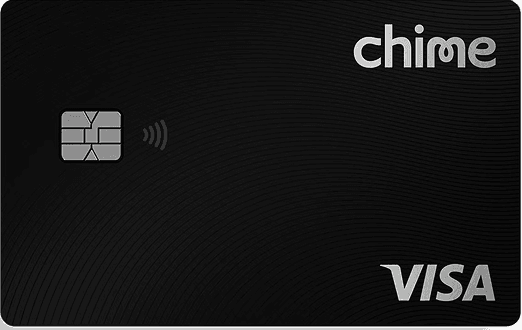
Chime Card™
Chime Card™
Chime Card™ is Chime's secured credit card and has the reliable Chime credit-building features plus 5% cash back rewards on category of choice (with qualifying direct deposit) and access to cash at ATMs.¹
Fee
$0
APR
No interest
Minimum Deposit Amount
$0
Credit Check
No
Cashback
5% cash back rewards on category of choice (with qualifying direct deposit)
Benefit
Overdraft up to $200 without fees for eligible members.
6. Cleo Credit Builder Card — $1 Minimum Deposit, Lowest Deposit Ever
Deposit: As little as $1 (you set your own limit) APR: 0% (no interest) Annual Fee: $14.99/month membership Rewards: None (but membership includes cashback challenges and cash advances) Credit Bureau Reporting: All three (Equifax, Experian, TransUnion) Best For: People who want the absolute lowest deposit barrier and don't mind a membership fee. The $14.99/month is an alternative to a traditional annual fee.
Cleo lets you start with as little as $1 as your deposit — the absolute lowest floor. You set your own credit limit by depositing whatever you want.
The trade-off: Cleo charges a $14.99 monthly membership fee, which works out to $180/year. That's pricey compared to most cards' annual fees, so you should be confident you'll use the card.
In exchange, you get 0% APR (no interest), access to cash advances and cashback rewards through Cleo's app, and reporting to all three bureaus.
Cleo is worth considering if you truly cannot afford any deposit upfront and you want flexibility to set your own limit.
7. Current Build Card — $0 Deposit, Part of Current Checking
Deposit: $0 minimum (funds in your Current account = your limit) APR: 0% (no interest) Annual Fee: $0 Rewards: 1% cash back on dining and groceries Credit Bureau Reporting: All three (Equifax, Experian, TransUnion) Best For: People who want zero costs and zero barriers, and who are willing to switch (or already use) a mobile banking app. The 1% rewards on dining and groceries is the best perk among no-deposit cards.
Current Build Card is tied with Chime as the true zero-cost, zero-deposit option. If you have a Current checking account, you can start building credit immediately with no additional costs.
Like Chime, Current uses a balance-based model: money in your Current account becomes your credit limit. You spend only what you have, which removes the lender's risk.
The advantage over Chime: Current Build offers 1% cash back on dining and groceries, whereas Chime requires a qualifying direct deposit to unlock its rewards. If you dine out or buy groceries regularly, that 1% adds up.
The catch: like Chime, you need a Current account. But Current's checking account is also free, making the total cost zero.
How to Choose the Right Low-Deposit Secured Card
With seven options, how do you decide? Ask yourself these questions:
1. How much cash can you afford to deposit?
- Under $50: Capital One Platinum ($49) or go zero-deposit with Chime/Current/Cleo.
- $100–$200: Self ($100) or Discover ($200).
- $200+: Any card on this list; pick based on other factors.
2. Do you want rewards while building credit?
- Yes: Discover it Secured (cash back match is huge) or Current Build Card (1% on dining/groceries).
- No: OpenSky, Self, or Capital One.
3. How important is a low annual fee?
- Critical: Choose Discover, Capital One, Chime, or Current ($0 annual fee).
- Acceptable: Self ($0 first year, then $25).
- Willing to pay: OpenSky standard ($35) or OpenSky Plus ($0).
4. Do you have a credit check concern?
- Very low credit or no history: OpenSky (no credit check) or Self (no credit check).
- Otherwise: Any card.
5. Do you already use Chime or Current?
- Yes: Use Chime Card or Current Build Card (seamless, zero costs).
- No: Discover, Capital One, OpenSky, or Self.
6. Are you willing to switch banks for credit building?
- Yes: Chime Card or Current Build Card offer the best cost-to-reward ratio.
- No: Stick with traditional cards (Discover, Capital One, OpenSky, Self).
How to Graduate to an Unsecured Card
The goal with a secured card is graduation: converting to an unsecured card and getting your deposit back.
Timeline: Most cards graduate between 6 and 18 months. Discover it Secured is fastest (7 months). Capital One and OpenSky typically take 12–18 months.
What issuers look for:
- On-time payments: Never miss or be late. This is the biggest factor.
- Low utilization: Keep your balance below 30% of your limit. Ideally, stay under 10%.
- Account age: Some issuers require a minimum time (6+ months) before reviewing.
When you graduate:
- Your deposit is returned, usually as a statement credit or check within 7–10 business days.
- Your card converts to unsecured with potentially a higher limit.
- You keep the same account number, preserving your credit history.
Don't close the card after graduation. Closing a card hurts your credit by reducing your available credit and shortening your credit history. Keep it open, use it occasionally (small charges), and let it age. To accelerate your credit journey, pairing a secured card with Self's Credit Builder Account creates diverse credit types that help your score grow even faster.
FAQ: Low-Deposit Secured Credit Cards
Q: What credit score do I need to qualify? A: Most low-deposit cards have no credit score requirement or check. Self, OpenSky, Chime, and Current all approve without a credit check. Discover, Capital One, and Cleo may run a soft pull (doesn't hurt your score) but don't have a minimum score requirement.
Q: Will these cards build my credit faster than an unsecured card? A: No, they build credit at the same rate. What matters is on-time payments and low utilization, not the deposit. A $49 deposit builds credit just as effectively as a $500 deposit.
Q: Can I increase my credit limit without adding to my deposit? A: Possibly. Most issuers review for automatic limit increases after 6+ months of responsible use. You can sometimes request an increase without adding to your deposit, though policies vary.
Q: What happens if I miss a payment? A: Missing a payment is reported to all three credit bureaus and can lower your score 50+ points. The issuer won't automatically use your deposit; you still owe the full payment. Only after continued non-payment (typically 60+ days) will the issuer charge off the debt and may use your deposit to settle it.
Q: Can I use multiple low-deposit cards? A: Yes, but be cautious. Multiple applications trigger hard inquiries (if applicable) and multiple new accounts, both of which temporarily lower your score. Most people benefit from one card used perfectly for 6–18 months, then graduation.
Q: Which card is truly the best? A: It depends on your situation. Discover it Secured is the best overall (rewards + no fee). Capital One Platinum is the best for tight budgets ($49 minimum). Chime and Current are the best for zero costs. Self is the best for low deposits under $200. Choose based on your budget and priorities.
Q: Do I have to keep the deposit locked up the whole time? A: Yes, until you close the account or graduate. The deposit is collateral for the card issuer. You can't access it while the card is active.
The Bottom Line
Low-deposit secured cards remove a major barrier to credit building. Whether you have $49, $100, or zero dollars available, there's a card designed for you.
Start with what fits your budget. Make on-time payments, keep your balance low, and let the months pass. After 6–18 months, you'll graduate to unsecured credit, reclaim your deposit, and have built real credit history.
The best low-deposit card isn't the cheapest—it's the one you'll use consistently and manage responsibly. Pick one and commit to on-time payments. That's what builds credit.
Ready to get started? Explore Firstcard's full comparison of secured credit cards, or read our guide to how secured credit cards work to learn more before you apply.