A credit card that costs nothing to keep open and pays you back when you spend sounds too good to be true, but for students it is real. A free credit card for students means no annual fee, and the best ones add cash back on top. The catch is that "free" only stays free if you pay your balance in full, because the interest on a carried balance is where the real cost hides.
Here is a clear look at the top no-fee student cards available as of June 2026, what they actually cost, and what to do if you have no credit history and keep getting declined. For a broader list, see our roundup of free credit cards for students.
What "Free" Really Means on a Student Card
A free credit card for students has a 0 dollar annual fee, so there is no yearly charge just to hold the card. That is the part marketers highlight.
The part they downplay is the interest rate. Student cards often carry purchase APRs in the mid-to-high 20 percent range as of June 2026, and that interest only applies if you carry a balance past the due date. Pay in full each month and you pay zero interest, which is what keeps the card truly free.
Watch for two other costs. A late payment fee can run up to around 41 dollars, and some cards charge foreign transaction fees of about 3 percent on purchases made abroad. The best student cards waive the foreign fee, which matters if you study abroad.
Best Free Credit Cards for Students in 2026
Two no-fee student cards stand out for most college applicants.
Discover it Student Cash Back charges no annual fee and offers 5 percent cash back on rotating quarterly categories you activate, up to a quarterly cap, plus 1 percent on everything else. Discover also matches all the cash back you earn in your first year with no limit. It is one of the more accessible cards because Discover will consider applicants with no established credit history.
Capital One Savor Student Cash Rewards also has no annual fee and charges no foreign transaction fee, which makes it strong for study-abroad semesters. It earns 3 percent back on dining, entertainment, popular streaming services, and grocery stores, and 1 percent on other purchases. Capital One generally wants at least fair credit, roughly a 630 to 689 score, to approve a student applicant. If you have no file at all, our guide to the best credit card for a college student with no credit history covers easier-approval picks.
Both report to all three credit bureaus, so responsible use builds your credit while you earn rewards. Terms and conditions apply, and APRs vary by creditworthiness.
What If You Have No Credit and Get Declined?
Here is the honest problem. Traditional student cards still want some history, income, or a parent's help, and plenty of students with a truly blank file get rejected. If that is you, learning how to start credit with no credit helps, and a credit-builder card gets you reporting to the bureaus today so you qualify for a rewards card sooner.
A good starting point is the Self Visa Credit Card. Self does not require a hard credit check or existing credit, and it reports to all three bureaus. You build savings while you build your score, then unlock a secured Visa backed by that money. For a student with no file, it is a low-risk on-ramp.

Another flexible option is the Current Build Card. It combines a spending account with credit building and skips the traditional hard pull, so a thin or empty file is not an automatic no. Because your building activity is tied to money you already set aside, you avoid running up debt on a student budget.
Current Build Card
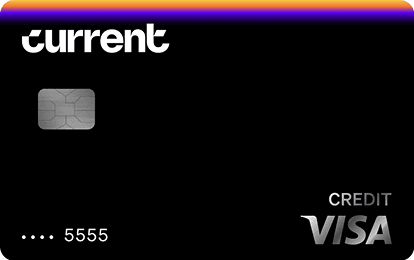
Current Build Card
$0 annual fee. No minimum deposit required. No credit check required. 1 point per dollar on eligible categories. Reports to Experian, TransUnion, Equifax.
Fee
$0
APR
0%
Minimum Deposit Amount
$0
Credit Check
No
Cashback
1 point/dollar on eligible categories (with qualifying payroll deposit)
Benefit
No credit check, no deposit minimum
Key Facts at a Glance
| Card | Annual fee | Rewards | Best for |
|---|---|---|---|
| Discover it Student Cash Back | $0 | 5% rotating categories + 1% | No-history students wanting rewards |
| Capital One Savor Student | $0 | 3% dining/entertainment/streaming/grocery | Study-abroad students (no FX fee) |
| Self Visa Credit Card | Plan fee applies | Credit building, no rewards | Students with no credit at all |
| Current Build Card | Varies | Credit building + spending | Students who want a card to swipe |
A Third Easy-Approval Builder
If you want the cheapest possible way to start reporting, the Kikoff Credit Account offers a small revolving line for a flat monthly subscription and reports payments to the bureaus. There is no hard credit check, and it is designed for people with no history, which describes most first-year students. Use it for a few months, then apply for Discover or Capital One once your score appears.
Kikoff Credit Account

Kikoff Credit Account
Everything you need to build your credit, right in one app. Build credit, lower debt, and unlock progress with tools that actually work.
Standout feature
An avg increase of +86 points within a year with on-time payments
Fees
$5/month for Basic plan, $20/mo for Premium plan $35/mo for Ultimate plan
Pros
Helps both payment history and credit utilization, the two factors that move scores most
Cons
Monthly fee continues for as long as you keep the account open
How to Use a Student Card Without Paying a Cent in Interest
The rule is simple. Pay the full statement balance by the due date every month and you will never pay interest, no matter how high the APR is.
Set up autopay for the full balance so a busy exam week does not cost you a late fee or a hit to your credit. A single late payment can drop your score and may trigger a penalty APR.
Keep your spending low relative to your limit. Student cards often start with limits around 500 to 1,000 dollars. Using under 30 percent of that, and ideally under 10 percent, keeps your credit utilization ratio low and helps your score climb faster. Treat the card like a debit card you pay off, not free money.
How to Build Credit That Lasts Past Graduation
Your student card is the foundation of an adult credit file. Keep it open after you graduate, since the age of your oldest account helps your score over time.
Use it for one small recurring charge, like a streaming subscription, and let autopay handle it. That keeps the account active and reporting without any risk of overspending. Over a few years, this quietly builds the kind of score that gets you approved for an apartment, a car loan, or a premium travel card.
Frequently Asked Questions
Is there a truly free credit card for students?
Yes. Cards like the Discover it Student Cash Back and Capital One Savor Student have a 0 dollar annual fee, so they cost nothing to keep. They only become expensive if you carry a balance and pay interest, so paying in full each month keeps the card genuinely free.
Can I get a student credit card with no credit history?
Sometimes. Discover will consider students with no credit history, while many other issuers want fair credit or a cosigner. If you are declined, a credit-builder card like Self or Kikoff starts reporting to the bureaus right away so you qualify for a rewards card within a few months.
Do student credit cards build credit?
Yes, as long as the card reports to all three credit bureaus, which the major student cards do. Paying on time and keeping your balance low builds positive history that follows you after graduation.
How much should a student spend on a credit card each month?
Keep your balance under 30 percent of your limit, and under 10 percent is even better for your score. On a 500 dollar limit, that means keeping the reported balance under 150 dollars and paying it off in full each month.